POV video motion sickness: why it happens and what helps
A head-mounted or handheld camera makes the whole frame swing, bob and turn with the operator, so your eyes read large self-motion that your inner ear never feels. No device setting removes that camera motion, so the fix is all about how you watch: a smaller screen held farther away, a lit room, and frequent breaks.
Cameras and footage · No built-in setting for this
Key facts
- POV footage swings the whole frame with the camera operator, so your eyes read large self-motion your inner ear never feels.
- It is the strongest form of moving-screen sickness short of VR.
- No device setting removes the motion, so watching on a smaller, farther screen in a lit room is the fix.
Try Dizzout free. It runs on your phone, not on the machine you are playing on. Drug-free, and it works once symptoms start.Free · works with any headphones · no account to try
Ease screen motion sickness. Free to try, no card needed. Or go straight to the App Store or Google Play.
 Scan to open on your phone
On a computer? Dizzout installs on your phone. Scan the code, or open dizzout.com/get on your phone and it'll take you straight to the right store.
Why first-person footage does it
A head-mounted or handheld camera swings, bobs and turns the entire frame with whoever is holding it. Your eyes read large self-motion that your inner ear never feels, which is the strongest version of the visual versus vestibular conflict short of putting on a VR headset. That is why POV footage gets people who are fine with steadier video.
What actually helps
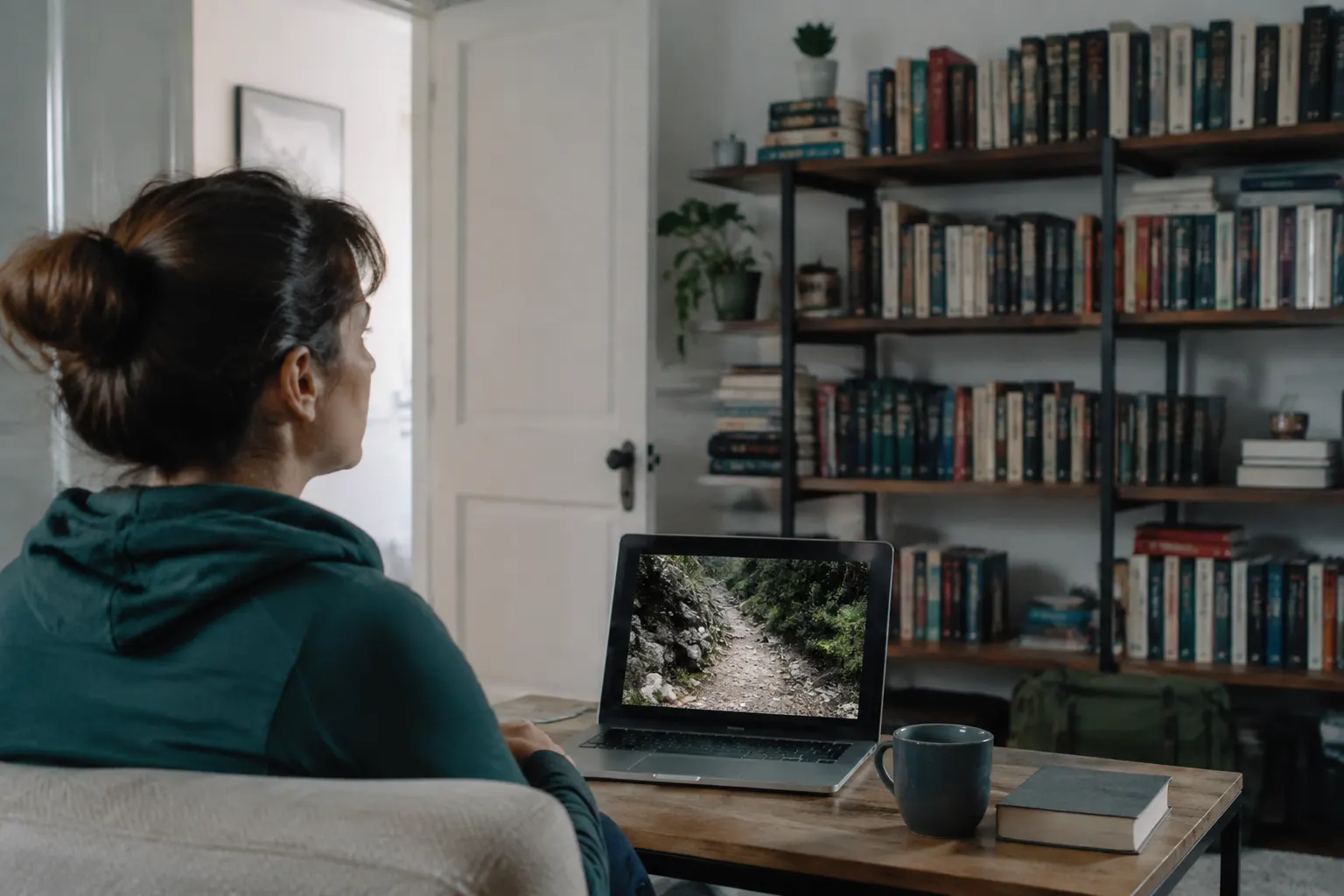
There is no built-in setting for this. No device setting removes camera motion from first-person footage. It is baked into the recording, so every fix is about how you watch it, not a toggle you can flip.
- Watch on a smaller screen held farther away, rather than letting the footage fill your vision.
- Keep the room lit so your peripheral vision can anchor to still surroundings.
- Pause often, and stop at the first hint of nausea instead of pushing through.
- If you get the choice, pick a stabilized version of the clip over raw footage.
Frequently asked questions
Why do POV videos make me feel sick?
A first-person camera moves the whole frame with the person filming, so your eyes read large self-motion while your inner ear feels you sitting still. That is the same conflict behind car and sea sickness, and POV footage is one of the strongest triggers for it short of VR. It commonly affects people who are fine with steadier video.
How do I watch POV footage without getting nauseous?
There is no setting that removes the camera motion, so change how you watch. Use a smaller screen held farther away instead of filling your vision, keep the room lit so your eyes can lock onto still surroundings, and take frequent breaks. If a stabilized version of the clip exists, choose it. Stop at the first hint of nausea rather than pushing on.
Why can I ride a bike but not watch bike POV footage?
Riding gives your inner ear the motion your eyes are seeing, so the two agree, and you are steering, so you know what is coming. A video gives you the visual half only, on someone else's route, while your body sits perfectly still. That is the whole conflict in one sentence, and it is why the footage can be harder than the activity.
Is first-person footage worse than third-person?
Usually, yes. A third-person camera keeps something fixed in the frame, the person or vehicle you are following, so your eyes have a stable reference while the background moves. First person removes that: the whole frame swings with the head or the handlebars and there is nothing steady to hold onto. If a clip exists both ways, the third-person version is the easier watch.
Can I build up a tolerance to POV footage?
Many people do, with short sessions rather than long ones. The pattern that works is a few minutes of smoother footage, stopping before symptoms start, and coming back the next day instead of pushing on. Progress is slow and it can slip back after a break, so treat it as training rather than a fix.
Set up before your next session with POV video motion sickness
Put it on your phone
Dizzout runs on your phone, not on the machine you are playing on. Install it now, and when you next feel it starting, move the headphones you are wearing over to your phone and press play. Drug-free, and it works once symptoms have already begun.
Free to try, no card needed. Or go straight to the App Store or Google Play.
Scan to open on your phoneOn a computer? Dizzout installs on your phone. Scan the code, or open dizzout.com/get on your phone and it'll take you straight to the right store.
Know someone who gets motion sick?
Send them the app that helps stop it, drug-free, in about 90 seconds, works with any headphones. Free to try.
More screen triggers
Related
- What cybersickness isThe screen version of motion sickness, and the three symptom groups it comes in.
- Does your phone have a motion sickness setting?Which makers built one in, and what the built-in features cannot do.
- VR motion sickness (headset version)Why headsets trigger it, the comfort settings that help most, and how to build tolerance.
- Video game motion sickness, by gameThe 20 games players report most, each with the settings that help.
Your next question, probably
Does your phone have the setting?
iPhone, Samsung and Pixel, and what each one cannot do
If that is not your question:
Settings paths were checked at the makers' own support pages and at MDN as of August 2026, where a first-party source exists; the rest is labelled reported and dated. Device menus change with software updates and vary by model, so your own settings menu is the final word. Apple, Samsung, Sony, LG, TCL, Roku, Vizio, Amazon, TikTok, Instagram, Google and DJI are trademarks of their respective owners; Dizzout is not affiliated with or endorsed by them. Sensitivity varies from person to person; this page is informational and not medical advice.