
Motion Sickness: Bangkok to Chiang Mai Drive
The Bangkok to Chiang Mai trip covers about 435 miles (700 km) and takes around 9 hours. The terrain is mixed (highway then mountain), which makes it a moderate motion sickness risk route.
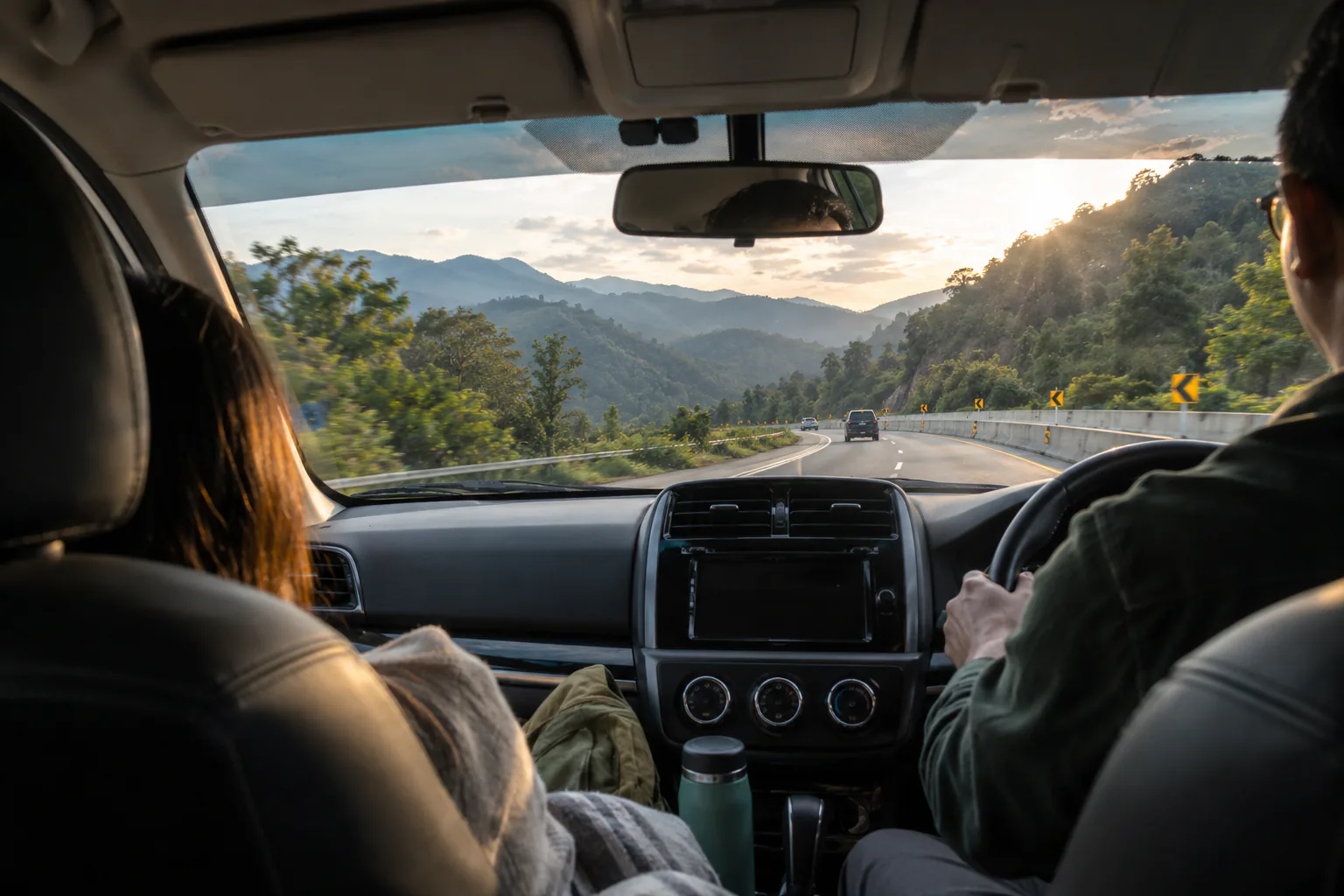
The Bangkok-Chiang Mai drive via Highway 1 is mostly straight expressway for the first 6 hours, then enters mountainous northern Thailand for the final stretch. The mountain section (Lampang to Chiang Mai) has significant curves and elevation changes that can trigger motion sickness, particularly in van or bus travelers.
In the Nausea Index table of the 46 road trips we cover, the Bangkok to Chiang Mai trip is rated manageable, one of 7 in that band, with 32 rated higher. Full table: the bumpiest road trips, ranked.
Key facts
- The Bangkok to Chiang Mai trip covers about 435 miles, which is 700 km.
- It takes about 9 hours.
- The terrain is mixed (highway then mountain), which puts the route in the moderate band for motion sickness.
- 2 sections are flagged as motion sickness pressure points, starting with Lampang to Chiang Mai mountain section.
- Steadiest place to sit: Front seat of any vehicle.
Going on the Bangkok to Chiang Mai drive? Dizzout is drug-free sound therapy for passengers in the back seat, with relief in about 90 seconds.Starts in your browser · works with any headphones
Stop car sickness. Get your personalized Dizzout plan. Paid subscription for full access.

On your phone? Scan to start there.
Where Motion Sickness Hits Hardest
The sections most likely to trigger motion sickness are: Lampang to Chiang Mai mountain section, Nakhon Sawan curves. Many travelers take the night train or fly instead - the drive is long and tough on motion-sensitive passengers, especially in shared minivans which are common. If driving yourself, plan stops at the Lampang area before the mountain section.
Measured bends
We counted every bend on this route from OpenStreetMap data: 687.3 km, ranked 22 of 26 road trips for bends per km.
- Bends
- 29
- Bends per km
- 0.04
- Hairpins
- 3
- Busiest 10 km
- 9 bends
Best Seat for Motion Sickness on This Drive
Front seat of any vehicle.
Going on the Bangkok to Chiang Mai drive? Have Dizzout ready
Stop car sickness
Dizzout is drug-free sound therapy for passengers in the back seat, with relief in about 90 seconds. It plays precisely calibrated audio through any headphones you already own, wired or Bluetooth. Free to download.
Get your personalized Dizzout plan. Paid subscription for full access.
30,000+ travelers in 30+ countries · How we count

On your phone? Scan to start there.
Comparing apps first? See how the motion sickness apps compare
Not travelling yet? Remind me the day before my trip
Know someone who gets motion sick?
Send them the app that helps stop it, drug-free, in about 90 seconds, works with any headphones. Free to download.
Prevention Tips for the Bangkok to Chiang Mai Drive
- Have Dizzout downloaded before you start, so it is ready the moment symptoms begin
- If you plan to take an over-the-counter tablet such as Bonine or Dramamine, those need 30 to 60 minutes before departure to do anything. Ask a pharmacist first
- Eat lightly before the drive; a heavy meal makes symptoms worse for most people
- Take breaks every 90 minutes minimum on long stretches
- Keep the car cool and well-ventilated
- Avoid reading or phone use in the back seat
Which of those actually hold up when they are tested is a separate question, and we keep the answers in one place: the remedy verdicts, ranked by evidence.
Frequently asked questions
Which part of the Bangkok to Chiang Mai drive is winding?
The final mountain stretch, roughly from Lampang onward, after about six hours of flat expressway. That late arrival of curves is the trap: passengers are tired, fed and often on phones when the road finally starts turning. Take a real break before Lampang and change the cabin setup for the mountains.
Is the minivan worse than driving yourself?
Usually, yes. Shared vans are the common way to make this trip, and van passengers get the worst of it: no control of the driving, limited forward view, rear seats over the axle. If you are prone to car sickness, ask for the front seat of the van, or choose the train or a flight for this leg.
What are the alternatives to the 9 hour drive?
The night train and short domestic flights both serve this corridor and both skip the mountain curves entirely. For badly motion sensitive travelers the flight is the shortest exposure; the train trades duration for a gentler ride. Driving keeps your schedule, at the cost of the last winding hours.
Where should you stop before the mountains?
The Lampang area is the natural staging stop: the last easy stretch before the climb toward Chiang Mai. Stop properly, eat lightly, get the queasiest passenger into the front seat with eyes up before the road changes character.
How long is the Bangkok to Chiang Mai drive?
About 435 miles, around 9 hours of driving in normal conditions, the first six mostly flat and the rest mountainous. It is long enough that fatigue becomes its own factor; if you can, split it or hand the mountain leg to the freshest driver.
What's the fastest way to stop car sickness mid-drive?
Once symptoms have started, pills won't work fast enough - they take 30+ minutes to kick in. The fastest options mid-drive are sound therapy via headphones (Dizzout states relief in about 90 seconds), pulling over for fresh air, and looking at the distant horizon.
Other drives we have looked at
Route facts last checked September 2026. Roads, rules and seasons change; the linked official pages are the live word.