
Motion Sickness: Reykjavik to Reykjavik (loop) Drive
The Reykjavik to Reykjavik (loop) trip covers about 813 miles (1308 km) and takes around 16 hours. The terrain is two-lane rural road, which makes it a moderate motion sickness risk route.
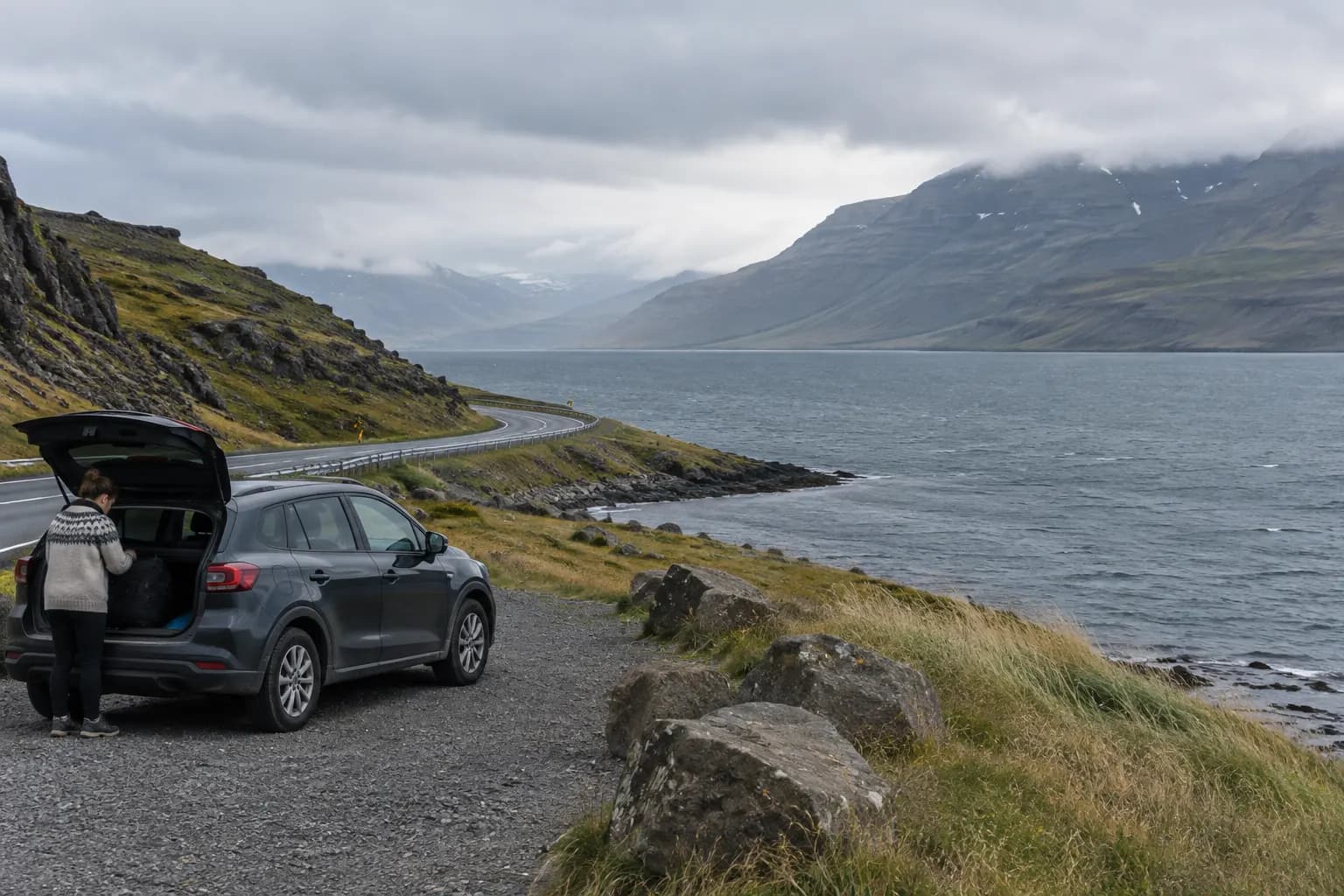
Iceland's Ring Road (Route 1) is a loop of more than 1,300 km, about 813 miles, around the entire island. The road quality is excellent but features many curves around fjords, river crossings, and lava fields. Motion sickness risk varies dramatically - the South Coast is mostly straight, while the East Fjords and parts of the North have constant curving.
In the Nausea Index table of the 46 road trips we cover, the Reykjavik to Reykjavik (loop) trip is rated manageable, one of 7 in that band, with 32 rated higher. Full table: the bumpiest road trips, ranked.
Key facts
- The Reykjavik to Reykjavik (loop) trip covers about 813 miles, which is 1308 km.
- It takes about 16 hours.
- The terrain is two-lane rural road, which puts the route in the moderate band for motion sickness.
- 3 sections are flagged as motion sickness pressure points, starting with East Fjords.
- Steadiest place to sit: Front passenger seat.
Going on the Reykjavik to Reykjavik (loop) drive? Put it on your phone before you go, so it is there when you need it. Drug-free, any headphones.Starts in your browser · works with any headphones
Stop car sickness. Get your personalized Dizzout plan. Paid subscription for full access.

On your phone? Scan to start there.
Where Motion Sickness Hits Hardest
The sections most likely to trigger motion sickness are: East Fjords (entire stretch), Berufjörður, Northwest fjord crossings. Plan 7 to 10 days for the Ring Road. The wind in Iceland is severe - gusts can rock vehicles even on straight stretches, contributing to motion sickness independent of road shape. Check vedur.is for wind warnings before driving.
Route facts, checked at the source
Each fact below was checked against the linked official or operator page.
- Length: More than 1,300 km, connecting Reykjavik to nearly every region. vegagerdin.is
- Surface: Fully paved since 2019; opened in 1974. vegagerdin.is
- Single lane bridges: 29 single lane bridges remained as of 2023, down from 140 in 1990. vegagerdin.is
- Traffic: Over 1,000 vehicles daily year round on most sections, over 2,000 daily May to August. vegagerdin.is
- Safety reference: The road administration points drivers to safetravel.is for driving guidelines. vegagerdin.is
Best Seat for Motion Sickness on This Drive
Front passenger seat.
Going on the Reykjavik to Reykjavik (loop) drive? Set it up first
Put it on your phone before you go
Set it up before the car pulls away, not at the first lay-by. Dizzout is a drug-free app that plays precisely calibrated audio through any headphones you already own, wired or Bluetooth, with relief in about 90 seconds. Free to download.
Get your personalized Dizzout plan. Paid subscription for full access.
30,000+ travelers in 30+ countries · How we count

On your phone? Scan to start there.
Comparing apps first? See how the motion sickness apps compare
Not travelling yet? Remind me the day before my trip
Know someone who gets motion sick?
Send them the app that helps stop it, drug-free, in about 90 seconds, works with any headphones. Free to download.
Prevention Tips for the Reykjavik to Reykjavik (loop) Drive
- Have Dizzout downloaded before you start, so it is ready the moment symptoms begin
- If you plan to take an over-the-counter tablet such as Bonine or Dramamine, those need 30 to 60 minutes before departure to do anything. Ask a pharmacist first
- Eat lightly before the drive; a heavy meal makes symptoms worse for most people
- Take breaks every 90 minutes minimum on long stretches
- Keep the car cool and well-ventilated
- Avoid reading or phone use in the back seat
Which of those actually hold up when they are tested is a separate question, and we keep the answers in one place: the remedy verdicts, ranked by evidence.
Frequently asked questions
How long is the Iceland Ring Road?
More than 1,300 km, about 813 miles, per the Icelandic Road Administration, circling the whole island from Reykjavik. Most of it is easy two lane driving; the motion sickness story is concentrated in the fjord sections, where the road winds in and out of every inlet.
Is the Ring Road paved?
Yes, fully paved since 2019, per the road administration, though conditions still vary with weather. The surface is not the challenge here; wind and the winding fjord sections are what unsettle passengers.
Are there one lane bridges on the Ring Road?
29 single lane bridges remained as of 2023, per the road administration, down from 140 in 1990. Each one forces slowing, sometimes stopping, then accelerating away, and that is exactly the rhythm queasy passengers feel most.
Where do you check Ring Road conditions before driving?
The road administration points drivers to safetravel.is for driving guidelines, and road.is carries live conditions. Icelandic weather changes fast and wind alone can rock a car on a straight road, so a two minute check each morning is the cheapest comfort measure on this trip.
How busy is the Ring Road in summer?
Busy by Icelandic standards: over 2,000 vehicles daily on popular sections in the May to August peak, against over 1,000 year round, per the road administration. For passengers that mostly means slower convoys, more braking and more overtaking. Build slack into each day rather than pushing past every campervan.
What's the fastest way to stop car sickness mid-drive?
Once symptoms have started, pills won't work fast enough - they take 30+ minutes to kick in. The fastest options mid-drive are sound therapy via headphones (Dizzout states relief in about 90 seconds), pulling over for fresh air, and looking at the distant horizon.
Other drives we have looked at
Route facts last checked September 2026. Roads, rules and seasons change; the linked official pages are the live word.