
Motion Sickness: Inverness to Inverness (loop) Drive
The Inverness to Inverness (loop) trip covers about 516 miles (830 km) and takes around 16 hours. The terrain is single-track rural roads, which makes it a very high motion sickness risk route.
Scotland's NC500 is a 516-mile loop through the Scottish Highlands on mostly single-track roads with frequent passing places. Constant curves, elevation changes, and the need to pull into passing places creates a stop-start motion pattern that triggers severe motion sickness in many passengers. The route is unsuitable for sensitive passengers without significant planning.
In the Nausea Index table of the 46 road trips we cover, the Inverness to Inverness (loop) trip is rated notorious, one of 17 in the top band. Full table: the bumpiest road trips, ranked.
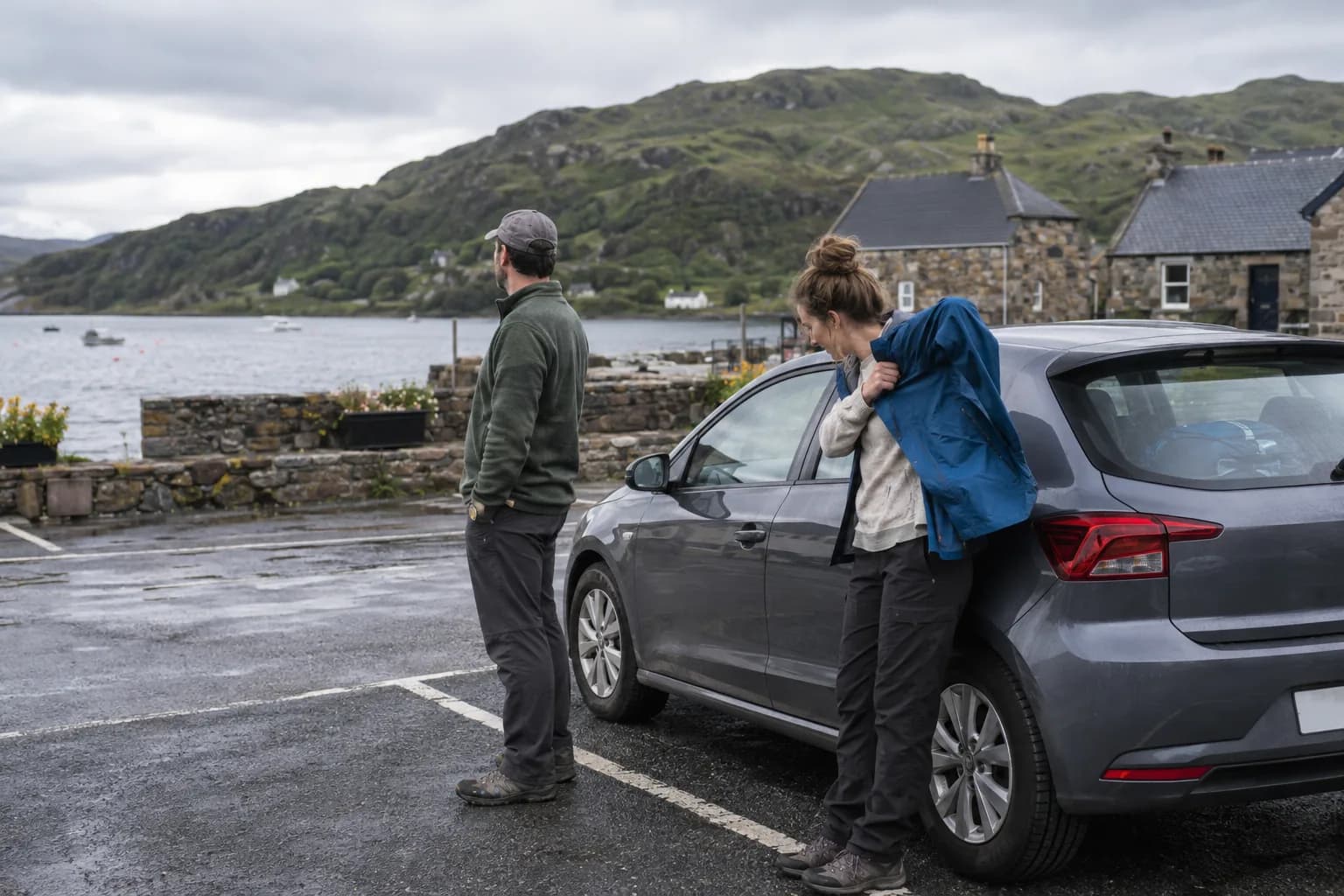
Key facts
- The Inverness to Inverness (loop) trip covers about 516 miles, which is 830 km.
- It takes about 16 hours.
- The terrain is single-track rural roads, which puts the route in the very high band for motion sickness.
- 3 sections are flagged as motion sickness pressure points, starting with Bealach na Bà.
- Steadiest place to sit: Driver's seat.
Going on the Inverness to Inverness (loop) drive? Put it on your phone before you go, so it is there when you need it. Drug-free, any headphones.Starts in your browser · works with any headphones
Stop car sickness. Get your personalized Dizzout plan. Paid subscription for full access.

On your phone? Scan to start there.
Where Motion Sickness Hits Hardest
The sections most likely to trigger motion sickness are: Bealach na Bà (Applecross Pass), Drumbeg loop, Bettyhill to Tongue coastal section. The official itineraries run 7 to 9 days; spread the loop across at least a week. Attempting it in fewer days dramatically worsens motion sickness fatigue. Take breaks at every village. The Bealach na Bà has switchbacks comparable to Alpine passes - avoid with motion-sensitive passengers.
Route facts, checked at the source
Each fact below was checked against the linked official or operator page.
- Length: 516 miles, just over 500 miles, looping from Inverness. northcoast500.com
- Official pacing: Official itineraries run 7, 8 and 9 days. northcoast500.com
- Regions: Six regions: the Black Isle, Easter Ross, Caithness, Sutherland, Wester Ross and Inverness-Shire. northcoast500.com
- Bealach na Ba guidance: Official guidance says not to push on over the Bealach in adverse weather, calling it potentially dangerous in strong gusty winds; the Tornapress to Shieldaig road is the gentler alternative. northcoast500.com
Best Seat for Motion Sickness on This Drive
Driver's seat.
Keep the audio kit dry at a stop
Use a proper stationary stop to prepare ordinary headphones for Dizzout. Keep damp outer layers separate from your phone and case.
Free to download. Paid subscription for full access.
30,000+ travelers in 30+ countries · How we count

On your phone? Scan to start there.
Comparing apps first? See how the motion sickness apps compare
Not travelling yet? Remind me the day before my trip
Know someone who gets motion sick?
Send them the app that helps stop it, drug-free, in about 90 seconds, works with any headphones. Free to download.
Prevention Tips for the Inverness to Inverness (loop) Drive
- Have Dizzout downloaded before you start, so it is ready the moment symptoms begin
- If you plan to take an over-the-counter tablet such as Bonine or Dramamine, those need 30 to 60 minutes before departure to do anything. Ask a pharmacist first
- Eat lightly before the drive; a heavy meal makes symptoms worse for most people
- Take breaks every 90 minutes minimum on long stretches
- Keep the car cool and well-ventilated
- Avoid reading or phone use in the back seat
Which of those actually hold up when they are tested is a separate question, and we keep the answers in one place: the remedy verdicts, ranked by evidence.
Frequently asked questions
How long is the North Coast 500?
516 miles, per the route's official site, looping out of Inverness around the far north of Scotland. The mileage undersells the workload: much of it is single track with passing places, so the driving is slower and busier than the number suggests.
How many days does the NC500 take?
The official itineraries run 7 to 9 days. Compressing it concentrates hundreds of miles of single track cornering into long days, which is exactly how carsick passengers get ground down. Take the longer pacing and the same road becomes a holiday rather than an endurance test.
Can you skip the Bealach na Ba?
Yes, and the official guidance tells you when you should: it calls the pass potentially dangerous in strong gusty winds and says not to push on in adverse weather, naming the Tornapress to Shieldaig road as the gentler alternative. With badly motion sensitive passengers, the alternative is the better road in any weather.
Why do single track roads trigger car sickness?
Passing places set the rhythm: slow, pull in, stop, accelerate, again and again. That stop start pattern is a stronger trigger than smooth cornering, and on the NC500 it continues for days. Regular breaks and a front seat with a clear forward view take most of the edge off.
Which NC500 region is toughest for carsick passengers?
Wester Ross, on the official region split, holds the route's hardest driving, including the Bealach na Ba. Its sea lochs and headlands mean sustained twisting even away from the pass. Plan Wester Ross as short days with generous stops rather than a push through.
What's the fastest way to stop car sickness mid-drive?
Once symptoms have started, pills won't work fast enough - they take 30+ minutes to kick in. The fastest options mid-drive are sound therapy via headphones (Dizzout states relief in about 90 seconds), pulling over for fresh air, and looking at the distant horizon.
Other drives we have looked at
Route facts last checked September 2026. Roads, rules and seasons change; the linked official pages are the live word.