
Ferry vs flying to Ireland: which is easier on motion sickness?
If motion sickness is the deciding factor, flying wins: about an hour in the air against roughly 2 to 3.5 hours on open water. The Irish Sea is a shallow, wind-exposed crossing that kicks up short, steep waves, and the fast craft that saves you time is also the ride that feels the chop most. The ferry still makes sense when you need your own car or hate airports: pick the big conventional ferry over the fast craft, travel on a calmer forecast, and use the crossing to lie down rather than sit in a lounge full of moving screens.
The Irish Sea crossing is short by ferry standards, which tricks a lot of people into underestimating it. Holyhead to Dublin takes about 3 hours 15 minutes on Stena Line and about 3 hours 25 minutes on an Irish Ferries cruise ferry, and the Dublin Swift fast craft does it in roughly 1 hour 50 minutes. A flight from most UK airports is about an hour of air time. On paper that is a small gap. In your stomach it is not: an hour of mostly smooth cruising against two or three hours of open water that has a reputation for a reason.
This page compares the two honestly for someone who gets motion sick. Which one is mechanically gentler, when the ferry is still the right call, and how to stack the odds if you take it.
Whichever option you pick, Dizzout is a drug-free backup for the moment nausea starts: precisely calibrated sound on any headphones, free to try on iOS and Android.
Free to try, no card needed. Or go straight to the App Store or Google Play.
Ferry vs flying to Ireland for a motion-sick traveller
| Factor | Ferry (Irish Sea) | Flying |
|---|---|---|
| Time exposed to motion | About 2 to 3.5 hours on open water | About 1 hour in the air, worst parts a few minutes |
| Type of motion | Short, steep chop; rolling and pitching in wind | Mostly smooth cruise; bumps in climb, descent, turbulence |
| Weather sensitivity | High; fast craft cancels before big ferries do | Lower; flights operate through most Irish Sea weather |
| Can you lie down? | Yes, with a cabin or quiet lounge | No, seated throughout |
| Fresh air access | Yes, open deck on conventional ferries | No |
| Bring your own car | Yes | No, rent or use transit on arrival |
| Best pick within the option | Big conventional ferry on a calm forecast | Any scheduled jet service |
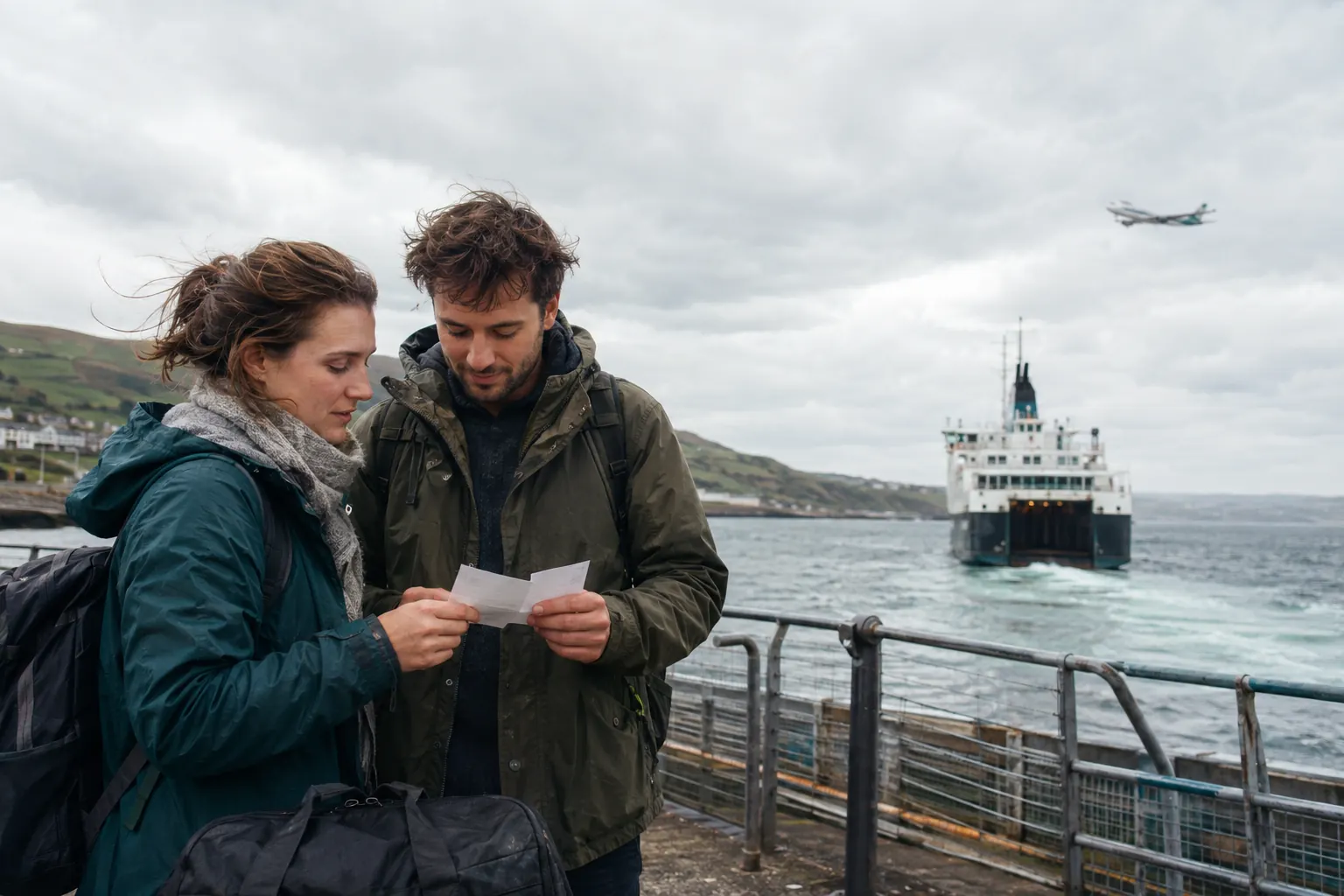
Why the Irish Sea punches above its weight
The Irish Sea is relatively shallow and sits in the path of Atlantic weather systems funnelling between two coastlines. Shallow water shortens and steepens waves, so instead of long rolling swell you often get quick, choppy motion: the kind that repeats every few seconds and gives your inner ear no rhythm to settle into. Winter and autumn crossings are noticeably livelier than mid-summer ones.
The boat you choose changes the ride more than most people expect. The large conventional ferries are heavy displacement ships that shoulder through chop. The fast craft is lighter and rides the surface, so the same sea state feels sharper on board, and operators themselves cancel fast-craft sailings in weather the big ferries still sail through. Our Irish Sea page covers the crossing conditions in more detail, month by month.
What the flight actually feels like
A Dublin, Belfast, Cork or Shannon flight from Britain spends only a short time at low altitude, and most of the motion a sensitive passenger notices happens during climb and descent. In between, a jet at cruise sits above the bumpiest air. There can still be turbulence, and taxi, takeoff and the descent into wind are not nothing, but the total exposure is measured in minutes rather than hours.
That duration difference is the core of the verdict. Motion sickness builds with time in motion: a queasy 40 minutes usually stays manageable, while a queasy third hour on the water is where trips fall apart. If your goal is simply the least provoked stomach on arrival, the plane is the honest answer for most people.
When the ferry is still the right call
The ferry earns its place when you are bringing a car, a dog, a bike, or half a house worth of luggage, and on a fair-weather day it can be a genuinely pleasant crossing. If that is your situation, three choices tilt the odds. First, book the conventional ferry rather than the fast craft: slower, heavier, steadier. Second, watch the forecast and avoid strong wind days when your dates are flexible. Third, plan to lie down for the crossing if you can, because being flat with your eyes closed is one of the positions health agencies such as the CDC list for easing motion sickness, and it beats sitting upright in a cafe watching screens and pillars sway.
Night crossings suit some travellers for exactly that reason: you sleep through the exposure instead of watching it. Just book early enough to get a berth rather than a reclining seat.
When to use which
Fly when motion sickness is the main thing you are optimising for, when your dates land in rough-weather months, or when a past crossing went badly enough that you dread the repeat. Take the ferry when the car, the dog or the luggage decides for you, and stack it in your favour: conventional ferry over fast craft, calm forecast over convenient slot, lying down over sitting in a bright lounge. If you end up on board and queasy anyway, get to a point where you can see the horizon or lie flat with your eyes closed, and treat food and coffee gently before boarding rather than not at all.
Try drug-free motion sickness relief
Try Dizzout Free
Free to try on iOS and Android · ~90 seconds · works on any headphones.
Frequently asked questions
Is the fast ferry to Dublin worse for seasickness than the slow one?
Usually, yes. The Dublin Swift saves you over an hour, but a lighter, faster craft transmits chop to passengers more sharply than a heavy conventional ferry, and fast-craft sailings are the first to be cancelled when the wind picks up, which tells you how differently the two ride the same sea. If you are prone to seasickness and still want the ferry, the big ship is the better bet even though you are exposed for longer.
How rough is the Irish Sea really?
It varies a lot by season and wind. It is a shallow sea in the path of Atlantic weather, so it produces short, steep waves quickly when the wind blows, and autumn and winter crossings are regularly lively. Plenty of summer crossings are flat and uneventful. Check the forecast for your sailing day rather than relying on reputation in either direction, and see our Irish Sea guide for what drives the conditions.
Does an overnight ferry crossing help if I get seasick?
It can. Sleeping through the crossing means your brain spends the exposure lying flat with eyes closed, which is one of the positions health guidance lists for easing motion sickness, instead of upright watching a moving interior. The catch is that it only works with a cabin where you can actually lie down, and a rough night can still wake you. On the short Dublin routes most sailings are daytime anyway, so this applies more to longer routes.
The honest summary: the plane is gentler, the ferry is more useful, and the gap between them is mostly about hours of exposure. If you do sail, give yourself the big ship, the calm day and somewhere to lie down, and the Irish Sea is very manageable. If you just want to arrive feeling fine, fly and rent the car on the other side.
Related comparisons
- Is the Irish Sea rough? The crossing guide
- Ferry vs cruise ship for seasickness
- How to not get seasick: the full plan
- Seasickness: why boats do this and what helps
- All motion sickness comparisons
This page is general travel information, not medical advice; how strongly any crossing affects you varies by person and by day. Sailing times and schedules are set by the operators and change, so check them before booking. Stena Line, Irish Ferries and other names are trademarks of their respective owners; Dizzout (Kinda Smart Inc.) is not affiliated with them.