
Bus vs car: why buses make you sick when cars don't
Getting sick on a bus but not in a car is common and has clean mechanical reasons. On a bus you sit high above the wheels, where every sway is amplified; you cannot see the road ahead, so nothing your inner ear feels is ever anticipated; the driver's braking rhythm is not yours; and the cabin is often warm and stuffy. In a car you usually ride low, near the front, with a windscreen full of road, and the driving style belongs to someone you can actually talk to. The gap between the two is real, and you can close some of it with route choice and where you put your eyes.
Plenty of people breeze through car journeys and then lose a school run or an airport shuttle to a bus. It feels random, but it is not: buses combine four or five known motion-sickness aggravators that cars mostly avoid, and the passengers it hits hardest are the ones stuck in the middle rows with a phone out.
Understanding the difference is genuinely useful, because it tells you which parts of the bus experience you can change. This page breaks down what the bus does that the car does not, why drivers and front-seat passengers get an easier ride in both vehicles, and what helps when the bus is unavoidable.
Whichever option you pick, Dizzout is a drug-free backup for the moment nausea starts: precisely calibrated sound on any headphones, free to try on iOS and Android.
Free to try, no card needed. Or go straight to the App Store or Google Play.
Bus vs car: the motion differences that matter
| Factor | Bus | Car |
|---|---|---|
| Seating height | High above wheels, sway amplified | Low, close to the axles |
| View of the road ahead | Almost no seats have one | Windscreen visible from most seats |
| Predictability | Driver and route are out of your hands | You can see, anticipate, and ask the driver |
| Stops and starts | Frequent on local routes | As the journey requires |
| Cabin environment | Often warm, crowded, stuffy | Your own climate control |
| Escape options | Wait for a stop | Pull over in minutes |
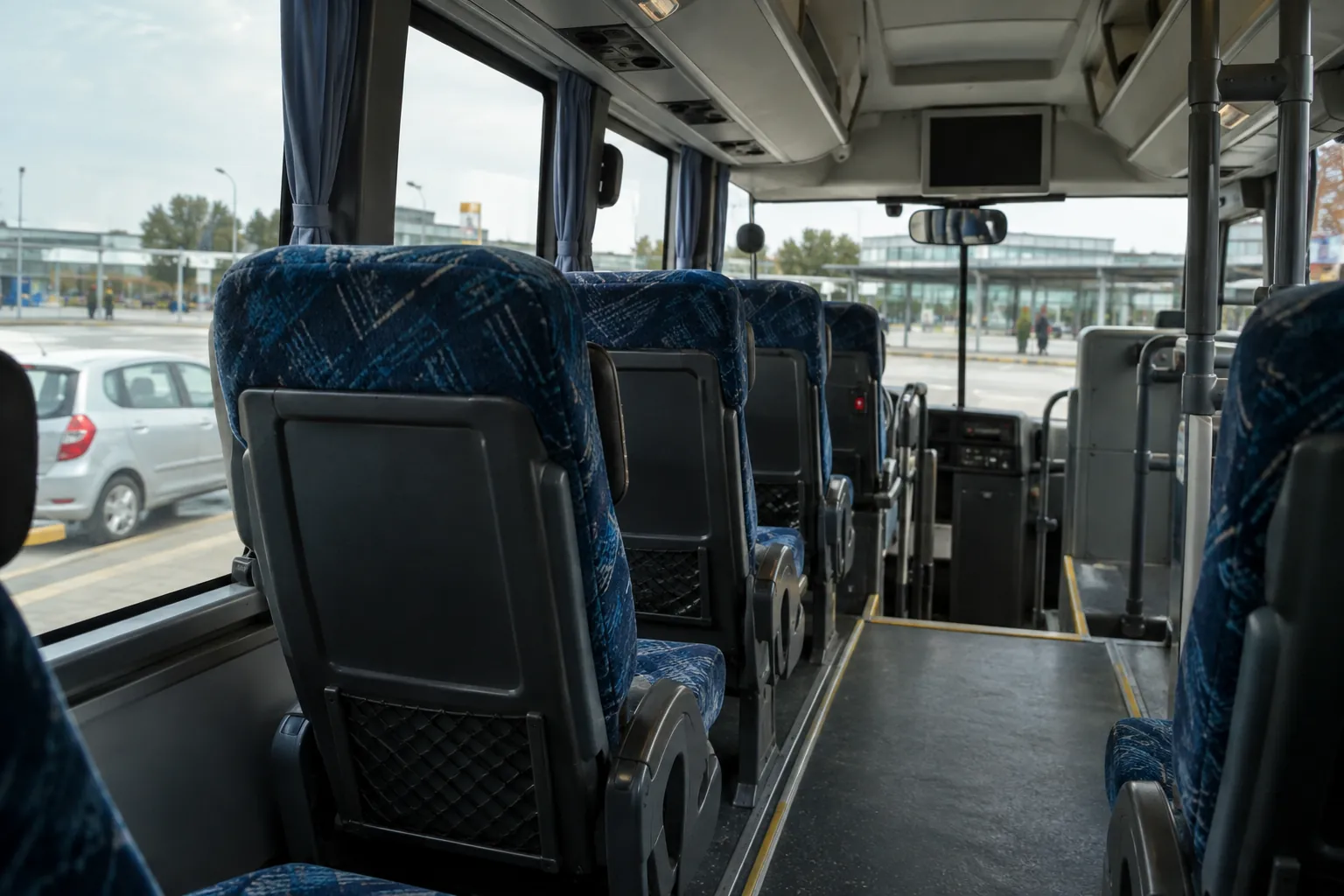
Height, sway and the seat you cannot pick
A bus passenger sits well above the vehicle's suspension and wheels. When the bus rolls through a corner or rocks over a bump, the cabin swings like the top of a metronome: the same road input moves your head further on a bus than it would in a low-slung car. Coaches with soft, comfortable suspension trade sharp jolts for exactly the slow swaying motion that inner ears dislike most.
In a car you also have some control over where you sit and how it is driven. On a bus you get whatever seat is free, often over the rear axle or in a row with no window line of sight, and the driver brakes, pulls out and takes roundabouts to a schedule, not to your stomach. Unpredictability is a core ingredient of motion sickness, and a bus serves it constantly.
The missing windscreen
The biggest single difference is the view. In a car, even back-seat passengers usually catch a decent slice of windscreen, and front-seat passengers watch the road the whole way, letting the brain predict every slow-down and bend before it is felt. Research on coach passengers has found that those with no view of the road ahead report feeling ill far more often than those who can see forward. On most buses, almost nobody can see forward: you face a seat back, side windows show the world sliding sideways, and on a crowded service you may see no window at all.
That is why the same person reading a phone in a car for ten minutes and on a bus for ten minutes can have two very different outcomes. The car was topping up their brain's motion prediction between glances. The bus never did.
Closing the gap when you have to ride the bus
You cannot lower the bus, but you can work with what is left. Ride routes that spend their time on straight main roads rather than winding locals when there is a choice. Keep your eyes up and out the largest window you can see, ideally toward the direction of travel, and save the phone for stops. Cooler air helps: open a vent or window if the bus allows it. Travel on a settled stomach rather than an empty or greasy one.
And take early signs seriously. On a bus you cannot pull over, so the window between fine and not fine is worth respecting. If commuting by bus is a daily struggle, our commuting guide covers strategies for working travel, and the seat finder tool answers the where-to-sit question for any vehicle.
When to use which
Pick the car when both are available and you are the queasy one, ideally the front seat with a view of the road, which is also where guidance like the CDC's puts motion-sensitive passengers. Take the bus with a plan when it is the practical option: an express routing, eyes up and forward, cool air, a settled stomach, and the phone away between stops. If buses defeat you daily on a commute, it is worth testing whether a train, tram or even a longer walking leg changes the picture, because for most prone people any rail option is a step down in provocation.
Try drug-free motion sickness relief
Try Dizzout Free
Free to try on iOS and Android · ~90 seconds · works on any headphones.
Frequently asked questions
Why do I get sick on the bus but never in my own car?
Your own car gives you the three protections a bus takes away: a low seat near the axles, a windscreen full of road so your brain predicts every braking and turn, and a driving style you influence. The bus seats you high where sway is amplified, hides the road ahead, and moves to a schedule. Familiarity helps too: your brain has thousands of hours of your own car's motion patterns to draw on.
Are coaches better or worse than city buses for motion sickness?
It depends on the route more than the vehicle. A motorway coach that holds a steady speed for hours is often gentler than a city bus lurching between stops every few hundred metres. But a coach on a winding rural road is one of the tougher rides on land, because soft suspension, big sway and no forward view all stack up. When both service types cover your journey, choose the one that spends the most time going straight.
Does sitting at the front of the bus actually help?
Position on the bus changes what your body feels, and our bus seating guide breaks the layout down properly, including the front-axle sweet spot. The short version is that where you sit matters less than what you can see: any seat that gives your eyes the road or a big stable view of the horizon beats a better-positioned seat staring at a seat back. Combine the two when you can.
Buses stack the deck: height, hidden road, someone else's braking. Cars quietly deal you the good cards. When the bus is the only game, play what you can control, your eyes, the route, the air and the timing, and the ride gets noticeably easier.
Related comparisons
- Bus and coach seating guide
- Why rideshares make you carsick
- Why drivers don't get car sick
- Motion sickness while commuting
- All motion sickness comparisons
This page is general information about how vehicle motion tends to affect people; individual reactions vary widely and this is not medical advice. If travel sickness is frequent or severe, talk to a doctor or pharmacist about the right approach for you.