The short answer
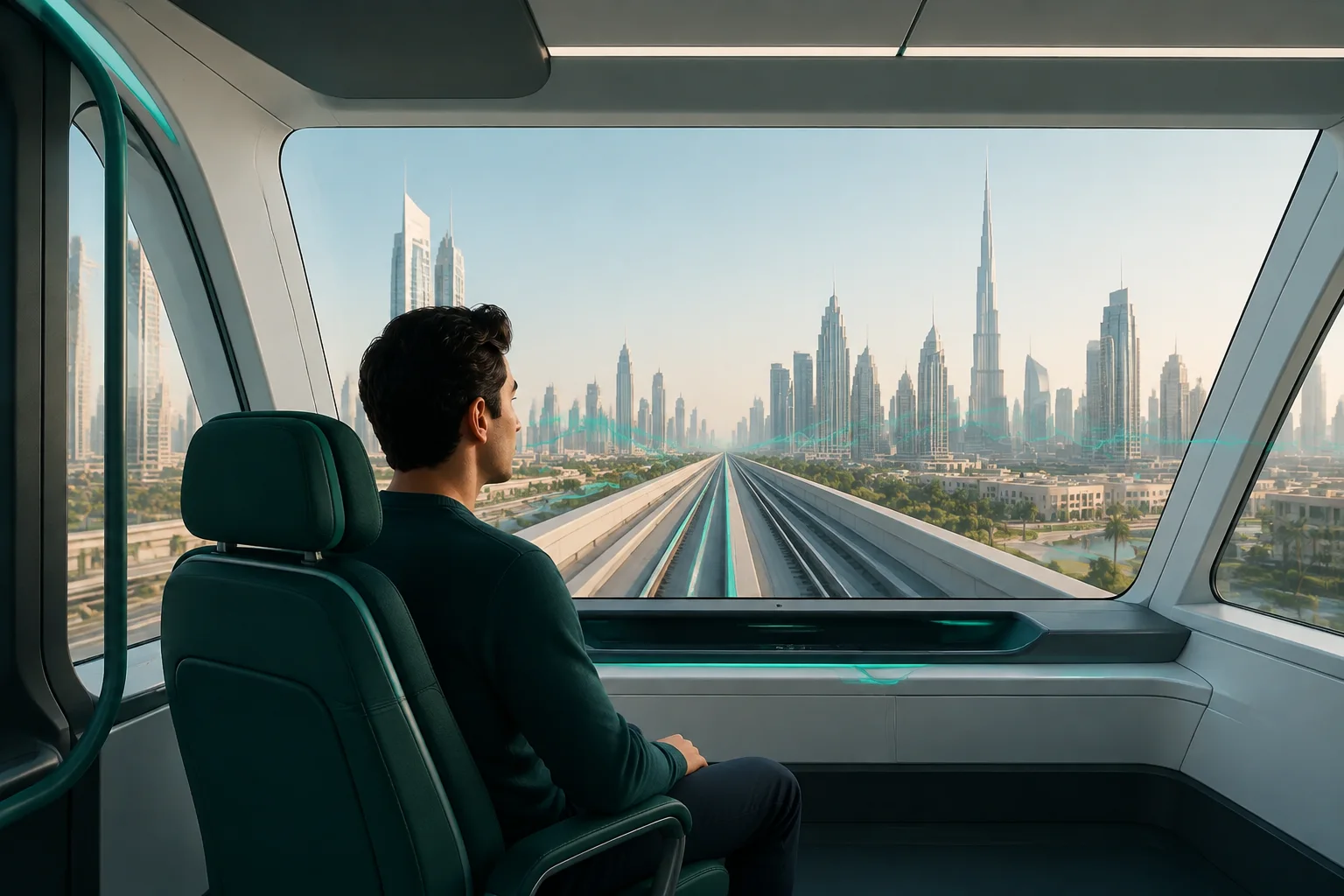
Dubai puts three motion sickness triggers in one city: curved elevated highways with frequent elevation changes, a driverless metro that accelerates and banks through tight curves, and desert safaris built specifically around violent vehicle motion. Travel off-peak, sit forward-facing with a view out, pre-cool the car, and treat dune bashing as the hardest thing on the itinerary rather than a bonus.
Dubai's spectacular growth has created one of the world's most dynamic cities, but navigating its bustling highways, curved metro lines, and rapid urban expansion can trigger motion sickness for many residents and visitors. From the winding roads through Dubai Hills to the busy Sheikh Zayed Road, motion sickness is a common concern in the Emirates.
Here's how to plan around it and enjoy comfortable travel throughout the UAE.
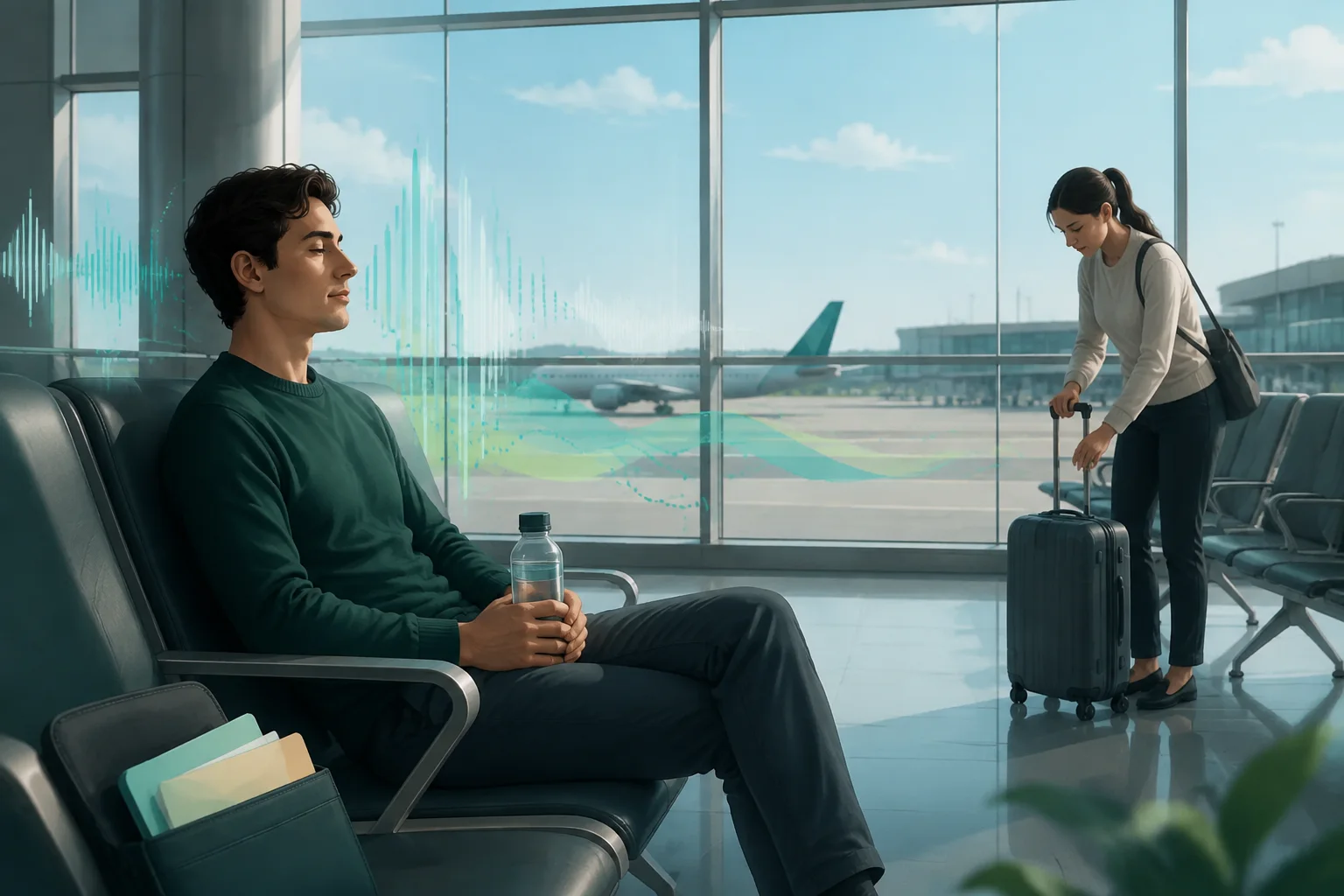
Try Dizzout free. Drug-free, works in the heat and in traffic, about 90 seconds on any headphones.Free · works with any headphones · no account to try
Free to try, no card needed. Or go straight to the App Store or Google Play.
Dubai's unique travel challenges
Dubai's rapid development has created travel conditions that can trigger motion sickness more frequently than in other cities. Understanding these unique challenges is the first step to prevention.
Dubai-specific travel tips
Living in or visiting Dubai calls for specific strategies. Here are tips tailored to the UAE's environment.
Peak hours and route planning
- Travel during off-peak hours (10 AM to 4 PM)
- Use a maps app to pick smoother routes
- Avoid Al Khail Road during rush hour
- Choose coastal routes when possible for straighter paths
Vehicle comfort in Dubai heat
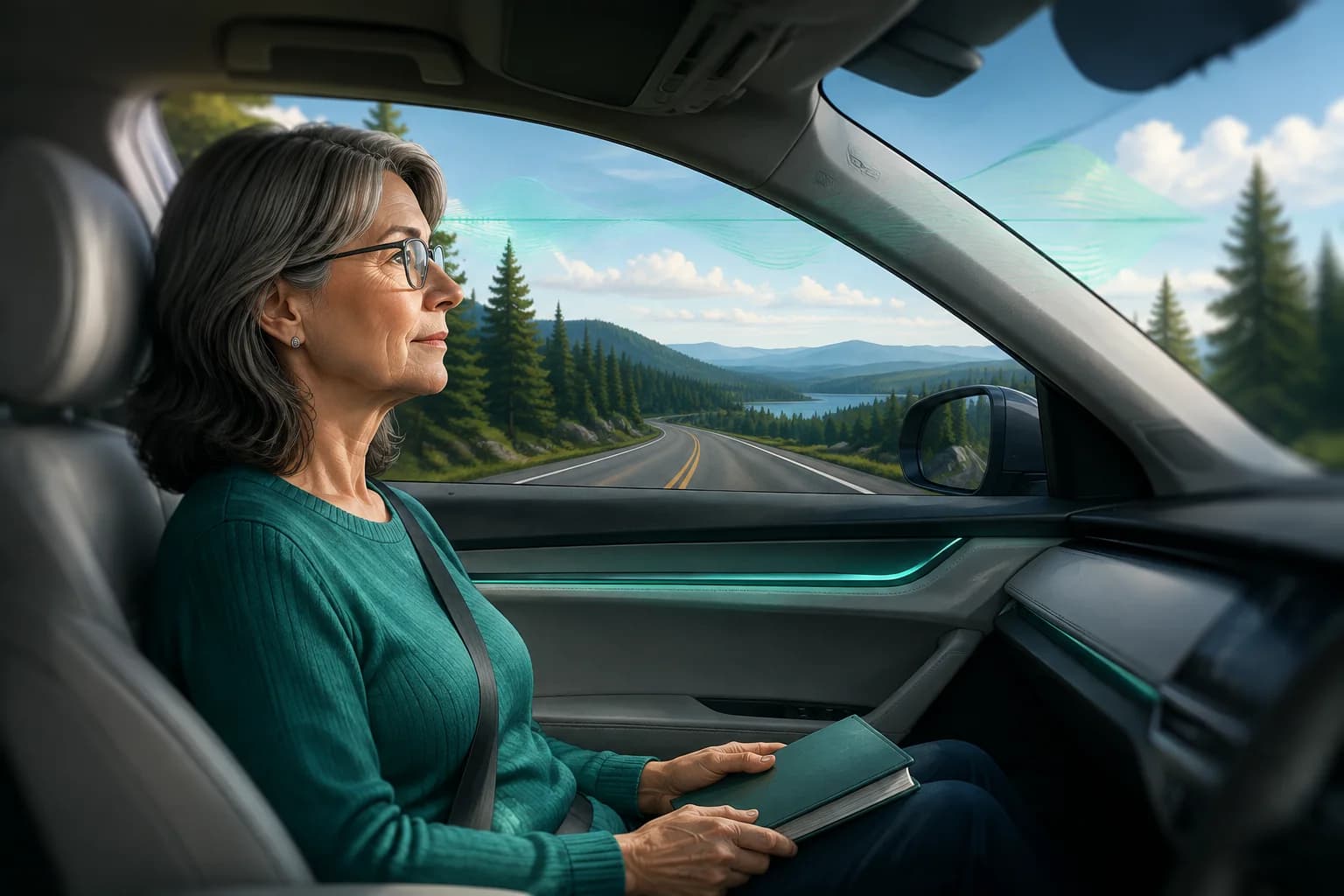
- Pre-cool your car before travel
- Use sunshades to reduce glare
- Keep windows slightly cracked for air circulation
- Stay hydrated, but avoid large amounts of fluids in one go
Metro and public transport
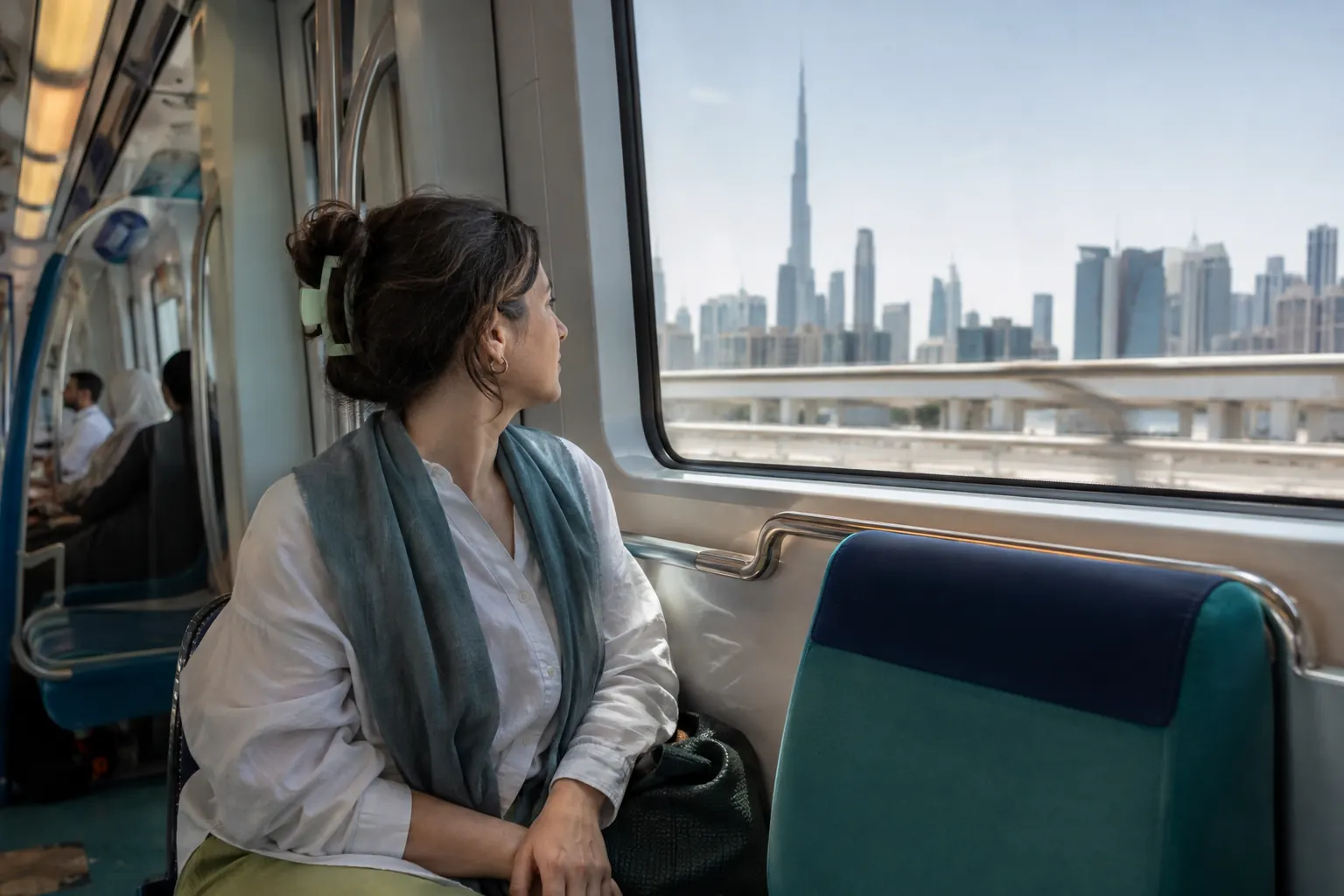
- Sit facing the direction of travel
- Choose seats near the center of the car
- Avoid using phones during curves
- Focus on distant landmarks through windows
Dubai's transportation, ranked by how it feels
Easiest on a sensitive passenger
- Dubai Metro: smooth, air-conditioned, gentle acceleration, good views
- Dubai Tram: ground level, minimal motion, panoramic windows
- Newer taxis and rideshares: better suspension, front passenger seat
Plan ahead for these
- Desert safari vehicles: dune bashing is the hardest motion on any itinerary
- Water taxis: creek crossings can be choppy, stay on deck for air
- Bus tours: stop-start traffic plus strong air conditioning
How each mode tends to feel, not measured effects. Sensitivity varies.
- CarFront seat, pre-cooled, window cracked
- MetroForward-facing, centre of the car
- Bus tourFront seats, eyes on the road
- Water taxiStay on deck, horizon in view
Seating advice follows the same pivot-point logic in every vehicle.
Routes that catch people out
These are the drives locals mention most often as hard on a motion-sensitive passenger. If one of them is a daily commute, plan the seat and the timing rather than hoping.
- Dubai Hills to Downtown Dubai
- Jumeirah to Dubai Marina curves
- Al Barsha to Business Bay
- Arabian Ranches to DIFC
- Dubai South to JLT
- Sharjah to Dubai commuter routes
- Dubai Festival City to Palm Jumeirah
- Mirdif to Dubai Mall
For the commute and the dunes
Stop the nausea
In stop-start traffic on Sheikh Zayed Road there is no horizon worth looking at, and on a dune drive there is no steady anything. Dizzout plays precisely calibrated audio through any headphones. Drug-free, about 90 seconds.
Free to try, no card needed. Or go straight to the App Store or Google Play.
 Scan to open on your phone
On a computer? Dizzout installs on your phone. Scan the code, or open dizzout.com/get on your phone and it'll take you straight to the right store.
Getting there: flight strategies
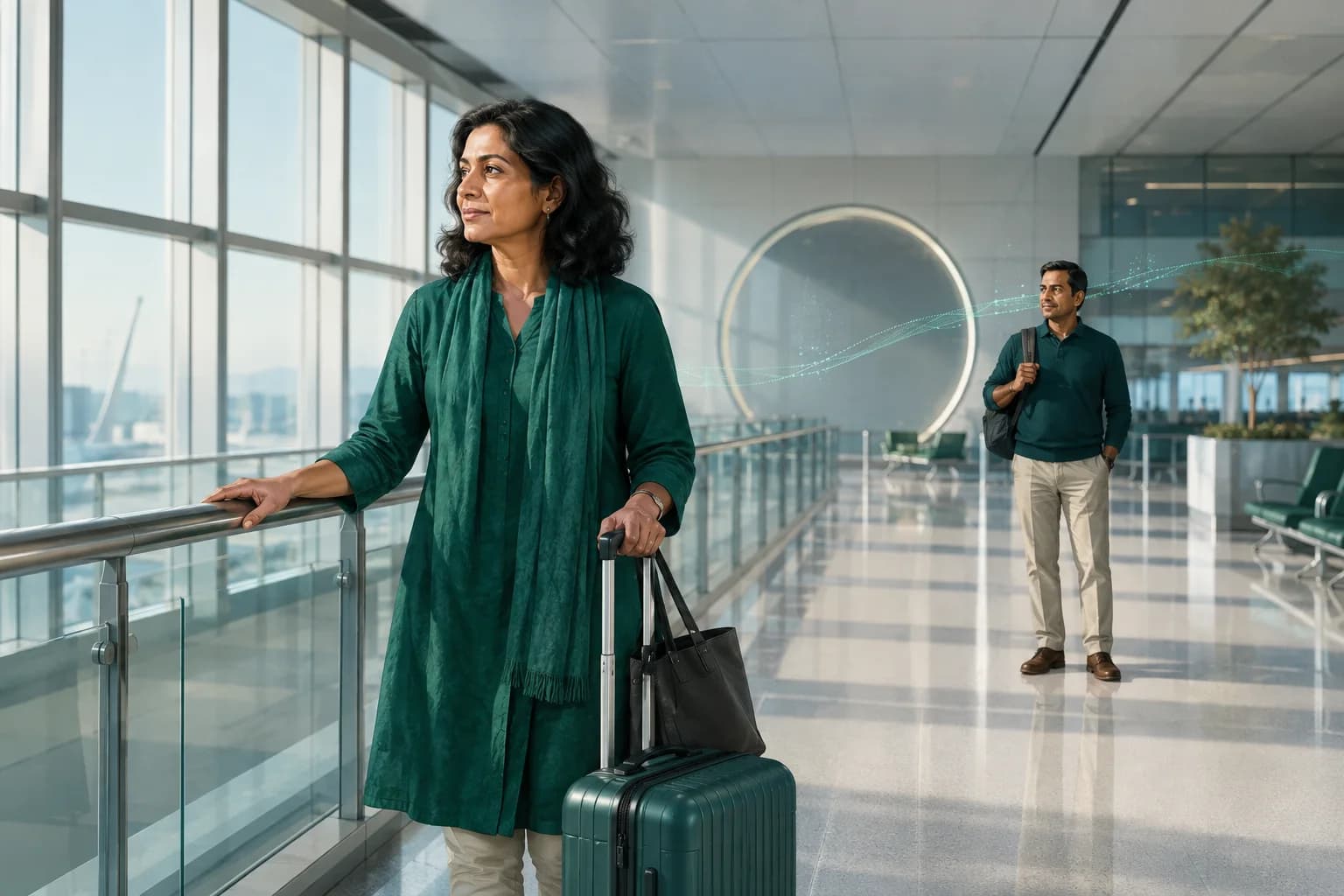
Your Dubai trip begins the moment you step on the plane, and long-haul flights are their own challenge for motion-sensitive travelers. The seat rules are the same ones that apply everywhere, and we go through them properly in the window seat guide.
- Steadiest:
- Over the wing. It is the aircraft's pivot point, so vertical motion is smallest here.
- Okay:
- Forward of the wing. Steadier than the tail, without the wing's full advantage.
- Worst:
- The very back. Motion is amplified furthest from the pivot point.
- Best: over the wing, window seat, front of cabin, lower deck on double-deckers
- Avoid: back of the plane, near galleys, middle seats, exit rows
Attraction-specific tips
Dubai's attractions are designed to amaze, and some of them are designed around motion. Here's how to enjoy each without discomfort.
Burj Khalifa lifts
- Run a session before you queue, if that is part of your routine
- Face forward and watch the floor indicator
- Take deep, steady breaths
- Book during less busy times
Desert safari
- Eat light meals 2 to 3 hours beforehand
- Sit in the front passenger seat
- Keep windows slightly open for fresh air
- Bring motion sickness medication as backup, and ask the operator to ease off if you need them to
Frequently asked questions
Why does driving in Dubai trigger motion sickness so often?
The combination of curved elevated highways, frequent elevation changes, construction detours and high-speed stretches gives the inner ear a lot to process, while passengers usually have their eyes on a phone. Add extreme heat and a heavily air-conditioned cabin and the threshold drops further.
Is the Dubai Metro good or bad for motion sickness?
Generally good. It is smooth, air-conditioned and accelerates gently, and the windows give you a distant visual reference. The curves are what catch people out, so face the direction of travel, sit near the centre of the car, and keep your eyes off your phone through the bends.
How do I survive a desert safari if I get car sick?
Treat dune bashing as the hardest motion of the trip. Eat light two to three hours before, take the front passenger seat, keep a window slightly open, and tell the driver if you need them to ease off. Bring whatever remedy normally works for you.
Does the heat make motion sickness worse?
A hot, stuffy cabin lowers the threshold at which the sensory mismatch tips into nausea, which is why pre-cooling the car and keeping air moving helps. The transition between air-conditioned indoors and 45C outdoors is its own shock to the system.
Someone you know gets motion sick?
Send them this guide. It might be the trip it saves.
Your next question, probably
Which seat, on which vehicle?
Seat by seat, every vehicle
If that is not your question:
About this article
This article is informational and not a substitute for medical advice. Place and company names are trademarks of their respective owners; Dizzout is not affiliated with or endorsed by them.