
Why a Mazda back seat can still make you car sick, and what helps
Mazda is the brand engineered partly against car sickness: G-Vectoring Control makes tiny torque adjustments the moment you steer, smoothing weight transfer so your head sways less, and it is often recommended for motion-prone passengers. The catch owners report is in the back. Mazdas ride deliberately firm and sporty, the CX-30 sits on a short wheelbase, and rear-seat riders are the ones who still describe queasiness, with owner comparisons between the CX-30 and CX-5 back seats genuinely split.
G-Vectoring smooths the front; the firm ride reaches the back
Try Dizzout free. Put it on your phone before you go, so it is there when you need it. Drug-free, any headphones.Free to download · works with any headphones
Stop car sickness. Free to download. Paid subscription for full access.
Why it happens in a Mazda
Two Mazda design choices pull in opposite directions for a sensitive passenger. The first helps: G-Vectoring Control, and the GVC Plus that followed, trims engine torque almost imperceptibly on turn-in, shifting a little weight to the front tires so the car settles into corners with less side-to-side head sway. JD Power notes the system is often recommended for passengers prone to motion sickness, and Mazda tunes its ride around human balance rather than raw firmness. The second cuts the other way: Mazda deliberately tunes taut, sporty suspensions, and reviewers describe the CX-30 in particular as firm and occasionally jittery on rough pavement, on a wheelbase of roughly 104 inches that translates undulations into more pitch. GVC's effect is also felt most up front, while the riders who report queasiness are mostly in the back, where a high beltline and smaller rear glass limit the forward view. Owner threads comparing the two back seats reach no verdict, which is itself the honest answer: this is a helps-but-not-a-cure brand.
G-Vectoring Control Plus
Tiny automatic torque adjustments on turn-in shift weight to the front tires, so the car settles into corners with less side-to-side head sway. Often recommended for motion-prone passengers, and felt most from the front seats.
A deliberately firm, sporty ride
Reviewers praise the sharp handling and minimal body roll and note the ride is on the firm side, with the CX-30 letting jitters through on rough pavement. Some sensitive riders find a low-roll car steadier; others prefer softer.
The CX-30's short wheelbase
At roughly 104 inches it reacts to undulations with more pitch than the longer CX-5 over the same stretch of road.
Rear-seat sightlines
Coupe-influenced styling, a high beltline and smaller rear glass limit a back-seat rider's view of the road ahead, which is one of the strongest defenses against car sickness.
Back-seat riders are the ones who report it
Drivers and front passengers rarely complain; the queasiness reports in owner forums come from the rear, and direct CX-30-versus-CX-5 rear-seat comparisons are inconclusive.
One car makes you sick and another does not? Why certain cars make you car sick covers the three causes, whatever the brand.
What actually helps in a Mazda
1. Front seat for the sensitive rider
The front passenger seat gets the clearest forward view and the most benefit from GVC's smoothing. It is the single biggest improvement over the back.
2. Let GVC do its work
Drive smoothly: brake and accelerate gradually so deceleration feels predictable, and take corners gently. The system smooths weight transfer; it does not fix abrupt inputs.
3. Keep screens out of the back seat
Looking down at a phone or book widens the eye-versus-inner-ear mismatch, and the rear of a firm-riding car is the worst place to do it.
4. Fresh air at face level
Crack a window or aim a vent; cool moving air is the simplest way to ease early queasiness.
5. Test-drive both back seats before buying
If the rear-seat rider is the sensitive one, sit them in the CX-5 and the CX-30 back to back. Owner reports on which feels steadier are split, so your passenger is the tiebreaker.
Comparing apps for the drive? The car sickness app guide sets sound therapy against on-screen motion cues, free options included.
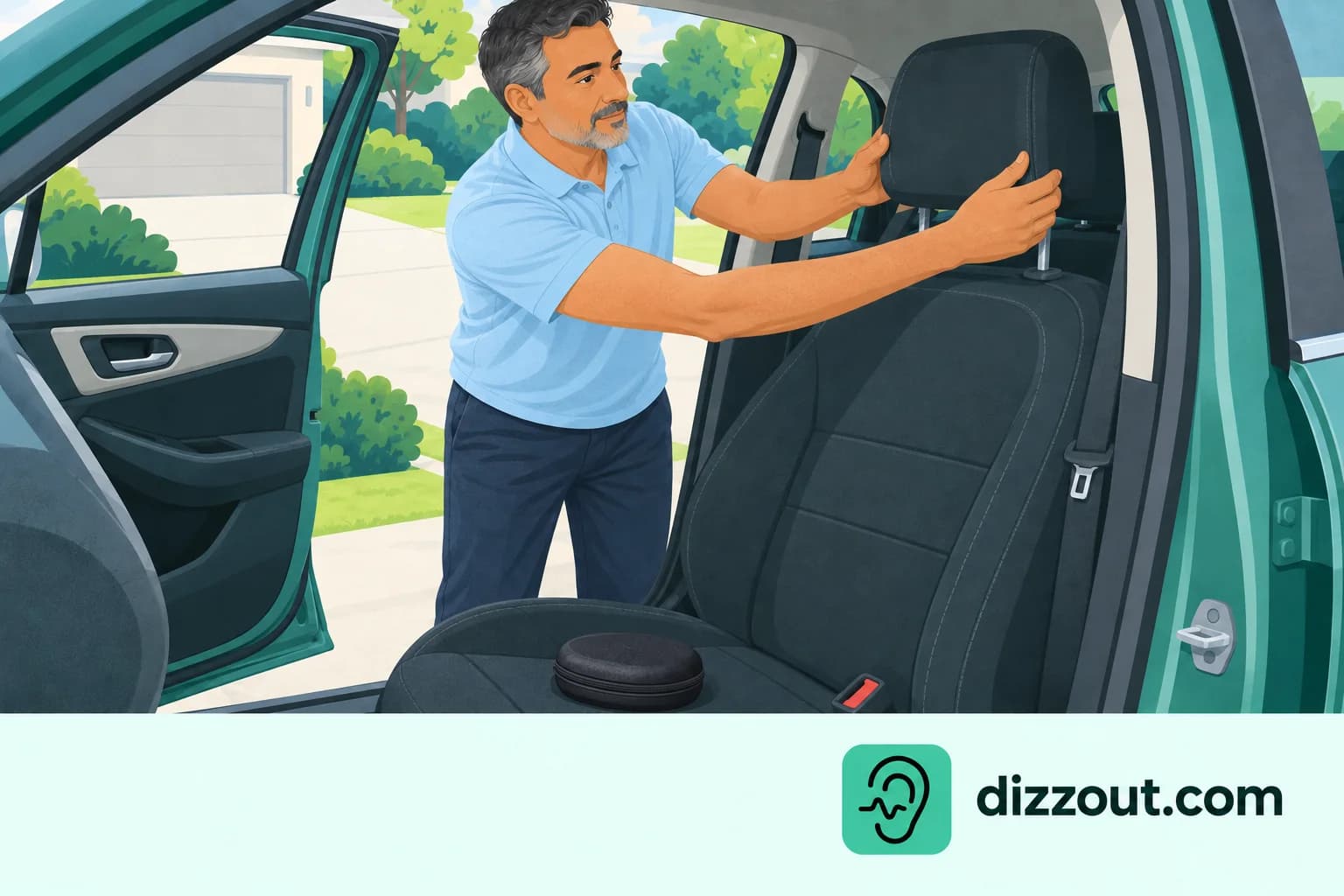
Set up while parked
Arrange your passenger space before departure. Keep ordinary headphones for Dizzout accessible and clear of the seat belt.
Free to download. Paid subscription for full access.
Mazda model by model
The CX-5 is the longer, slightly softer one whose G-Vectoring story reads best; the CX-30 shares the system but pairs it with a shorter wheelbase and sportier tuning, so its ride is firmer and its back seat divides owners. Both keep body roll low, and both put their most comfortable experience up front.
| Model | Type | Powertrain | Reader-reported risk |
|---|---|---|---|
| Mazda CX-30 | Subcompact SUV | ICE | moderate |
| Mazda CX-5 | Compact SUV | ICE | low |
Risk levels summarise what owners and passengers commonly report, not measured testing.
Frequently asked questions
Does Mazda's G-Vectoring Control prevent motion sickness?
It helps rather than prevents. GVC makes small automatic torque adjustments the moment you steer, cutting the abrupt weight shifts and head sway that unsettle the inner ear, and it is often recommended for motion-prone passengers. Owner discussions are equally clear that it is not a cure, especially for rear-seat riders, so treat it as a real advantage that still needs good seating and smooth driving.
Why do I get car sick in the back of a Mazda but not the front?
Three reasons stack. GVC's smoothing is felt most from the front seats. The firm, sporty tuning that keeps body roll low also passes more road texture to the rear. And the high beltline with smaller rear glass limits your view of the road ahead, which is what normally keeps a sensitive passenger comfortable. Moving to the front seat addresses all three.
CX-30 or CX-5 if my passenger gets car sick?
Owner comparisons, including direct rear-seat threads, are inconclusive. Both carry G-Vectoring Control Plus; the CX-5's longer wheelbase soaks up undulations a little more, while the CX-30 is sportier and firmer. The reliable answer is to test-drive both from the back seat with the actual passenger.
Related
Sources & further reading
Your next question, probably
Which model do you actually ride in?
Every model we cover, each with its own seat and setup notes
If that is not your question:
Based on publicly reported owner and passenger experiences and each vehicle's documented design, as of July 2026. Regenerative braking and the other characteristics described here are deliberate engineering choices, not faults: this page is about how they feel to motion-sensitive passengers, and sensitivity varies from person to person. Vehicle and brand names are trademarks of their respective owners; Dizzout is not affiliated with or endorsed by them. Specifications and software features change; check the manufacturer's current documentation. Informational only, not medical advice.