
Lake vs ocean: where do people get more seasick?
The surprise answer: plenty of people get seasick on lakes, and on a windy day a small boat on a big lake can outdo the ocean. The difference is wave shape. Open-ocean swell arrives as long, spaced rollers a boat rides like slow hills; lake waves are short, steep and stacked close together, because shallow water and limited distance squeeze the same wind energy into quick, jarring chop. Great Lakes sailors treat their water with more respect than newcomers expect for exactly this reason. Neither water body wins outright: calm days are calm everywhere, but wind on a lake bites faster than its size suggests.
"It's just a lake" has preceded a lot of miserable afternoons. People who plan carefully for ocean outings routinely board lake boats with no precautions at all, then discover that twenty minutes of steep chop can do what an hour of rolling swell never quite managed.
The comparison is worth getting right because the two waters really do move boats differently, and because the deciding factors, wind, boat size and where you put your eyes, are things you can check and choose before you leave the dock.
Whichever option you pick, Dizzout is a drug-free backup for the moment nausea starts: precisely calibrated sound on any headphones, free to try on iOS and Android.
Free to try, no card needed. Or go straight to the App Store or Google Play.
Lake vs ocean boating for seasickness
| Factor | Lake | Ocean |
|---|---|---|
| Wave shape in wind | Short, steep, stacked chop | Long, spaced swell plus local chop |
| Motion delivered | Quick, jarring, irregular pitching | Slow rhythmic rise and fall |
| Typical boats | Small: fishing boats, pontoons, dinghies | Everything up to stabilized ships |
| How fast conditions change | Fast: wind builds and dies with the day | Slower: swell persists after wind |
| Predictability from forecast | High: wind forecast tells the story | Moderate: distant storms send swell |
| Common mistake | No precautions because it is a lake | Underestimating small-boat trips |
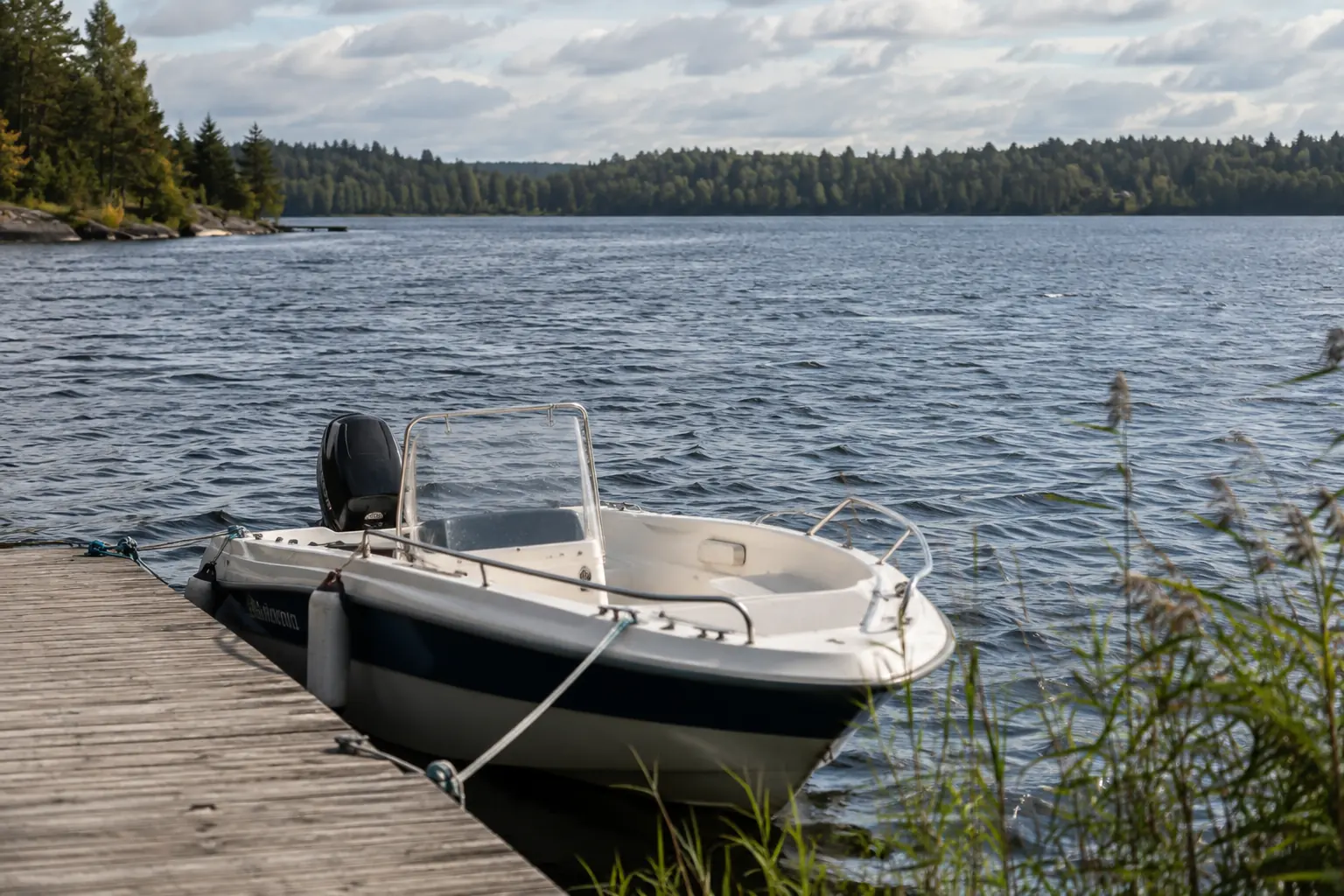
Wave shape is the whole story
Waves are built by wind blowing over distance, and the water's depth and size set the wave's shape. The open ocean gives storms thousands of miles of fetch, producing swell: tall perhaps, but long and widely spaced, so a boat rises and falls in slow rhythmic hills. Lakes offer wind a short runway and shallow water, which compresses the energy into waves that are shorter, steeper and only seconds apart.
For inner ears, spacing beats height. A long ocean swell moves you through a few big, slow cycles a minute; steep lake chop delivers quick, irregular pitching that repeats relentlessly, closer to a washboard than to hills. That is why experienced Great Lakes boaters describe rough days there as harder on crews than bigger-numbered days offshore, and why the sickness on a lake often arrives faster than newcomers believe possible.
Boat size resets the comparison
Most lake time happens on small craft: fishing boats, pontoons, runabouts, sailing dinghies. Small boats feel everything, so the average lake outing pairs the harsher wave shape with the most responsive hull, a combination that explains most it-was-just-a-lake stories. The ocean side of the ledger includes everything from kayaks to cruise ships, and on the big end, size and stabilizers absorb swell almost entirely.
Compare like with like and the picture sharpens: a small boat in ocean swell is often a gentler ride than the same boat in lake chop, while any large vessel beats both. If you get to choose the boat for a windy day, choose length and weight before you choose the water.
Reading the day before you commit
Lakes telegraph their mood through the wind forecast. Because lake waves are wind-driven and die quickly when the wind drops, the forecast wind speed and direction tell you most of what the afternoon holds, and a long fetch, wind blowing down the lake's full length toward your area, is the setup that builds the worst chop. Morning outings dodge the daily wind build-up on most lakes, the same pattern that makes early boat trips calmer at sea.
On the water, the usual rules hold: eyes on the shoreline or horizon rather than the deck or a phone, fresh air over cabin air, a settled stomach over an empty one, and the bow area avoided in chop, since pitching is strongest there. And take lake trips as seriously as sea trips when packing whatever usually helps you; the water does not care what it is called.
When to use which
Treat a windy lake day like a sea day: check the wind forecast against the lake's long axis, prefer the morning slot, pick the biggest boat available, and bring whatever normally helps you afloat. Prefer the ocean outing when it comes on a large or stabilized vessel in ordinary conditions, and respect it in small craft when swell is running. On either water, the in-the-moment playbook is identical: horizon or shoreline in your eyes, wind on your face, middle of the boat over the bow, and early action at the first hint rather than heroics at the rail.
Try drug-free motion sickness relief
Try Dizzout Free
Free to try on iOS and Android · ~90 seconds · works on any headphones.
Frequently asked questions
Can you actually get seasick on a lake?
Yes, and it is common. Lake waves in wind are short, steep and close together, because limited distance and shallow water compress the wind's energy, and that quick irregular pitching is hard on inner ears, often harder than larger but slower ocean swell. Small boats, the typical lake craft, feel all of it. The Great Lakes are the famous example, rough enough in weather to be treated like inland seas, but any sizeable lake produces real chop when the wind blows down its length.
Why does lake chop feel worse than bigger ocean waves?
Spacing. An ocean swell may be taller, but its crests arrive many seconds apart, so a boat rides slow hills your body can find a rhythm in. Lake chop arrives every second or two, steep-faced and irregular, delivering constant abrupt pitching with no rhythm to settle into. Repetitive, unpredictable motion is what builds nausea, and chop is precisely that. Boaters summarise it neatly: a big soft sea is easier company than a short sharp chop.
Are the Great Lakes really rough enough to cause seasickness?
Genuinely, yes. They are large enough for serious fetch but shallow enough to keep waves short and steep, and in wind they produce conditions experienced sailors describe as more punishing, foot for foot, than open-ocean swell. Boating guidance for the Great Lakes treats seasickness as a standard preparation topic. On calm summer days they are as gentle as any water; the point is to read the wind forecast, not the word lake.
Water is water, and wind does not check the map label. Judge the day by the forecast and the boat, not by lake versus ocean, board small craft with the same respect everywhere, and let the mornings and the big hulls do their quiet work for you.
Related comparisons
- Which boat trips make people seasick
- Morning vs afternoon boat trips
- Deep sea fishing and seasickness
- Seasickness: why boats do this and what helps
- All motion sickness comparisons
This page is general information, not medical advice; individual reactions to water motion vary. Check marine forecasts and follow local boating safety guidance: rough-water judgment is a safety matter before it is a comfort one.