The short answer
One rough crossing or one flight spent with your head in a bag can make the next trip frightening for years. That is not weakness; nausea is one of the body's fastest and most durable lessons, and the brain files a bad trip under never again. The dread it leaves then makes the next trip more likely to go badly, because expecting to be ill is linked to being ill. The way out is to make the next trip different on purpose, with the seat, the month, the food and a sound session before the motion starts, and then to notice that it went better.
The crossing was four hours. I remember about forty minutes of it, all of them on the floor of the toilets. For three years after that I took the long way round by road, and I told myself it was a preference.
Prone to motion sickness? Drug-free sound therapy: Prepare Me before the motion starts, Motion Sickness Relief if it starts anyway.Starts in your browser · works with any headphones
Get your personalized Dizzout plan. Paid subscription for full access.

On your phone? Scan to start there.
Why one trip teaches so fast
Being violently sick is exactly the kind of event the brain is built to remember. It felt like poisoning, so everything around it gets tagged as dangerous: the ship, the smell of the lounge, the engine note, even the word ferry. The next time those cues appear, the body starts the response early as a warning. Then expectation does the rest. Among 239 passengers surveyed over four years on Southern Ocean voyages, expecting to be ill was one of five factors associated with actually being ill.
So the fear is not a prediction. It is a memory wearing a prediction's clothes.
A bad memory or a real risk?
I went back over that crossing. It was January, in a strait the sea pages rate as rough in winter. I had not slept. I had a hangover. I sat in a windowless lounge and read. Four of the five things that make motion sickness worse, and the fifth, the weather, was the one I had blamed. The predictor estimates your risk for a specific trip from your history and its conditions, which turns out to be a more honest guide than the memory.
If the swaying continued for a day or two after you got home, that was land sickness, normal, and it passes. If dizziness or nausea happen now without any travel, see a doctor; that is a different question.
The different trip
- A calmer month, or a shorter crossing. You are allowed to choose the gentle version first.
- The seat or cabin that moves least. Midships and low on a boat, over the wing on a plane, the front seat in a car.
- Sleep behind you, food in your stomach, no alcohol. Each one raises the threshold.
- 10 to 30 minutes before the motion starts: headphones on. If you use Dizzout, run Prepare Me, the same sound session in a quicker form, built for before a trip you expect to be rough. Then slow breathing with a long exhale.
- A plan for the first sign of queasiness, so it does not become a crisis: horizon, air, slow exhale, press play on Motion Sickness Relief. Dizzout states relief in about 90 seconds.
- Afterwards, say out loud that it went better. The body learns from good trips too, but only the ones you let it count.
What happened
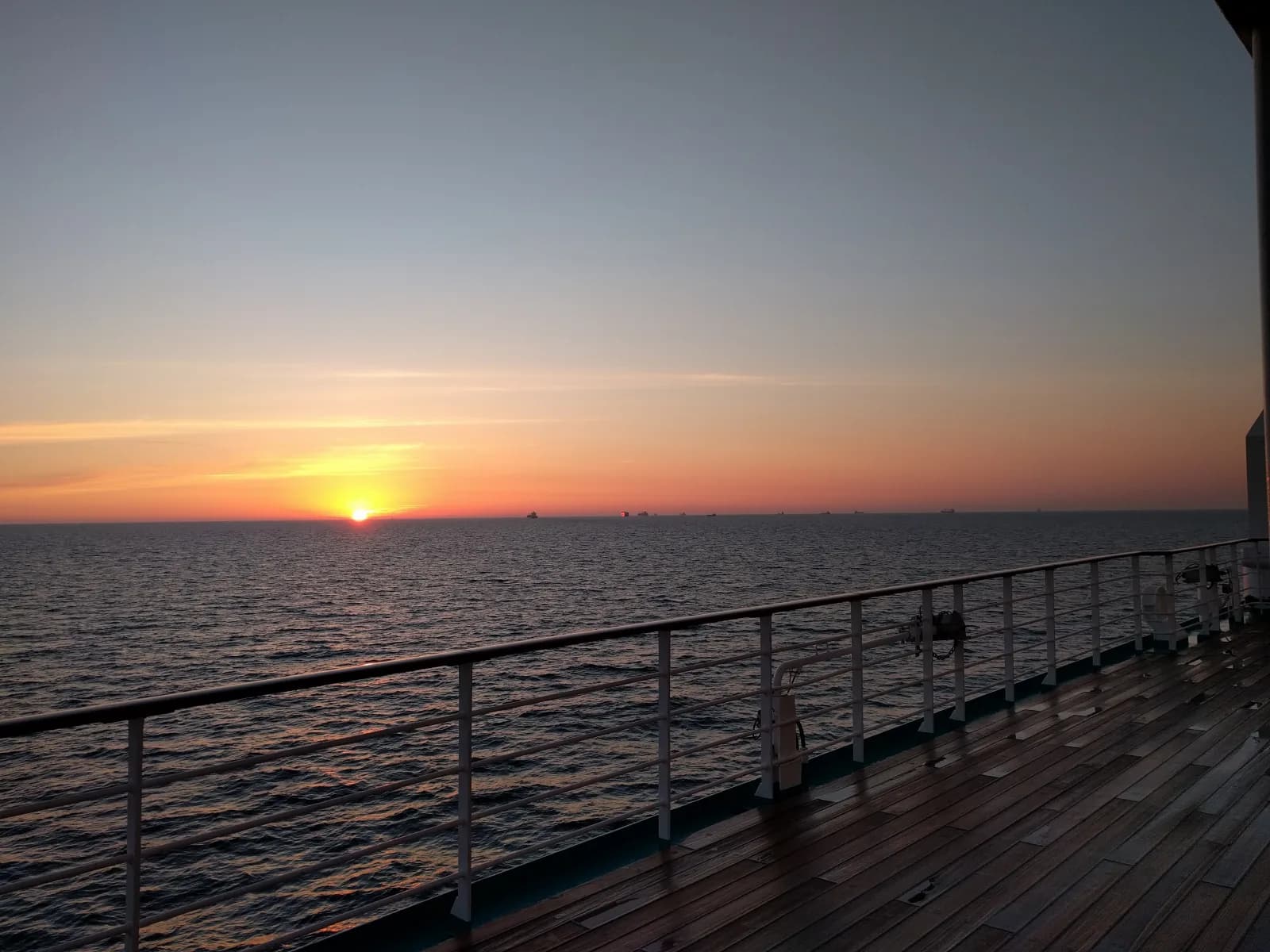
The crossing I finally took was in June, in the morning, on a full stomach and a full night's sleep, on the open deck in the middle of the ship with my eyes on the shore. It was dull. That is the best review a crossing can get. The third one I barely thought about, which is the whole point: the dread does not fade with time, it fades with evidence, and the only way to get evidence is to go.
If the fear is bigger than one trip, if it is stopping you from going places you want to go, a therapist who works with phobias can help, and that help works. The emetophobia page is the place to start reading.
Make the next trip the different one
Stop Motion Sickness Now
Dizzout is drug-free sound therapy through any headphones. Run Prepare Me in the 10 to 30 minutes before the motion starts, and Motion Sickness Relief if it starts anyway, with relief in about 90 seconds. Free to download.
Get your personalized Dizzout plan. Paid subscription for full access.
30,000+ travelers in 30+ countries · How we count

On your phone? Scan to start there.
Comparing apps first? See how the motion sickness apps compare
Frequently asked questions
Why am I scared of boats after getting seasick once?
Because being sick is one of the body's strongest lessons, and the brain tagged everything about that trip as dangerous. The fear is a learned response, not a prediction. Look at what caused that trip and make the next one different; it usually goes better, and the body learns from that too.
How long does the dread last after a bad trip?
Until a trip goes well. It does not fade much with time on its own; it fades with evidence. One or two trips planned differently, that go better than feared, loosen it considerably. If it is stopping you travelling, a therapist can help.
Will I be sick again next time?
Not necessarily. Most bad trips had causes: rough weather, the wrong seat, no sleep, no food, a screen. Change those, have a plan for the first sign of queasiness, and run a sound session before the motion starts if you use Dizzout. Expecting to be sick makes it more likely, so the plan is partly there to replace the expectation.
Someone you know gets motion sick?
Send them this guide. It might be the trip it saves.
Your next question, probably
The dread after a bad trip, in full
Bad memory or real risk?
Not your question? Will this trip make me sick?Why is the first time the worst?Can I build tolerance between trips?
About this article
by the Dizzout editorial team.
- Besnard et al., 2021: Motion sickness lessons from the Southern Ocean, 239 passengers (Aerospace Medicine and Human Performance)
- NHS: Motion sickness
This article is informational and not medical advice. Dizzout is a wellness app for motion sickness and does not treat anxiety. If fear is stopping you from travelling, talk to a doctor or therapist.