The short answer
Because dehydration is only part of it. Alcohol shifts the density balance inside the inner ear, so head position starts producing a motion signal your body is not making. While your body clears the alcohol that effect runs backwards, and the clearing phase ends where NIAAA puts the peak of a hangover, which is usually the morning you are the one travelling. Put a coach or a ferry on top of that and your brain has two signals to reconcile that disagree.
You have done this journey before. Same road, same ferry, and it was fine. Today, one day after a wedding or a festival, forty minutes in the back of a coach and you are counting exits.
The usual explanation is water: you are dehydrated, drink more. True, and half an answer. Alcohol has a documented effect on the balance organ itself, and that effect has a second phase that arrives while you sober up.
Prone to motion sickness? Drug-free relief through the headphones already in your bag. No drowsiness, about 90 seconds.Starts in your browser · works with any headphones
Get your personalized Dizzout plan. Paid subscription for full access.

On your phone? Scan to start there.
The dehydration answer is not wrong, it is incomplete
The National Institute on Alcohol Abuse and Alcoholism lists fatigue, weakness, thirst, headache, nausea, stomach pain, vertigo, light and sound sensitivity, anxiety and sweating among the symptoms. It names several causes:
- Mild dehydration. Alcohol suppresses vasopressin, so the kidneys stop holding fluid and you lose more than you take in.
- Disrupted sleep. People fall asleep faster, then sleep in fragments and wake early.
- Gastrointestinal irritation. Alcohol irritates the stomach lining and increases acid release, which NIAAA links to nausea and stomach discomfort.
- Inflammation, acetaldehyde, and a rebound as the calm of the night before wears off.
Two details matter for travel. Vertigo is on that list, next to nausea, and vertigo is a balance symptom rather than a stomach one. And NIAAA is specific about timing: symptoms peak when blood alcohol returns to about zero, and can last 24 hours or longer. The worst of it lands after the alcohol has gone.
Dehydration explains thirst, fatigue and the headache. It does not explain why turning your head to look out of a window feels wrong. For that, go one layer down.
What alcohol does to the balance organ
Each inner ear holds three fluid-filled loops, the semicircular canals. Each has a small flexible flap, the cupula, standing in fluid called endolymph. The two normally have almost the same density, and that match is the trick: a cupula that neither floats nor sinks is one gravity cannot push. The canals report turning, and nothing else.
Alcohol breaks the match. A scoping review of the light cupula in Brain Sciences describes ethanol, specific gravity 0.79, diffusing from the bloodstream into the cupula faster than into the endolymph, which leaves the cupula lighter than the fluid around it. A review of canal biomechanics in the Journal of Neurophysiology puts ethyl alcohol about 20 percent lighter than endolymph, and says alcohol entering the endolymph generates a buoyancy force that depends on gravity.
A cupula that floats is one gravity can push. Head position now produces a rotation signal when nothing is rotating. Clinicians see it as a particular eye movement and call it positional alcohol nystagmus. You feel it as the bed spinning.
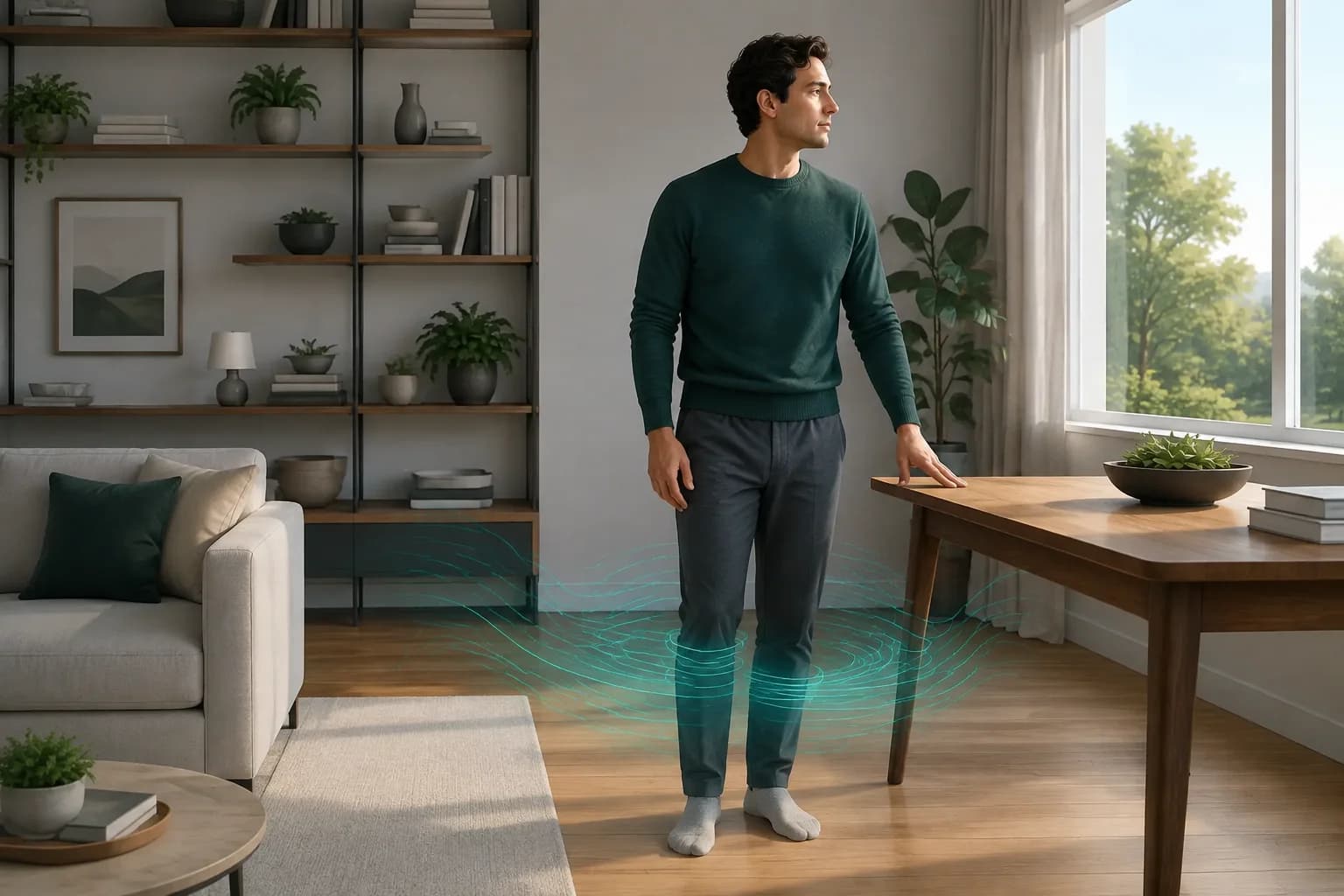
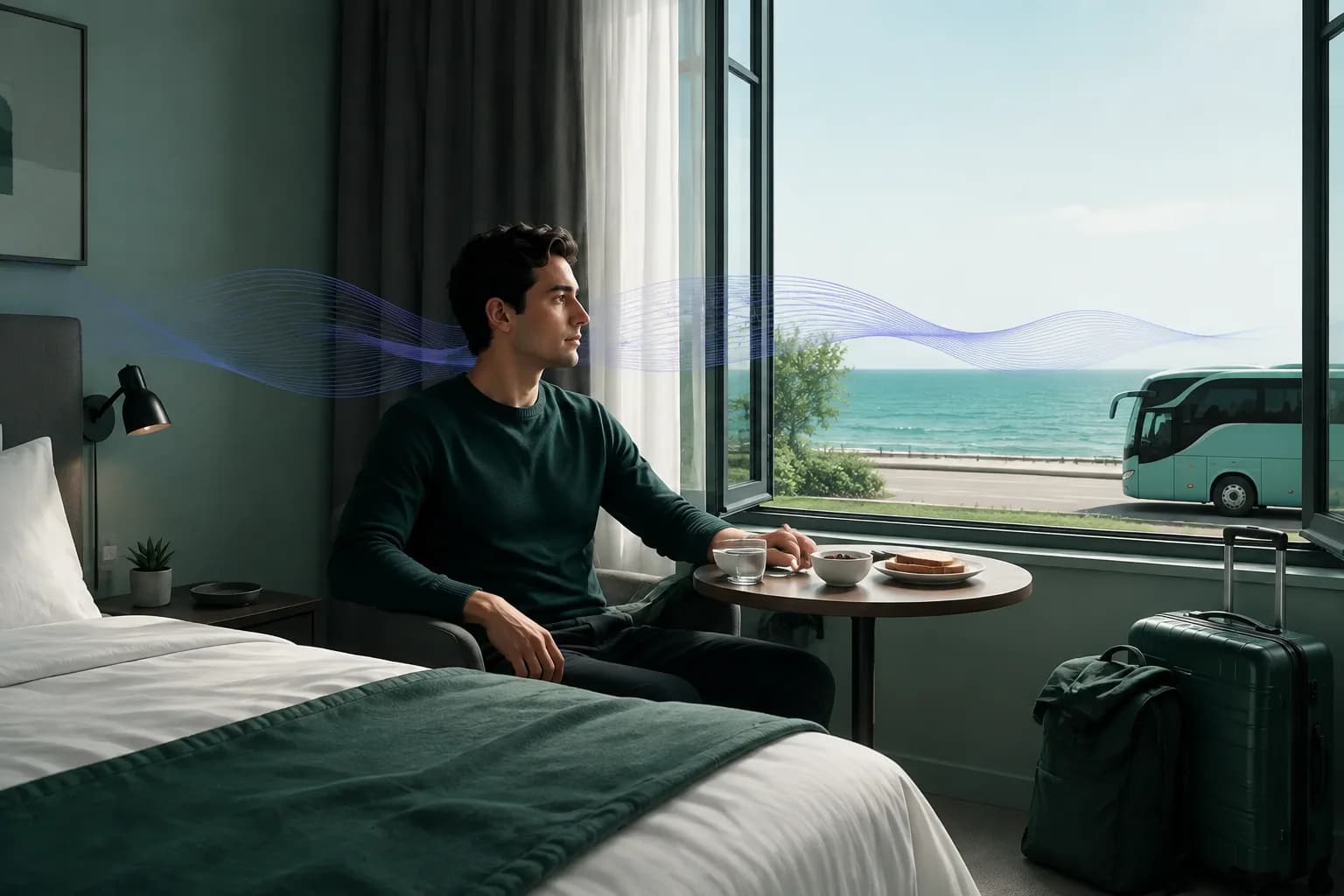
The mechanism described in this article, drawn with the false signal coming from the ear rather than the eyes.
The next day reversal, and why it outlasts the headache
Here is the part that almost never gets written down. The effect does not simply fade. It flips.
Alcohol reaches the cupula first on the way in, so the cupula floats. On the way out it leaves the cupula first too, so the cupula ends up the heavier of the two. The canal biomechanics review describes what follows: during clearance the direction of alcohol transport reverses, the force on the cupula reverses sign, and the nystagmus reverses with it. The literature calls the two phases PAN I and PAN II.
PAN II belongs to the clearing phase, not the drinking phase. It runs on the falling side of the curve, the stretch that ends where NIAAA puts the peak of the hangover. Your blood is catching up faster than your balance organ is. How long that lasts is not something the papers put a number on, and it will not be the same for two people at the same table.
While drinking
Alcohol reaches the cupula faster than the fluid around it. The cupula floats, and head position starts producing a signal it should not.
Clearing
Alcohol leaves the cupula first. It is now the heavier of the two, and the force on it reverses.
The morning after
Blood alcohol is heading back to about zero, which is where NIAAA puts the peak of the hangover.
Travel day
Add real motion, and the brain has to reconcile a true signal with a false one.
The mechanism as described in the vestibular literature cited below. Neither paper puts hours on the phases, so treat the order as the point, not the clock.
Day two of a cruise, the coach home, the 6am flight
Once you know the reversal exists, three familiar complaints stop looking like coincidence.
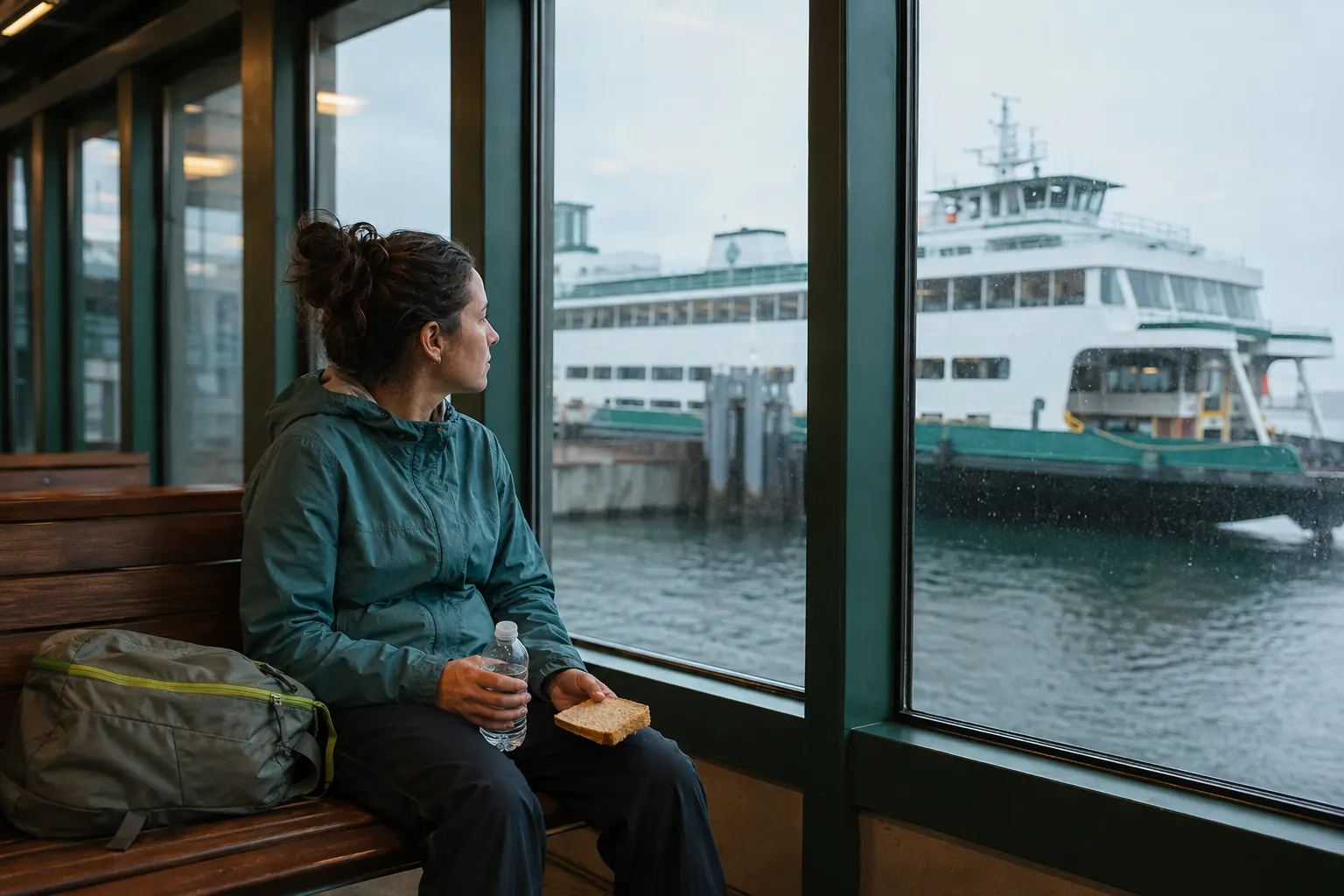
- Day two of a cruise. Embarkation night is the night people go out, and if day two is a sea day there is no port to step off onto. The ship did not get rougher overnight. It gets filed under not having sea legs yet, when the night before may be doing part of the work. The motion itself is covered ship by ship in the cruise guide.
- The coach home from a festival. A coach is a hard ride: high seats, no forward view from most rows, and long stretches of sway. Add the morning after and you get road trip nausea on a route you would normally sleep through.
- The 6am flight after a wedding. A short night, an early start, and the head movements of climb and descent landing on a balance organ that is not reading normally.
Same body, same route, different day. The variable is not the vehicle.
Why adding a motion sickness tablet is the wrong move here
The instinct is to reach for the usual travel pill. Read the box first.
The OTC Drug Facts label for Dramamine Original Formula, dimenhydrinate 50 mg, says under "When using this product": "marked drowsiness may occur", "avoid alcoholic drinks", and "alcohol, sedatives, and tranquilizers may increase dizziness". Read that again. The word is not drowsiness. It is dizziness, the symptom you already have.
The less drowsy version swaps the ingredient, not the warning. Meclizine HCl 25 mg carries "drowsiness may occur", "avoid alcoholic drinks", and "alcohol, sedatives, and tranquilizers may increase drowsiness".
What no label answers is whether last night's alcohol still counts this morning. That depends on how much, how late, and on you, so check with your doctor or pharmacist first. A tablet being a pharmacist question is not the same as having no options.
What actually helps on the journey
What is left is free, unglamorous, and mostly about giving your senses less to argue about.
- Moving air on your face. Fresh air is the most reliable cheap move: a cracked window, an open vent, a seat on deck.
- Keep your head still and supported. Positional alcohol nystagmus is positional: the false signal comes from where your head is. A headrest or a rolled jacket earns its place today.
- Face forward and watch the road, the horizon, or the wing. It gives your eyes the same story your body is getting, which removes one side of the conflict.
- Sip water, eat something plain. NIAAA links stomach irritation and extra acid to hangover nausea, so an empty stomach is a poor start to a moving journey. This is comfort, not a fix: NIAAA says nothing speeds a hangover up and only time helps.
- Do not read or scroll. Nausea builds when your eyes lock on something still inside a moving vehicle.
- Carry drug-free relief. Sound therapy through any headphones is one option designed to help calm the response in about 90 seconds, with no drowsiness added to a morning that has enough already. What else people try, and how the evidence looks, is in the remedy verdicts.
Do
- Book the forward-facing seat where the vehicle moves least
- Support your head and keep it still
- Get moving air on your face early, not once nausea peaks
- Ask a pharmacist about any tablet before the trip, not during it
Don't
- Add a motion sickness tablet on top of last night without asking
- Read or scroll to pass the time
- Start on an empty stomach and coffee alone
- Assume it was the route's fault and book differently next time
Practical strategies, not measured effects. Which ones matter most depends on the journey and on you.
The night before, when you know you are travelling
Nearly everything useful here is decided while you can still think clearly.
- Pick the seat now. Forward-facing, low, midship, over the wing, front of the car. At 6am you will take whatever is left.
- Ask the pharmacist now. If you want a tablet in the bag, the alcohol question gets answered the day before, not in a queue.
- Charge the headphones and pack them. Whatever the plan is, it belongs in the bag, not on a list.
- Protect the sleep window. NIAAA notes that alcohol fragments sleep and wakes people early, and arriving tired is a problem of its own.
The balance organ runs on a slower clock than the headache does, and it is worth travelling accordingly. If the room spins with no travel involved, or the dizziness outlasts the day, that belongs with a doctor rather than a travel tip.
And if you are reading this from the back of the coach, skip the above and go to the 60-second protocol.
When the usual pill is the wrong tool
Stop the nausea
The labels on the usual tablets say to avoid alcohol, which is an awkward answer on exactly the morning you want one. Dizzout plays precisely calibrated audio through any headphones instead, one option designed to help calm the response in about 90 seconds. Drug-free and no drowsiness, which matters when the day already started rough. Free to download on iOS and Android, subscription for full access.
Get your personalized Dizzout plan. Paid subscription for full access.
30,000+ travelers in 30+ countries · How we count

On your phone? Scan to start there.
Comparing apps first? See how the motion sickness apps compare
Frequently asked questions
Does a hangover make motion sickness worse?
The mechanism points that way, and it goes beyond dehydration. Alcohol changes the density balance between the cupula and the fluid in the inner ear's balance canals, so head position produces a motion signal your body is not making. That effect reverses direction while your body clears the alcohol, which puts the reversed phase in the hours that end where hangover symptoms peak. Put real motion on top and the brain has a true signal and a false one to reconcile. No trial has measured how much worse it makes a journey, so treat it as an explanation rather than a number.
Why do I get car sick when hungover?
Because a route you normally handle is meeting a balance organ that is not reading normally. The inner ear is signalling rotation from head position alone, your eyes see the inside of a car, and motion sickness comes from exactly that kind of disagreement. NIAAA also lists dehydration, fragmented sleep and stomach irritation among the causes of a hangover, and each of those lowers your margin further on the same drive that was fine last week.
Why is day two of a cruise the worst?
Two things can line up. Embarkation night is the night people go out, and if day two is a sea day there is no port to step off onto. The ship has not changed. Your balance organ is in the reversed phase of the alcohol effect while the hangover is peaking, and the sea gets the blame. Not every day two works like this, and a genuinely rough crossing is still a rough crossing.
Can you take Dramamine with a hangover?
That is a pharmacist question, and the label is why. Dramamine Original Formula is dimenhydrinate, and its OTC Drug Facts label says to avoid alcoholic drinks, warns that marked drowsiness may occur, and states that alcohol, sedatives and tranquilizers may increase dizziness. The meclizine less drowsy label carries the same avoid-alcohol line, with drowsiness in place of dizziness. Whether last night's alcohol still counts this morning depends on how much and how late, so check with your doctor or pharmacist before taking anything rather than guessing at the airport.
How long does alcohol affect your balance?
The papers do not give a duration, and it will not be the same for two people who drank the same amount, so be wary of any page that quotes you hours. What the vestibular literature does describe is two phases: one while alcohol is entering the inner ear fluid, and a reversed one while your body clears it. NIAAA notes that hangover symptoms peak when blood alcohol returns to about zero and can last 24 hours or longer. The reversed phase runs into that same stretch. If dizziness carries on past the day, or the room spins with no travel involved, see a doctor rather than waiting it out.
Someone you know gets motion sick?
Send them this guide. It might be the trip it saves.
Your next question, probably
Which drug-free options are worth trying?
Side by side, honestly
Not your question? Which app should you actually download?Queasy right now?
About this article
- Rabbitt RD. Semicircular canal biomechanics in health and disease. Journal of Neurophysiology, 2019
- Lee DH, et al. The Light Cupula Phenomenon: A Scoping Review. Brain Sciences, 2024;14(1):15
- Fetter M, et al. New insights into positional alcohol nystagmus using three-dimensional eye-movement analysis. Annals of Neurology, 1999
- NIAAA: Hangovers (symptoms, causes, timing and remedies)
- DailyMed: Dramamine Original Formula (dimenhydrinate 50 mg) OTC Drug Facts label
- DailyMed: Dramamine Less Drowsy (meclizine HCl 25 mg) OTC Drug Facts label
This article is informational and not a substitute for medical advice. Talk to your pharmacist or doctor before taking any medication for motion sickness, especially after drinking, and see a doctor if dizziness or vertigo persists on its own. Brand names are trademarks of their respective owners.