
Motion Sickness: Prato allo Stelvio to Bormio Drive
The Prato allo Stelvio to Bormio trip covers about 29 miles (47 km) and takes around 1.5 hours. The terrain is high alpine hairpin pass, which makes it a very high motion sickness risk route.
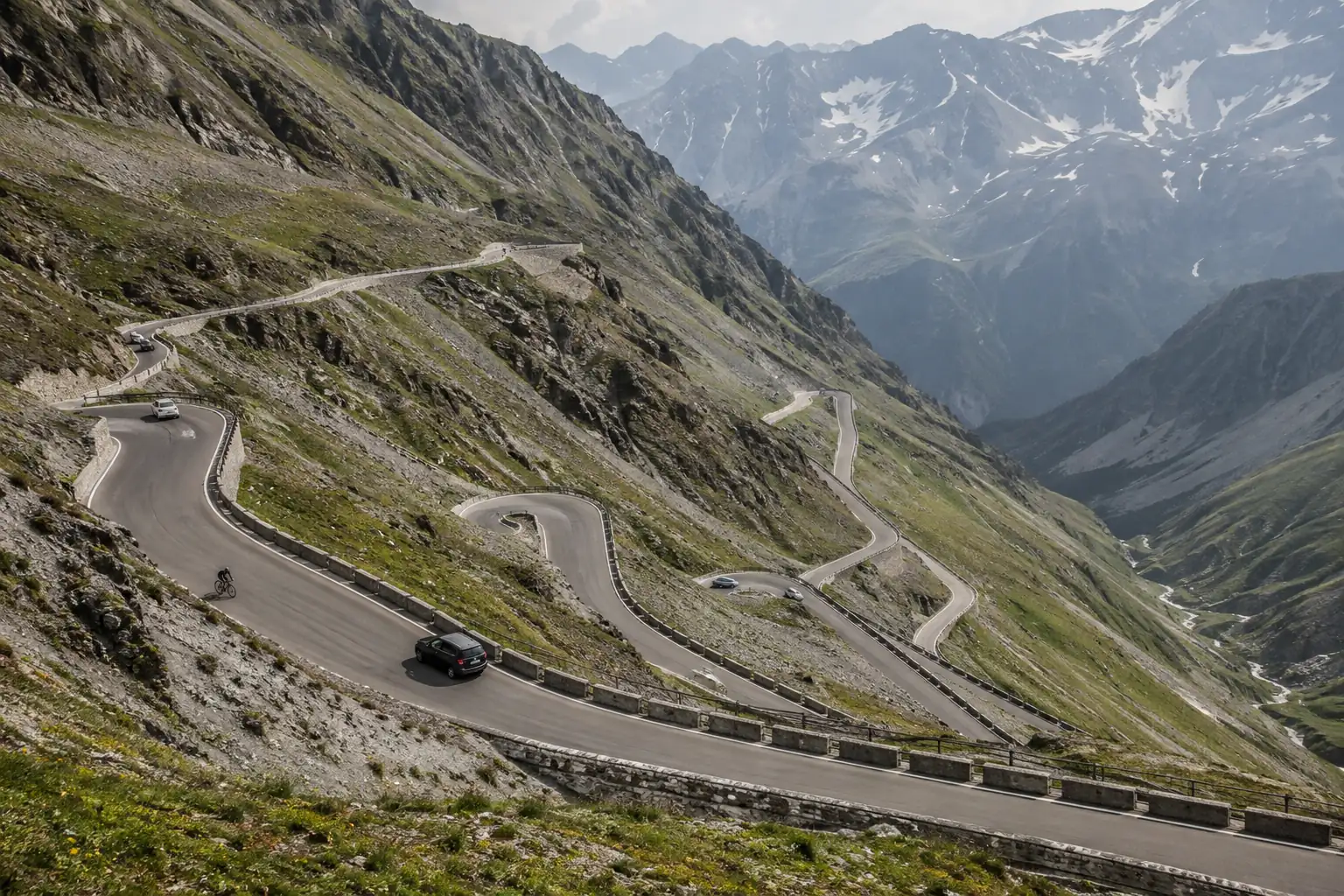
The Stelvio Pass tops out at 2,757 m, the highest mountain pass in Italy, and stacks 48 hairpin bends on the South Tyrol ramp above Prato allo Stelvio, with more on the Bormio side. The road runs 50 km of near constant cornering. Repeated 180 degree turns every few hundred meters give the inner ear no recovery time, which is why passengers report nausea here more than on almost any other alpine road.
Key facts
- The Prato allo Stelvio to Bormio trip covers about 29 miles, which is 47 km.
- It takes about 1.5 hours.
- The terrain is high alpine hairpin pass, which puts the route in the very high band for motion sickness.
- 3 sections are flagged as motion sickness pressure points, starting with The hairpin ladder above Prato allo Stelvio.
- Steadiest place to sit: Driver's seat, or front passenger looking through the next bend.
Try Dizzout free. Put it on your phone before you go, so it is there when you need it. Drug-free, any headphones.Free · works with any headphones · no account to try
Stop car sickness. Free to try, no card needed. Or go straight to the App Store or Google Play.
Where Motion Sickness Hits Hardest
The sections most likely to trigger motion sickness are: The hairpin ladder above Prato allo Stelvio (48 bends on the South Tyrol ramp), Bormio side hairpins below the summit, Trafoi forest switchbacks. The pass is a summer road: it closes each winter and reopening follows the snow. Cyclists share every hairpin in summer, so expect slow, stop and start climbing that makes symptoms worse. The Umbrail Pass via Switzerland is the only nearby alternative and is nearly as winding.
Season and closures: A summer road: the crossing closes in winter and reopening follows the snow; check conditions in the shoulder seasons. suedtirolerland.it
Measured bends
We counted every bend on this route from OpenStreetMap data: 46.6 km, ranked 3 of 26 road trips for bends per km.
- Bends
- 179
- Bends per km
- 3.84
- Hairpins
- 81
- Busiest 10 km
- 50 bends
Route facts, checked at the source
Each fact below was checked against the linked official or operator page.
- Elevation and bends: More than 48 hairpin bends up to the pass at 2,757 m, the highest mountain pass in Italy. suedtirol.info
- Road length and history: The 50 km road was built 1820 to 1825, with 48 bends on the South Tyrol side; closed in winter. suedtirolerland.it
Best Seat for Motion Sickness on This Drive
Driver's seat, or front passenger looking through the next bend.
Going on the Prato allo Stelvio to Bormio drive? Set it up first
Set it up before you pull out, not at the first lay-by. Dizzout is a drug-free app that plays precisely calibrated audio through any headphones you already own, wired or Bluetooth, with relief in about 90 seconds. Free to try.
Before you need it: find out how prone you are
Take the free 2-minute testTwo minutes, no sign-up, and it ends with a drug-free plan to prepare.
Put it on your phone before you go
Free to try, no card needed. Or go straight to the App Store or Google Play.
 Scan to open on your phone
On a computer? Dizzout installs on your phone. Scan the code, or open dizzout.com/get on your phone and it'll take you straight to the right store.
Know someone who gets motion sick?
Send them the app that helps stop it, drug-free, in about 90 seconds, works with any headphones. Free to try.
Prevention Tips for the Prato allo Stelvio to Bormio Drive
- Have Dizzout downloaded before you start, so it is ready the moment symptoms begin
- If you plan to take an over-the-counter tablet such as Bonine or Dramamine, those need 30 to 60 minutes before departure to do anything. Ask a pharmacist first
- Eat lightly before the drive; a heavy meal makes symptoms worse for most people
- Take breaks every 90 minutes minimum on long stretches
- Keep the car cool and well-ventilated
- Avoid reading or phone use in the back seat
Which of those actually hold up when they are tested is a separate question, and we keep the answers in one place: the remedy verdicts, ranked by evidence.
Frequently asked questions
How many hairpins does the Stelvio Pass have?
South Tyrol's tourism pages put it at 48 hairpin bends on the South Tyrol ramp, phrased in places as more than 48, with further bends on the Bormio side. However you count, the defining feature is stacking: bend after bend with no recovery straights, which is what passengers report as uniquely punishing here.
How high is the Stelvio Pass?
2,757 m, the highest mountain pass in Italy, per South Tyrol tourism. The height matters twice over: longer ramps of hairpins to get there, and thin, often cold air at the top. The summit is the place to stop properly before taking on the descent.
Is the Stelvio Pass open in winter?
No, the road to the pass closes in winter and runs as a summer road, per the regional tourism pages, which do not promise fixed dates. Reopening follows the snow. In early or late season, check locally before committing; being turned around adds hours of mountain driving nobody's stomach needs.
Why is the Stelvio so hard on passengers?
Because the bends never stop coming: repeated 180 degree turns stacked along a 50 km road, with the South Tyrol ramp alone holding 48 of them. Each hairpin swings the head through a full reversal, and the next one arrives before the inner ear settles. Few drives anywhere build in less recovery time.
Which side of the Stelvio is worse for car sickness?
The South Tyrol side is the documented one, with its 48 bend ladder above Prato allo Stelvio; the Bormio side stacks its own hairpins without an official count on the pages we cite. Passengers report both as hard. Whichever way you cross, break at the summit before starting down.
What's the fastest way to stop car sickness mid-drive?
Once symptoms have started, pills won't work fast enough - they take 30+ minutes to kick in. The fastest options mid-drive are sound therapy via headphones (Dizzout states relief in about 90 seconds), pulling over for fresh air, and looking at the distant horizon.
Other drives we have looked at
Route facts last checked September 2026. Roads, rules and seasons change; the linked official pages are the live word.