
Why the BMW i3 can make you car sick, and what helps
The i3 is the BMW this page covers in most depth, and its car sickness story comes from the feature it pioneered: true one-pedal driving. Lift off the accelerator and regenerative braking slows the car firmly, with a distinct jolt at the moment of lift-off, and owners describe stop-and-go traffic, where the driver is constantly on and off the pedal, as the worst case. The regen cannot be switched off, so the fix owners credit is technique.
The original one-pedal EV, strongest in stop-and-go traffic
Try Dizzout free. Put it on your phone before you go, so it is there when you need it. Drug-free, any headphones.Free to download · works with any headphones
Stop car sickness. Free to download. Paid subscription for full access.
Why it happens in a BMW
The i3 popularized one-pedal driving years before the same conversation reached Teslas, and its owner forum reads like an early draft of every EV motion-sickness thread since. Lifting off the accelerator produces firm, sustained deceleration with a noticeable jolt at lift-off; passengers get no engine note and no brake lights to warn them, and in stop-and-go traffic the repeated on-off pitching is what owners liken to an aircraft descent. The regen was set unusually strong at launch, and BMW is reported to have later softened the maximum partly in response to smoothness complaints, with a software update said to delay the onset of full regen after a sudden pedal release. The car has real strengths for a sensitive rider too: a tall, upright, glassy cabin with a clear view of the road ahead, and a tight, planted city-car feel. Owners consistently report the sensation largely fades once the driver learns to feather the pedal.
One-pedal regen with no off switch
Lifting off the accelerator produces firm deceleration with a distinct jolt. Unlike many newer EVs, the i3 offers no selectable low-regen or coast mode.
Stop-and-go traffic is the worst case
Constant on-off pedal work turns city driving into repeated surge-and-slow cycles, the pattern owners describe as hardest to sit through and liken to an aircraft descent.
No sound cues
The quiet EV cabin removes the engine-pitch and rev cues a gas car gives the brain to predict braking.
A short, tall city-car body
The narrow, short-wheelbase shape can amplify the felt fore-aft pitch when the regen bites.
Softened over time
BMW is reported to have reduced the i3's maximum regen partly over smoothness complaints, via an update that delayed full regen after a sudden pedal release. Reactions were mixed; some drivers preferred the original.
One car makes you sick and another does not? Why certain cars make you car sick covers the three causes, whatever the brand.
What actually helps in a BMW
1. Feather the pedal
The fix owners most often credit: find the accelerator's coasting sweet spot and ease off gradually instead of lifting off all at once. It flattens the lift-off jolt for everyone aboard.
2. Use Eco Pro for gentler response
If the car offers Eco Pro or Eco Pro+ alongside Comfort, the softer accelerator mapping makes acceleration come on more gently. It does not change the lift-off regen itself.
3. Front seat, eyes up
The i3's upright, glassy cabin gives an unusually clear forward view: use it. Keep the sensitive rider in front, watching the road ahead.
4. Route around the trigger
Keep stop-and-go drives short for sensitive passengers and pick smoother through-routes where you can.
5. Air moving, screens away
A vent on the face and phones down: the standard habits matter more in a car whose deceleration no setting can soften.
Comparing apps for the drive? The car sickness app guide sets sound therapy against on-screen motion cues, free options included.
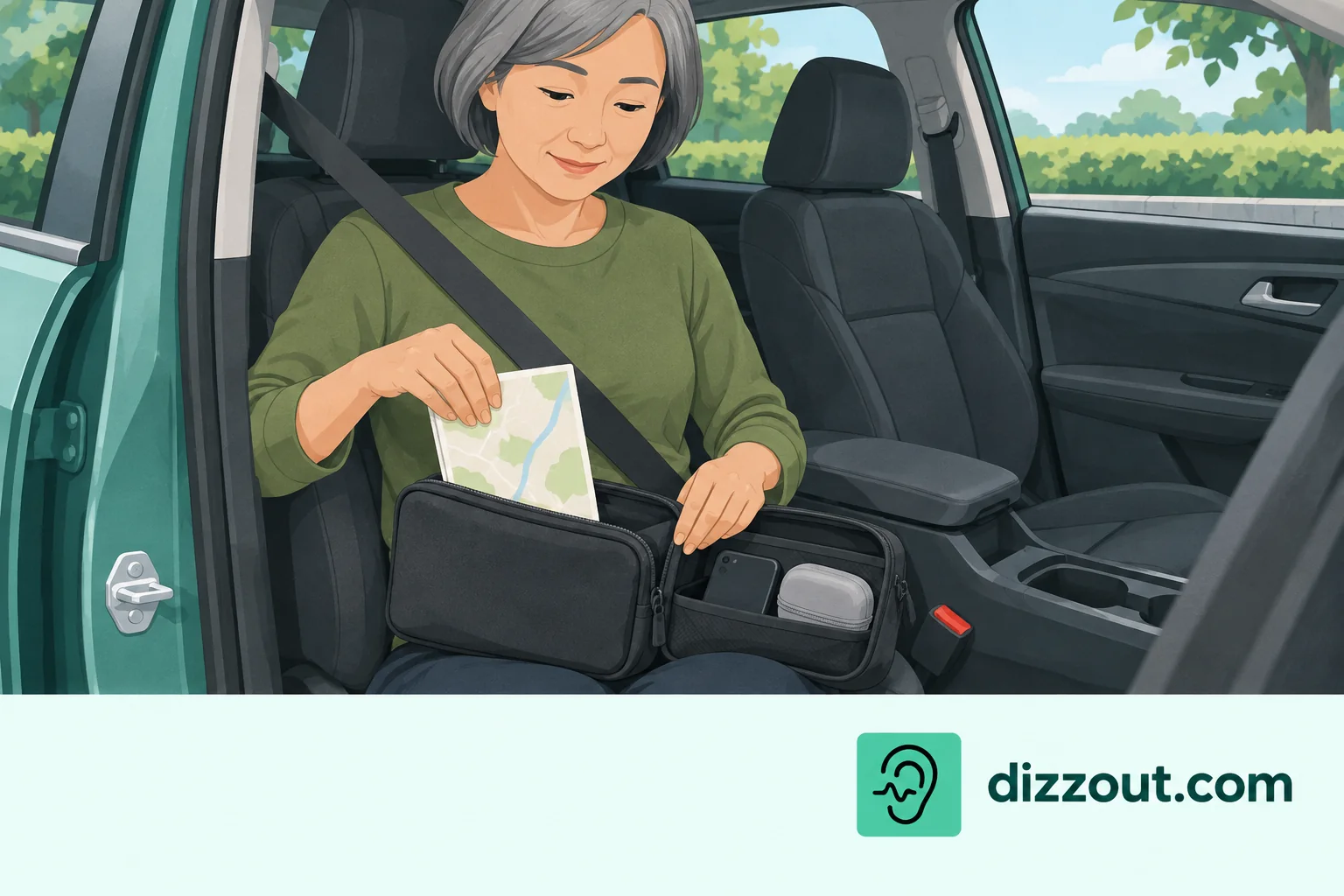
Put the map away before moving
Stow paper reading and loose equipment while parked. Keep ordinary headphones for Dizzout contained and clear of the seat belt.
Free to download. Paid subscription for full access.
BMW model by model
The i3 is the BMW researched in most depth here, an early EV whose one-pedal regen is the trigger; owners report the effect fades as the driver's pedal technique improves. The iX works differently: BMW makes adaptive recuperation the default in D and lets the driver choose Low instead.
Risk levels summarise what owners and passengers commonly report, not measured testing.
Frequently asked questions
Why does the BMW i3 make passengers car sick in traffic but not on the open road?
Stop-and-go traffic means the driver is constantly lifting off and pressing the accelerator, and every lift-off triggers the i3's firm regen deceleration with no warning a passenger can read. On the open road the car holds a steady speed, so those abrupt transitions mostly disappear, and with them the queasiness.
Can you turn off the i3's regenerative braking?
No: the strong regen is part of the i3's one-pedal design, and there is no off switch or selectable low mode the way many newer EVs offer. The practical fix is technique: easing off the accelerator gradually to coast into stops rather than lifting off abruptly, which owners report largely tames the sensation.
Did BMW change the i3's regen because people felt sick?
BMW is reported to have softened the i3's maximum regen partly in response to complaints that it was hard to drive smoothly, with a software update described as delaying the onset of full regen after a sudden pedal release. It is best read as a smoothness refinement rather than a motion-sickness recall, and some drivers preferred the stronger original.
Related
Sources & further reading
Your next question, probably
Which model do you actually ride in?
Every model we cover, each with its own seat and setup notes
If that is not your question:
Based on publicly reported owner and passenger experiences and each vehicle's documented design, as of July 2026. Regenerative braking and the other characteristics described here are deliberate engineering choices, not faults: this page is about how they feel to motion-sensitive passengers, and sensitivity varies from person to person. Vehicle and brand names are trademarks of their respective owners; Dizzout is not affiliated with or endorsed by them. Specifications and software features change; check the manufacturer's current documentation. Informational only, not medical advice.