
Motion sickness and neck tension: why travel stiffens your neck and how to release it
Step out of a long car ride feeling queasy and there is a fair chance your neck and shoulders ache too. The two go together for a reason: your neck is working the whole trip. It holds a heavy head steady against every curve, brake, and swell, and when you start feeling sick, you brace harder, hunching shoulders, stiffening the neck, sometimes clenching the jaw. Clinical guidance points the other way instead: keeping the head still and supported is a recognized countermeasure for motion sickness, and it costs your muscles far less than bracing does. This page covers why the tension builds, how it feeds the sickness loop, and how to break it.
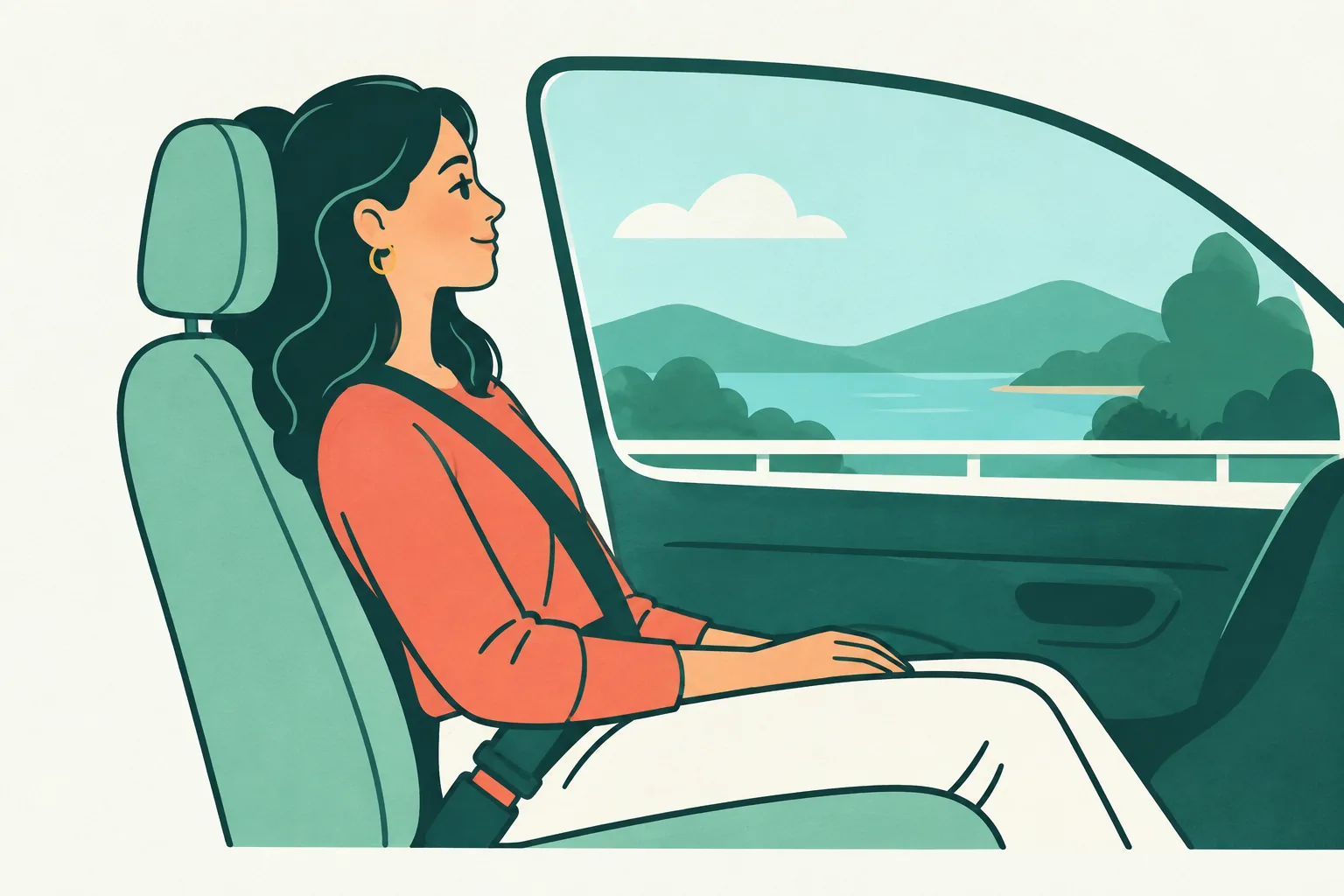
First thing to do: Give your head to the headrest: press the back of your head gently into the support, or recline slightly, and let the seat absorb the motion instead of your neck muscles.
Try Dizzout free. Drug-free calibrated sound through any headphones, designed to help once symptoms have started.Free · works with any headphones · no account to try
Free to try, no card needed. Or go straight to the App Store or Google Play.
What it feels like
Travel neck tension is the tight, stiff, achy feeling in the neck, shoulders, and base of the skull that builds during or after time in a moving vehicle. It often comes with a dull headache creeping up from the neck, reluctance to turn the head, and the discovery that your shoulders have been sitting somewhere near your ears for an hour. In a motion-sensitive traveler it typically arrives in company: queasiness, fatigue, and the general worn-down feeling of a rough trip. Two habits produce most of it. The first is postural: looking down at a phone or book, or sleeping with the head tipped against a window, loads the neck muscles unevenly for long stretches. The second is bracing: when you feel unwell or the ride gets rough, muscles tense protectively, and tense muscles held for an hour ache. There is also a boundary worth knowing about. Dizziness and nausea that seem to come from the neck itself, especially after a neck injury, have their own name, cervicogenic dizziness (cervical vertigo), which Cleveland Clinic describes as unsteadiness caused by a neck injury or condition rather than by the inner ear. If neck pain and dizziness travel together for you even without vehicles, that pattern deserves its own assessment.
Why motion sickness causes neck tension
Your neck is part of the balance conversation. StatPearls describes motion sickness as a mismatch between actual and expected input across the vestibular, visual, and proprioceptive systems, and the neck is dense with proprioceptors, the position sensors that report where your head sits relative to your body. In a moving vehicle that reporting job gets hard: the head is a heavy weight on a flexible column, every acceleration tries to swing it, and the neck muscles fire continuously to keep it stable. Long, unpredictable motion means long, low-grade muscular work, which is felt afterward as stiffness and ache. Sickness and tension then feed each other. Feeling queasy makes people brace, and a braced neck adds two problems: the muscles fatigue faster, and extra head wobble from tired muscles means extra conflicting motion signals. That is why clinical countermeasures go the opposite way. StatPearls lists reducing head movements and restraining movement of the head, shoulders, and hips among behavioral countermeasures for motion sickness, and travel-medicine guidance echoes it: let the seat, headrest, or a travel pillow do the stabilizing so the muscles can stand down. Supported stillness calms both the muscle ache and the sensory conflict; white-knuckled bracing worsens both.
How to ease it now
- 1
Give your head to the headrest: press the back of your head gently into the support, or recline slightly, and let the seat absorb the motion instead of your neck muscles.
- 2
Drop your shoulders and unclench your jaw deliberately; bracing tends to be unconscious, and naming it is most of releasing it.
- 3
Bring whatever you look at up to eye level and far away: eyes on the horizon or the road ahead, phone down. Looking down loads the neck and deepens the sensory conflict at the same time.
- 4
Breathe slowly and evenly for a minute or two; slow breathing relaxes the protective muscle tension along with the queasiness.
- 5
At the next stop, move gently: slow shoulder rolls and easy head turns to each side, nothing forced, plus a short walk.
- 6
If nausea has already set in, a drug-free option like Dizzout plays calibrated sound therapy through any headphones and is designed to be used after symptoms start. It is free to try, and it works with your head resting still against the seat.
A drug-free option that works after symptoms start
Try Dizzout free
Dizzout is a free-to-try, drug-free app that uses calibrated sound on any headphones. It's one of the few options designed to help once you already feel sick. Most people feel better in about 90 seconds.
Free to try, no card needed. Or go straight to the App Store or Google Play.
 Scan to open on your phone
On a computer? Dizzout installs on your phone. Scan the code, or open dizzout.com/get on your phone and it'll take you straight to the right store.
How to prevent it
- Set up support before you set off: adjust the headrest to actually meet your head, and use a travel pillow on flights and long rides so the head does not hang or tip.
- Choose the steadiest seat facing forward: front seat of a car, over the wing on a plane, mid-ship on a boat. Less motion means less stabilizing work.
- Keep screens and books out of moving stretches; the head-down posture is the fastest route to both neck ache and queasiness.
- Break up long journeys with stops to walk and roll the shoulders rather than holding one posture for hours.
- Avoid sleeping with your head tipped against the window on winding roads; if you nap, do it with the head supported upright.
- If you know rough water or mountain roads are coming, plan the basics that reduce sickness overall: light food, fresh air, rest beforehand, and a pharmacist's advice on preventive options if you are highly susceptible.
When to see a doctor
Neck stiffness that builds on a long trip and eases within a day with gentle movement is a muscular complaint, not a danger sign. See a doctor if neck pain is severe or getting worse, follows any accident or jolt to the head or neck, lasts beyond a few days, or comes with numbness, tingling, or weakness in the arms or hands. Dizziness or unsteadiness that seems tied to neck movement or neck pain, especially after an injury, fits the pattern Cleveland Clinic describes for cervicogenic dizziness and deserves proper assessment rather than travel remedies. Treat as urgent a stiff neck with fever and headache, or neck symptoms with chest pain, confusion, trouble speaking, facial drooping, or weakness on one side, since these can signal serious conditions unrelated to motion sickness. And motion-sickness-type nausea that recurs with no motion at all is worth a clinician's look on its own. This page is general information, not medical advice.
Common questions
Why does my neck hurt after a long drive when I get carsick?
Two loads stack up. Your neck muscles work continuously to hold a heavy head steady against every curve and brake, and feeling queasy makes you brace on top of that, hunching shoulders and stiffening the neck for an hour or more. Held tension aches. Supporting your head on the headrest and consciously dropping your shoulders removes most of the load.
Does keeping my head still actually help motion sickness?
Yes, it is a recognized behavioral countermeasure. StatPearls lists reducing and restraining head movement among the measures that help, because a stabilized head sends steadier signals to the balance system. The key is supported stillness, head resting against the seat or a pillow, rather than muscling the head still yourself, which just trades sickness for stiffness.
Can neck problems cause motion sickness rather than the other way around?
A related pattern exists. Cleveland Clinic describes cervicogenic dizziness (cervical vertigo) as unsteadiness caused by a neck injury or condition, since the neck's position sensors feed the balance system. It is a diagnosis a clinician makes, typically when neck pain and dizziness travel together even without vehicles. Ordinary travel neck tension is far more common, but that combination is worth an assessment.
Is jaw clenching part of the same thing?
Usually, yes. Clenching is part of the same unconscious bracing response that hunches shoulders and stiffens the neck when you feel unwell or the ride gets rough, and it can leave the jaw and temples aching after a trip. The fix is the same: notice it, unclench deliberately, let the headrest take your head, and slow your breathing until the tension drops.
What should I do about neck tension mid-flight or mid-cruise?
Support first: headrest or travel pillow so the muscles can stop stabilizing. Then eyes far, screens away for a while, shoulders down, slow breaths. Move gently every hour or so, easy shoulder rolls and head turns, plus a short walk where possible. If queasiness is the driver, settle it too; the tension usually unwinds once you stop feeling sick.
Sources
Related symptoms & guides
This page is informational and is not a substitute for professional medical advice. If symptoms are severe, persistent, or occur without any motion trigger, see a qualified clinician.