
The short answer
Gravol and original Dramamine are the same drug, dimenhydrinate, and dimenhydrinate is essentially modified Benadryl. Chemically it is diphenhydramine, the antihistamine in US and Canadian Benadryl, bound to a mild caffeine relative added to offset some of the drowsiness. So the three most familiar names on the motion sickness shelf belong to one antihistamine family, and they share the family trait: sedation. Plain Benadryl can work against motion sickness, but it is the drowsiest way in, and its box is written for allergies, not travel.
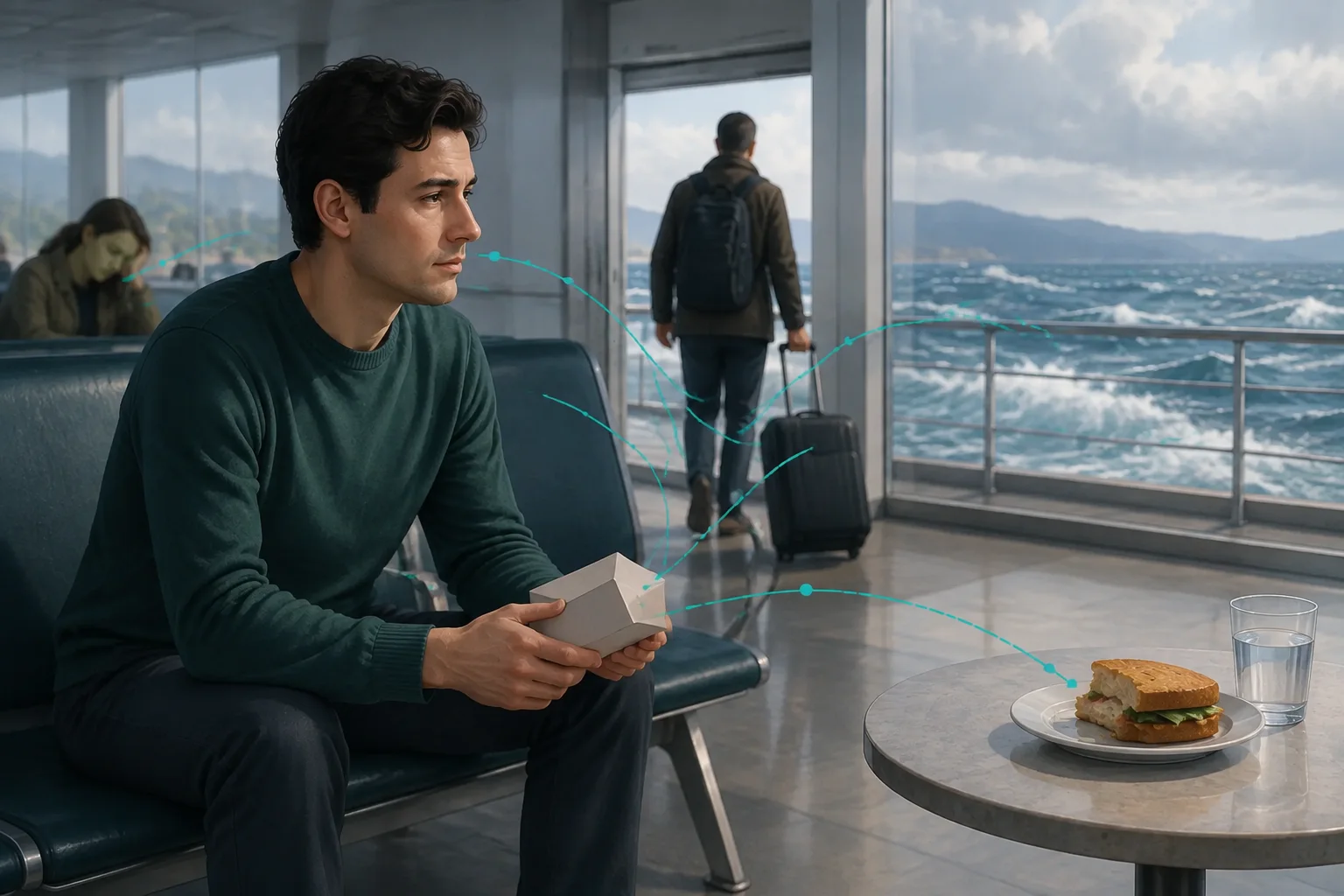
Ask a Canadian what they take for a rough ferry and they say Gravol. Ask an American and they say Dramamine. Ask anyone stuck at 2am with no travel kit and they raid the allergy shelf for Benadryl. Three names, three habits, and most people assume three different medicines.
They are closer to one medicine wearing three coats. Once you see the family tree, the pharmacy shelf gets much simpler, and so does the real question: how much drowsiness are you willing to trade for a calmer stomach.
Prone to motion sickness? Drug-free, no drowsiness to trade, about 90 seconds on any headphones.Starts in your browser · works with any headphones
Get your personalized Dizzout plan. Paid subscription for full access.

On your phone? Scan to start there.
The surprise: Gravol is basically Benadryl
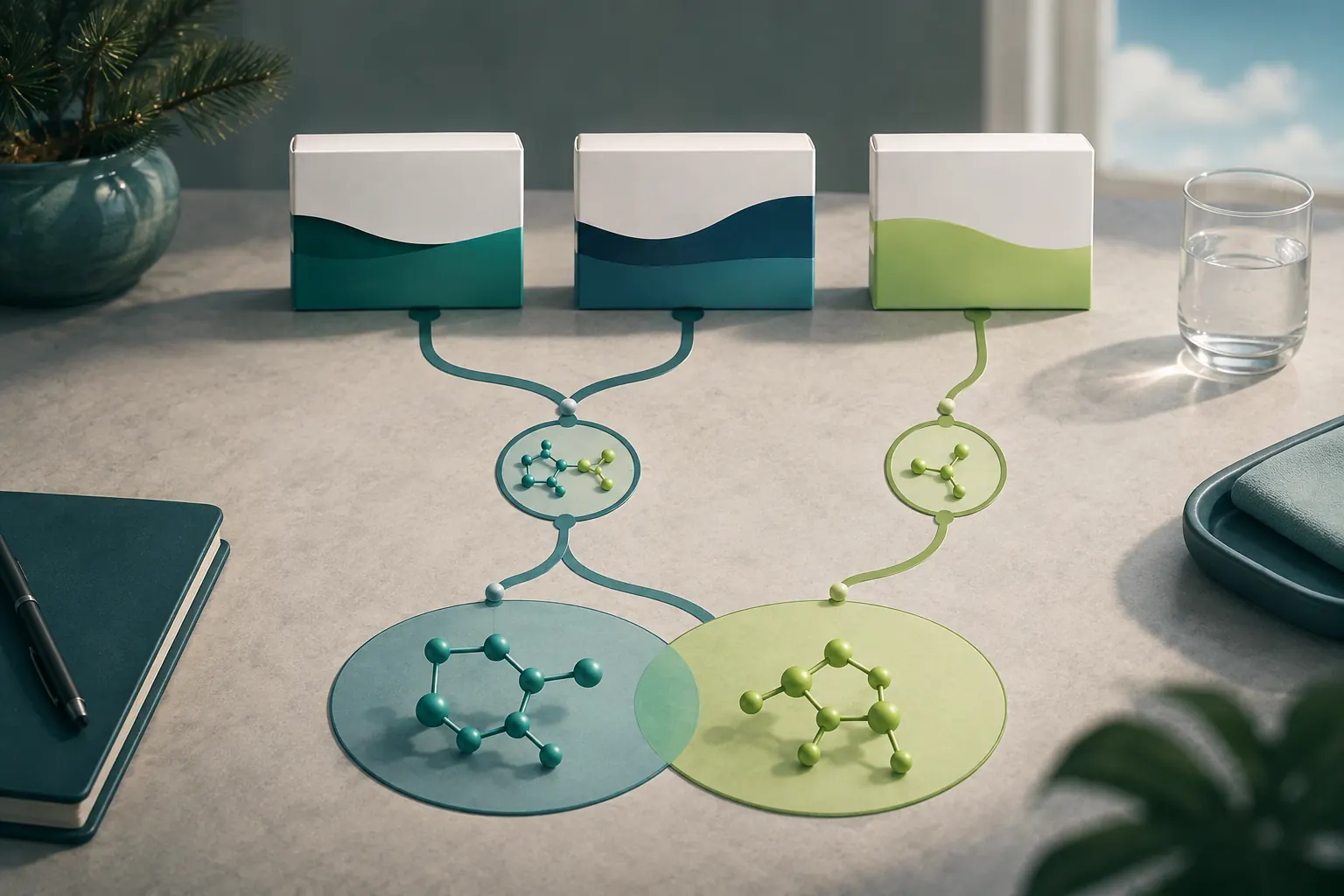
Turn a Gravol box over and the active ingredient line says dimenhydrinate. The US FDA label for dimenhydrinate spells out what that is: a 1 to 1 pairing of diphenhydramine, the antihistamine in Benadryl, with a compound called 8-chlorotheophylline. By the label's own numbers, diphenhydramine makes up 53 to 55.5 percent of dimenhydrinate by weight. Roughly half of every Gravol dose is the same molecule Americans and Canadians know as Benadryl.
That single fact reorganizes the whole shelf. Canada's default nausea remedy, America's classic motion sickness tablet and the allergy pill in your bathroom cabinet are not three unrelated options. They are one core molecule, dressed three ways. (One exception worth knowing, straight from the manufacturer's FAQ: Gravol Ginger contains ginger, not dimenhydrinate, so it sits outside this family entirely.)
What dimenhydrinate actually is
Dimenhydrinate is a salt: two molecules traveling as one tablet. The diphenhydramine half is the working antihistamine. The 8-chlorotheophylline half is a xanthine, the same chemical family as caffeine, included to push back against some of the sedation the first half causes. It softens the drowsiness; no label claims it removes it.
Original Dramamine in the US is this exact same dimenhydrinate, which is why Dramamine vs Gravol is mostly a question of which country you are standing in. The label facts travel with the molecule: first dose 30 minutes to 1 hour before you travel, then redosing every 4 to 8 hours depending on age. The full profile is on our Dramamine fact page.
Does plain Benadryl work for motion sickness
Yes, the molecule itself is a recognized option. MedlinePlus, the NIH's drug reference, states plainly that diphenhydramine is used to prevent and treat motion sickness. It is the same core antihistamine as the rest of the family, minus the caffeine relative that takes the edge off the sleepiness.
That last part is the catch. Without the offsetting half, plain diphenhydramine is the drowsiest common way into this family. And the Benadryl box is written for allergies: dosing every 4 to 6 hours, no travel timing anywhere on it. If you are thinking of repurposing it for a trip, put the box in front of a pharmacist first. The full label picture, including who should avoid it, is on our diphenhydramine page.
Benadryl vs Gravol vs Dramamine: the real differences
Same family, different boxes. Here is what actually separates them, straight from the labels:
| On the box | Active ingredient | Sold for | Label timing |
|---|---|---|---|
| Benadryl (US, Canada) | Diphenhydramine | Allergies | Every 4 to 6 hours; no travel guidance on the box |
| Gravol (Canada) | Dimenhydrinate | Nausea and motion sickness | 30 to 60 minutes before travel |
| Dramamine (original, US) | Dimenhydrinate | Motion sickness | 30 to 60 minutes before travel |
| Dramamine All Day Less Drowsy | Meclizine | Motion sickness | 1 hour before travel, one dose per 24 hours |
Benadryl vs meclizine: sedation vs duration
Meclizine is the family's long-haul branch. It is the drug inside Dramamine All Day Less Drowsy, Bonine and prescription Antivert, and its label rhythm is completely different: take it 1 hour before travel, and doses may be taken every 24 hours. One tablet before breakfast can cover a full travel day that would take three or four rounds of diphenhydramine. The two travel boxes are set side by side in Bonine vs Dramamine.
So the Benadryl vs meclizine question is really a trade. Diphenhydramine is fast, familiar and heavy: short coverage, strong sedation, redosing every few hours. Meclizine asks for more lead time and pays it back in duration, and many people find it gentler, though drowsiness is still on its label too. If your trip is longer than an afternoon, the once-a-day branch usually fits better.
Why people reach for Benadryl on trips anyway
Because it is already there. It lives in the bathroom cabinet, it is cheap, and on a trip it moonlights as an allergy pill and a sleep aid. On a night flight, the drowsiness can even read like a feature: some travelers take it hoping to doze through the turbulence rather than feel it.
The honest cautions: never behind the wheel, never with alcohol, and never stacked on top of Gravol or original Dramamine, since that means doubling up on the same molecule. For children and older adults the calculus changes again. All of that is a two-minute conversation with a pharmacist, and worth having before the trip rather than during it.
The drowsiness cost across the family
Every branch of this tree is a first-generation antihistamine, which means it crosses into the brain and damps histamine signaling there. Histamine is one of the signals that keeps you alert, which is why the same diphenhydramine molecule is also sold as an over-the-counter sleep aid, and why every label in the family carries the same warnings about driving and alcohol.
The differences are of degree. Plain diphenhydramine sits at the heavy end. Dimenhydrinate carries its built-in caffeine relative to soften the effect. Meclizine is the branch marketed as less drowsy, and for many people it is, but less drowsy is a relative claim on a box, not a promise of none. You find out how sedating each one is for you personally, ideally not on a day you needed to drive.
Stepping outside the antihistamine family
If every option above is the same trade at different exchange rates, the way out is to leave the family. The free basics cost nothing and stack with everything: watch the horizon, take the front seat, get fresh air, stop reading in the vehicle. The full toolkit is in how to stop motion sickness.
Sound therapy is another branch entirely, with no molecule to metabolize. Dizzout plays precisely calibrated audio through any regular headphones and is designed to help calm the response in about 90 seconds. Drug-free, no drowsiness, nothing to time 30 or 60 minutes before departure. It is one option, not a promise, and the app is free to download on iOS and Android, with a paid subscription for full access. Not sure how prone you are in the first place? The motion sickness test gives you a read in two minutes.
The branch with no drowsiness question
Stop the nausea
Every box in this family trades nausea for sedation by degree. Dizzout plays precisely calibrated audio through any headphones instead: drug-free, nothing to swallow, nothing to check against your other medication, about 90 seconds.
Get your personalized Dizzout plan. Paid subscription for full access.
30,000+ travelers in 30+ countries · How we count

On your phone? Scan to start there.
Comparing apps first? See how the motion sickness apps compare
Frequently asked questions
Is Gravol the same as Benadryl?
Not identical, but close relatives. Gravol is dimenhydrinate, which the US FDA label describes as a 1 to 1 pairing of diphenhydramine, the antihistamine in US and Canadian Benadryl, with 8-chlorotheophylline, a mild caffeine relative. Roughly half of a Gravol dose by weight is the Benadryl molecule. They are not interchangeable dose for dose, so ask a pharmacist rather than swapping one for the other.
Does Benadryl help with motion sickness?
It can. MedlinePlus states that diphenhydramine, the active ingredient in US and Canadian Benadryl, is used to prevent and treat motion sickness. But the box itself only gives allergy dosing, every 4 to 6 hours with no travel timing, and diphenhydramine is among the most sedating common options, so check with a pharmacist before using it for travel. In the UK, Benadryl products contain different antihistamines, so none of this carries over.
Why does Benadryl make you so sleepy?
Diphenhydramine is a first-generation antihistamine, which means it crosses into the brain and damps histamine signaling there, and histamine is one of the signals that keeps you alert. The effect is strong enough that the same molecule is sold separately as a sleep aid, and the label warns against driving until you know how it affects you.
Is Benadryl or Dramamine better for travel?
For travel specifically, original Dramamine has the practical edge: it is built on the same core antihistamine, but its label is written for motion sickness, with travel timing of 30 to 60 minutes before departure printed on the box, and its added 8-chlorotheophylline offsets some drowsiness. Benadryl's box is written for allergies. Neither escapes sedation, and if you want one dose to cover a whole day, meclizine is the family branch taken once every 24 hours. A pharmacist can match one to your health situation.
What works for motion sickness without an antihistamine?
Several things. The free basics first: watch the horizon, take the front seat, get fresh air, and stop reading in the vehicle. The scopolamine patch is a prescription option from a different drug class to weigh with a doctor. And sound therapy is a drug-free route: Dizzout plays precisely calibrated audio through any headphones, designed to help in about 90 seconds, with no drowsiness.
Someone you know gets motion sick?
Send them this guide. It might be the trip it saves.
Your next question, probably
Dramamine or Gravol for your trip?
The two names, side by side
Not your question? What does the diphenhydramine label say?And original Dramamine's label?Feeling sick right now?
About this article
- MedlinePlus: Diphenhydramine.
- MedlinePlus: Dimenhydrinate.
- MedlinePlus: Meclizine.
- DailyMed (FDA label): Dimenhydrinate.
- Gravol (manufacturer): What is dimenhydrinate?
- Benadryl UK: antihistamine products.
This article is informational and not a substitute for medical advice. Read the leaflet that comes with any medicine and talk to a pharmacist or doctor before taking one. Brand names are trademarks of their respective owners; Dizzout is not affiliated with or endorsed by them.