Motion Sickness on Ryanair Flights: Best Seats and How to Avoid Air Sickness
Ryanair (FR) operates from its hub at Dublin Airport in Ireland. Its primary fleet consists of Boeing 737-800, Boeing 737 MAX 8-200. The motion sickness risk profile for this airline is rated moderate-high.
Ryanair operates 3,100+ daily flights across Europe on Boeing 737 narrowbodies - typically at lower cruising altitudes than long-haul carriers due to short flight times. Alpine crossings (Switzerland, Austria, Northern Italy) are among the bumpiest in European aviation. UK routes in winter also produce significant turbulence.
Key facts
- Ryanair (FR) operates from its hub at Dublin Airport in Ireland.
- Its primary fleet is Boeing 737-800, Boeing 737 MAX 8-200.
- The motion sickness risk profile for this airline is rated moderate-high.
- 3 of its routes are listed here as known for turbulence, starting with UK-Italy (Alpine crossings).
Going on a Ryanair flight? Put it on your phone before you go, so it is there when you need it. Drug-free, any headphones.Starts in your browser · works with any headphones
Ease plane sickness. Get your personalized Dizzout plan. Paid subscription for full access.

On your phone? Scan to start there.
Best Seat on Ryanair for Motion Sickness
On Ryanair 737s, rows 10-15 over the wing are the smoothest. Avoid the last 5 rows where tail motion is most pronounced. Ryanair's seat selection costs extra but the choice of an over-wing seat is worth it for motion-sensitive passengers.
Known Turbulence Routes on Ryanair
- UK-Italy (Alpine crossings)
- Edinburgh routes
- Bay of Biscay crossings
Before you fly, look up a turbulence forecast for your route a day or two ahead, when route forecasts are most useful. Here is how to check a turbulence forecast before you fly. If you have been airsick before, read why air sickness happens and what helps, from the steadiest seat to what to do once nausea starts.
Turbulence and Anxiety on Ryanair Flights
Turbulence is hard on a motion-sensitive body for two reasons that have nothing to do with the airline. The movement is unpredictable, so you cannot brace for it the way you brace for a turn you can see coming. And inside a cabin there is no horizon to check it against, so your inner ear reports motion your eyes cannot confirm. That mismatch is what makes people queasy in the air, on a ship, or in the back of a car.
Anxiety adds to it. Fear and nausea travel overlapping pathways, so bumps that frighten you tend to feel more sickening than the same bumps on a calm day, and the anticipation between them keeps your attention on your stomach. It works the other way too: the calmer you stay, the less the same movement registers.
Turbulence also has a season. Jet streams run stronger in winter, which is when long-haul routes tend to get bumpy, and summer heat drives the convective turbulence that builds around afternoon storms. Neither is a reason to change your flight. Both are a reason to have a plan in your seat.
- Give your eyes something steady. From a window seat, watch the horizon. From an aisle seat, fix on the seat back in front of you and keep your head against the rest.
- Open the overhead vent and point it at your face, then breathe slowly with the exhale longer than the inhale.
- Start sound therapy at the first queasy signal rather than waiting. Dizzout is drug-free, works with the headphones you already brought, and is designed to help once symptoms have started.
Keep the small case close
Keep ordinary headphones for Dizzout accessible before stowing larger luggage. Put them away whenever boarding needs your attention.
Free to download. Paid subscription for full access.
30,000+ travelers in 30+ countries · How we count

On your phone? Scan to start there.
Comparing apps first? See how the motion sickness apps compare
Not travelling yet? Remind me the day before my trip

Know someone who gets motion sick?
Send them the app that helps stop it, drug-free, in about 90 seconds, works with any headphones. Free to download.
How to Prevent Air Sickness on Ryanair
- Choose a seat over the wing if possible
- Take a window seat to see the horizon
- Avoid alcohol the night before and during the flight
- Eat lightly before flying
- Use cool air vents on your face
- Download Dizzout before flying, since it works with any headphones on any aircraft
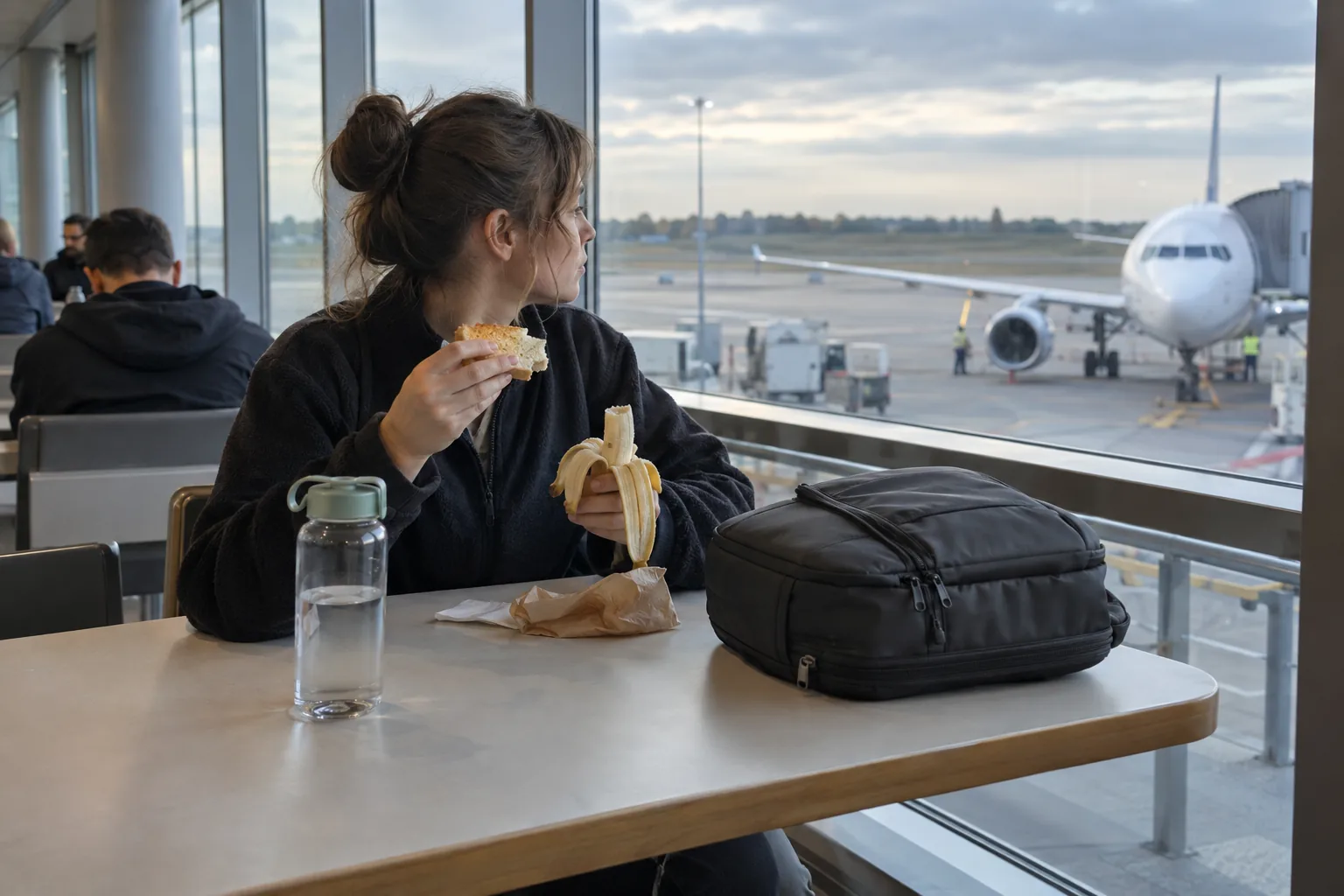
Cabin crew will usually offer ginger ale, and ginger is one of the few remedies with trial evidence behind it, though the effect is modest: see the verdict on ginger.
FAQ
Is Ryanair a bumpy airline?
Ryanair's motion sickness risk profile is rated moderate-high. Turbulence depends much more on route, weather, and aircraft type than on airline operations. Ryanair operates 3,100+ daily flights across Europe on Boeing 737 narrowbodies - typically at lower cruising altitudes than long-haul carriers due to short flight times.
What does Ryanair provide for air sickness?
Most airlines including Ryanair provide air sickness bags in every seat back. Flight attendants can provide ginger ale or water. They generally do not stock motion sickness medication, so bring your own or use Dizzout (drug-free, works on any flight).
Does turbulence cause motion sickness, or is it anxiety?
Both, and they feed each other. Turbulence moves you in ways you cannot predict, and with no horizon in view your inner ear reports motion your eyes cannot confirm. That mismatch is what makes you queasy. Anxiety amplifies it, because fear and nausea travel overlapping pathways, so the same bumps feel worse when they frighten you. What helps in the seat: a window seat over the wing so you can watch the horizon, the overhead vent pointed at your face, and slow breathing with the exhale longer than the inhale.