First Time Flying? Here's What to Expect (and How Not to Get Sick)
First flights produce a unique combination of motion sickness and anxiety. Many first-time flyers misinterpret normal flight sensations (takeoff thrust, cabin altitude change, minor turbulence) as something wrong, triggering panic and physical symptoms. Knowing what to expect dramatically reduces both.
Get your personalized Dizzout plan. Free to download, drug-free, works once symptoms start, on any headphones.Starts in your browser · works with any headphones
Paid subscription for full access.

On your phone? Scan to start there.
Why this hits First-time flyers and parents flying with kids for the first time
First-time flyers don't know what's normal, which amplifies anxiety and indirect motion sickness. The mechanism is the same as any motion sickness: a sensory mismatch between what the inner ear feels and what the eyes see. Your brain reads the disagreement as a poisoning signal and triggers nausea. Some groups and situations, first-time flyers and parents flying with kids for the first time included, amplify the mismatch rather than cause a different problem entirely.
Understanding this matters because the fix depends on whether you're preventing the mismatch (smart seat, no screens, fresh air) or looking for something once symptoms have already started. That second list is much shorter. Sound therapy is one of the few drug-free options built to be used after nausea has begun.
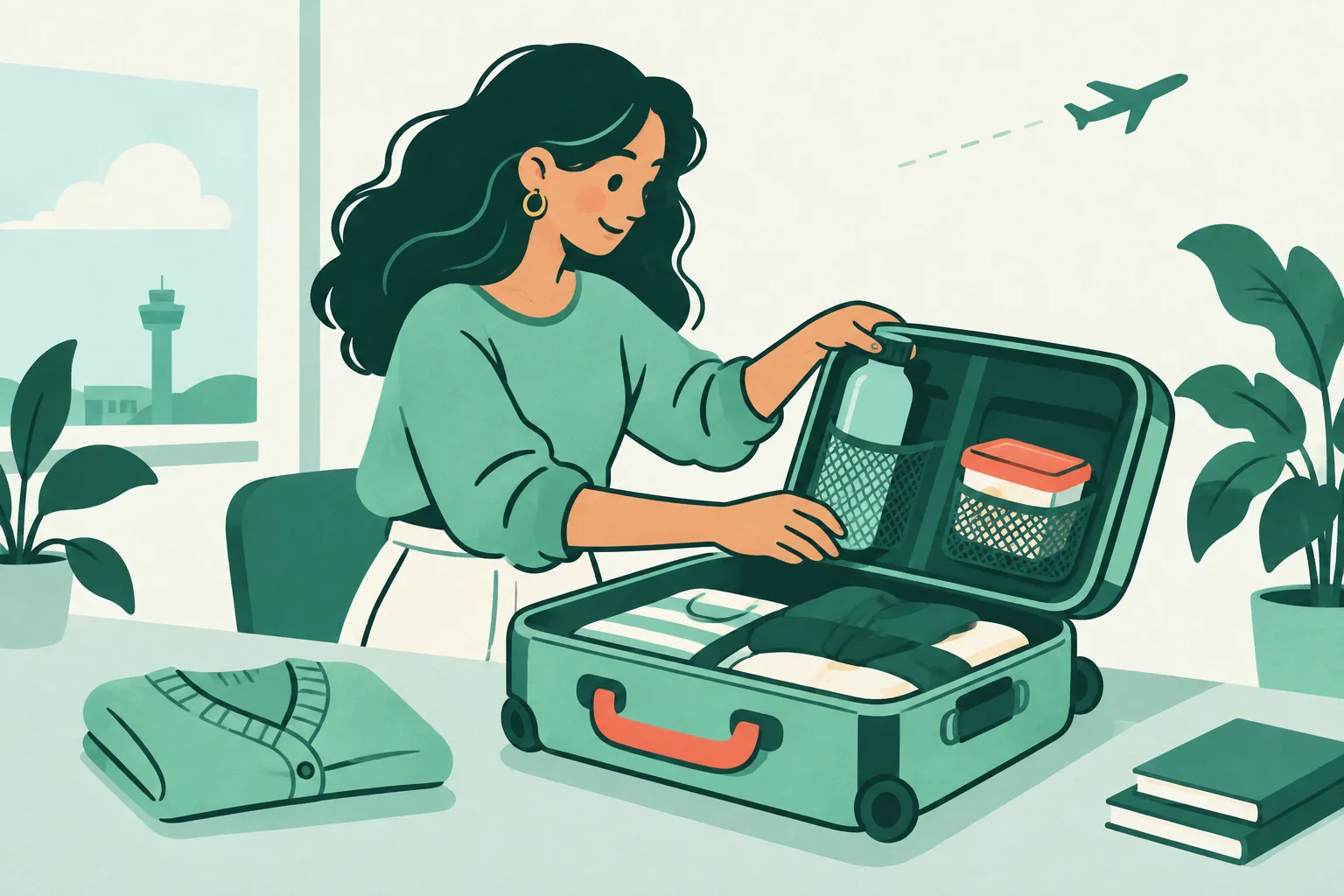
Safe options
- Sound therapy via headphones (works for both motion and calming)
- Window seat over the wing
- Aisle seat if claustrophobic
- Snacks and water
Some of those have been tested properly and some have not. See the verdict on each one, with the trials attached.
What to avoid
- Alcohol before flight (worsens anxiety + motion sickness)
- Caffeine in excess
- Heavy meals
- Skipping breakfast on early flights
How sound therapy fits in
Dizzout plays precisely calibrated audio through any headphones, wired or Bluetooth. Dizzout states relief in about 90 seconds. No medication, no drowsiness, no prescription, and you can start another session later in the same trip.
For first-time flyers and parents flying with kids for the first time this matters because so many traditional remedies come with trade-offs people would rather not make: drowsiness, dry mouth, or a prescription. Sound therapy has none of those three. Whether it is right for you is still a question for your doctor.
For the full science, see our science page and the vestibular system primer.
Already feeling sick?
Stop the nausea now
Sound therapy through the Dizzout app, on headphones you already own. Relief in about 90 seconds, drug-free, no drowsiness, no prescription.
Get your personalized Dizzout plan. Paid subscription for full access.
30,000+ travelers in 30+ countries · How we count

On your phone? Scan to start there.
Comparing apps first? See how the motion sickness apps compare
Know someone who gets motion sick?
Send them the app that helps stop it, drug-free, in about 90 seconds, works with any headphones. Free to download.
When to see a doctor
Ordinary motion sickness, even bad bouts, fades once the motion stops. If symptoms linger days afterward, come with hearing loss, severe headaches, or happen without movement at all, that points to a vestibular condition like BPPV (benign paroxysmal positional vertigo), vestibular migraine, or Ménière's disease. Those need clinical care, not a motion-sickness app. Sound therapy may help you tolerate travel while you work through treatment, but it isn't the treatment itself.
Common questions
Is this kind of motion sickness common in first-time flyers and parents flying with kids for the first time?
Yes. First-time flyers don't know what's normal, which amplifies anxiety and indirect motion sickness. The pattern is well-documented: a sensory mismatch between the inner ear and what the eyes are seeing triggers the nausea response, and certain situations or demographics amplify it.
What actually causes the nausea?
Motion sickness isn't a stomach problem: it's the brain reacting to a sensory mismatch. Your inner ear detects motion, your eyes may see a stationary view, and the brain interprets the conflict as a poisoning signal. Nausea is the protective response. Sound therapy is a drug-free option once the nausea has started.
Will Dizzout work for this specific situation?
Dizzout is designed for exactly this kind of sensory-mismatch motion sickness. Plug in any headphones, open the app, hit play. Dizzout states relief in about 90 seconds. Drug-free, no special hardware, no drowsiness.
When should I see a doctor instead of using an app?
If symptoms persist days after the motion stops, come with hearing loss, severe headaches, or happen without obvious movement, see a doctor. Those signs point to a vestibular condition (BPPV, vestibular migraine, Ménière's) that requires clinical treatment, not just motion-sickness relief.
Related guides
Further reading
- · Cleveland Clinic: Motion Sickness: clinical overview of causes, symptoms, and treatment options.
- · NHS: Motion sickness: UK National Health Service guidance.
- · CDC Yellow Book: Motion Sickness: official travel-medicine reference.
Other motion sickness guides
Your next question, probably
Feeling it right now?
The 60-second protocol, by situation: car, boat, plane, screens
If that is not your question: