
Motion Sickness in the Toyota C-HR: Why It Happens & How to Prevent It
The 2018-2022 Toyota C-HR is a style-forward subcompact crossover, and the same coupe-like design that turned heads is what some back-seat riders point to when they talk about feeling queasy. It is a model where the seat you choose changes the experience more than almost anything else.
Subcompact SUV · ICE · Reader-reported motion-sickness risk: mixed, very person-dependent.
- Low
- Moderate
- High
- Very high
Risk levels summarise what passengers and riders commonly report, not measured testing.
Key facts
- The Toyota C-HR is a subcompact SUV. It runs a combustion engine.
- Reader reports place it in the moderate band for motion sickness.
- 6 design factors are documented on this page as motion triggers in the Toyota C-HR.
- Best seat: Seat motion-sensitive passengers up front, where the windshield gives a clear, unobstructed view of the road and horizon.
Try Dizzout free. Put it on your phone before you go, so it is there when you need it. Drug-free, any headphones.Free · works with any headphones · no account to try
Stop car sickness. Free to try, no card needed. Or go straight to the App Store or Google Play.
Why the Toyota C-HR can trigger motion sickness
The C-HR is commonly discussed in the context of a firm, tightly controlled ride paired with styling-led rear visibility: small rear side windows, thick rear pillars, a high beltline, and a sloping roofline that owners describe as making the back seat feel dark and cave-like. With limited forward sightlines, a rear-seat rider's eyes struggle to confirm the motion the inner ear is feeling, which is the visual-vestibular mismatch the CDC points to as the core mechanism behind car sickness. To be fair, the C-HR earns praise for its composed, planted handling, supportive seats, and quiet, refined cabin on the highway, and it is the rear sightlines, not the ride itself, that owners most often single out.
- A firm, tightly controlled suspension that owners say transmits road texture more than a soft cruiser would
- Small rear side windows plus thick rear pillars that limit the outward view from the back seat
- A high beltline and sloping coupe-style roofline that owners describe as dark and 'cave-like' in the rear
- Limited forward road view for rear passengers, leaving the eyes little of the moving horizon to lock onto
- Rear-seat riders consistently more affected than front passengers, who keep a clear view ahead
- Frequently named on 'worst cars for visibility' and motion-sickness listicles, largely for those rear sightlines
Best seat & setup in the Toyota C-HR
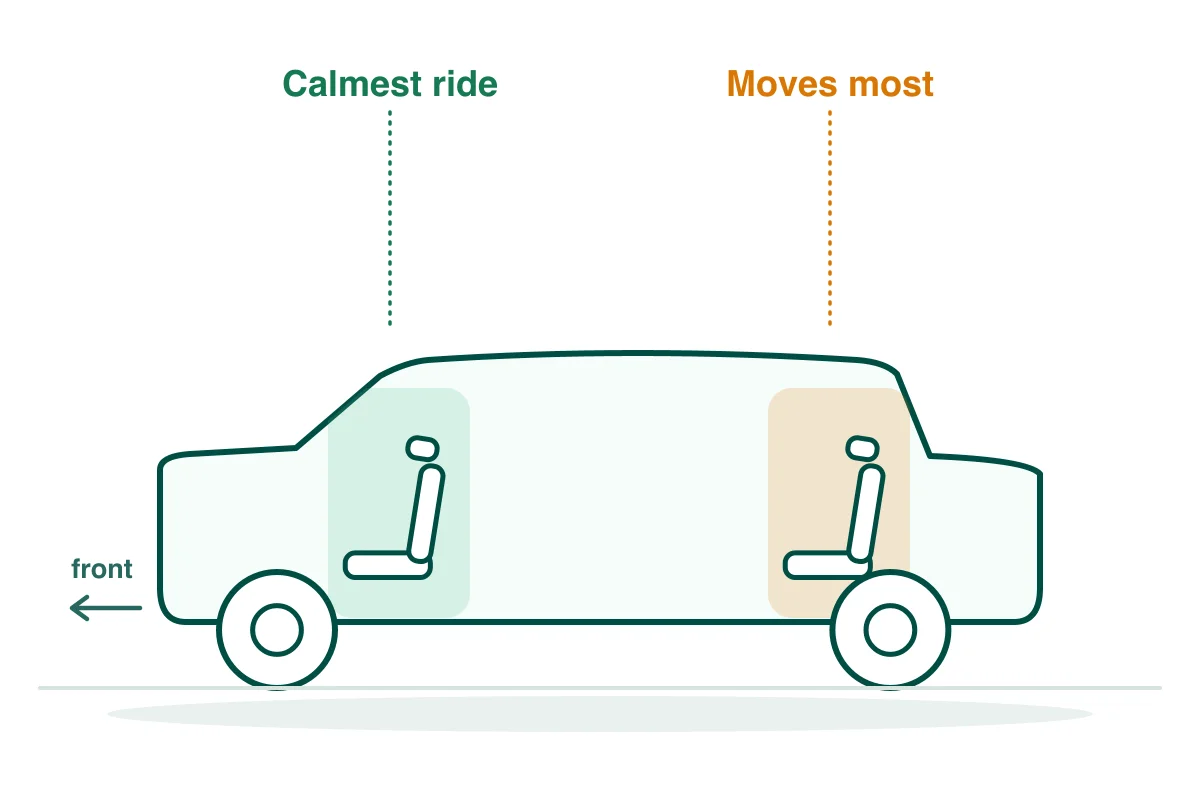
Seat motion-sensitive passengers up front, where the windshield gives a clear, unobstructed view of the road and horizon. The styling-driven rear sightlines make the back seat the hardest place for the inner ear and eyes to agree, so reserve it for less-sensitive riders and keep those trips shorter when you can.
Going on a drive in the Toyota C-HR? Set it up first
Set it up before you pull out, not at the first lay-by. Dizzout is a drug-free app that plays precisely calibrated audio through any headphones you already own, wired or Bluetooth, with relief in about 90 seconds. Free to try.
Before you need it: find out how prone you are
Take the free 2-minute testTwo minutes, no sign-up, and it ends with a drug-free plan to prepare.
Put it on your phone before you go
Free to try, no card needed. Or go straight to the App Store or Google Play.
 Scan to open on your phone
On a computer? Dizzout installs on your phone. Scan the code, or open dizzout.com/get on your phone and it'll take you straight to the right store.
Know someone who gets motion sick?
Send them the app that helps stop it, drug-free, in about 90 seconds, works with any headphones. Free to try.
What helps in the Toyota C-HR
- Put the most motion-sensitive person in the front passenger seat, with eyes on the road and the horizon ahead
- For rear riders, encourage them to look forward through the windshield rather than out the small side windows or down at a phone
- Skip reading, texting, and screens while moving: fixing the eyes on a still object widens the sensory mismatch
- Crack a window or aim a vent for cool, fresh airflow, which many riders find settles the stomach
- Ask the driver to brake and accelerate gradually and take corners smoothly, softening the inputs the firm ride transmits
- Dizzout: a drug-free, screen-free sound therapy you can start the moment symptoms begin; most users feel better in about 90 seconds. Over-the-counter options also exist: follow the label or ask a pharmacist.
The screens-away item on that list has a page of its own, with the trials attached: see the verdict on putting your phone away.
Frequently asked questions
Why do passengers feel carsick in the back of a Toyota C-HR but not the front?
Front passengers keep a clear view of the road and horizon, so their eyes confirm the motion their inner ear senses. In the back, the C-HR's small rear side windows, thick pillars, and high beltline limit that outward view, which owners commonly cite as making the rear seat harder for motion-sensitive riders.
Does the C-HR's ride make it worse for motion sickness?
The C-HR has a firm, tightly controlled ride that transmits more road texture than a soft, floaty car. Owners more often point to the rear visibility than the ride itself, and the same chassis is praised for composed, planted handling and a quiet, refined cabin on the highway.
What is the best way to ride comfortably in a C-HR if I get carsick?
Sit up front for the clearest view of the road, keep your eyes on the horizon, avoid screens and reading, and use fresh air from a window or vent. Smooth, gradual driving inputs help too, and a drug-free option like Dizzout can be started as soon as symptoms begin.
Other car motion-sickness guides
Sources & further reading
Your next question, probably
Car sick on every single drive?
The graded plan that builds tolerance ride by ride
If that is not your question:
Based on publicly reported owner experiences and the vehicle's documented design characteristics, as of 2026. Vehicle and brand names are trademarks of their respective owners; Dizzout is not affiliated with or endorsed by them. Motion-sickness sensitivity varies by person, so this is informational, not a vehicle review or a substitute for a doctor's advice.