
Motion Sickness in the Subaru Ascent: Why It Happens & How to Prevent It
The Subaru Ascent is a roomy, eight-seat family SUV that earns praise for its safety kit, high seating, and easygoing manners, yet it also shows up in multi-page owner threads about motion sickness, where the same traits that make it relaxed (a continuously variable transmission and a soft, settled ride) leave some passengers feeling queasy, especially in the third row.
3-Row SUV · ICE · Reader-reported motion-sickness risk: mixed, very person-dependent.
- Low
- Moderate
- High
- Very high
Risk levels summarise what passengers and riders commonly report, not measured testing.
Key facts
- The Subaru Ascent is a 3-row SUV. It runs a combustion engine.
- Reader reports place it in the moderate band for motion sickness.
- 6 design factors are documented on this page as motion triggers in the Subaru Ascent.
- Best seat: Seat the most motion-sensitive rider in the second row (the center position if your trim has a bench rather than captain's chairs) instead of the third row, which sits behind the rear axle and feels the most motion.
Try Dizzout free. Put it on your phone before you go, so it is there when you need it. Drug-free, any headphones.Free · works with any headphones · no account to try
Stop car sickness. Free to try, no card needed. Or go straight to the App Store or Google Play.
Why the Subaru Ascent can trigger motion sickness
In Subaru Ascent owner forums, several long-running threads ("Motion Sickness," "Motion sickness for passengers," "CVT a bit jerky at low speeds") describe a floaty ride feel paired with subtle, hard-to-anticipate acceleration from the CVT, the same character owners flag in the Outback, compounded here by a tall three-row body and a third row seated behind the rear axle. It's worth keeping in perspective: most of this is owner-reported anecdote, and the Ascent is also widely recommended as a comfortable family hauler with excellent outward visibility, a quiet cabin, and a composed ride on the highway. The well-supported piece is the mechanism: low-frequency suspension "float" and seat position relative to the car's center of gravity are recognized motion-sickness contributors, not a verdict that the model is flawed.
- A continuously variable transmission whose smooth, imperceptible ratio changes remove the acceleration cues passengers normally feel, which some owners describe as a 'floating' sensation
- Soft suspension that can wallow gently over road undulations, the kind of slow, low-frequency vertical motion that is among the most nausea-provoking inputs
- At low neighborhood speeds, owners report the CVT can feel slightly jerky or hesitant as it settles into ratio, most noticeable when the drivetrain is cold
- A tall three-row SUV with an elevated center of gravity, so passengers sit higher and feel more body lean in corners
- The third row sits behind the rear axle, where pitch and bounce are greatest and the forward view is most blocked
- EyeSight lane-centering / steering assist is reported as fairly active; some owners find disabling it on winding roads makes steering inputs feel more natural
Best seat & setup in the Subaru Ascent
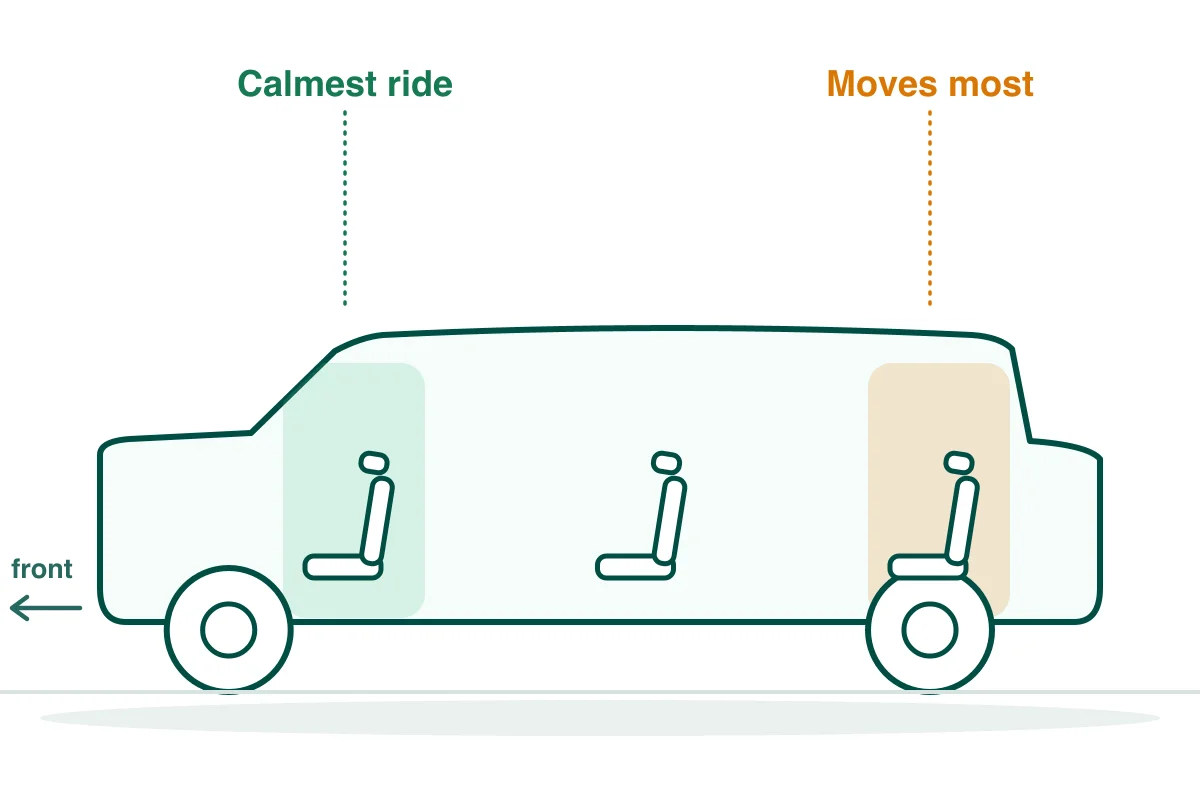
Seat the most motion-sensitive rider in the second row (the center position if your trim has a bench rather than captain's chairs) instead of the third row, which sits behind the rear axle and feels the most motion. Front passengers should keep their eyes on the horizon. The Ascent's tall seating and large windows give good outward visibility, which works in your favor up front.
Going on a drive in the Subaru Ascent? Set it up first
Set it up before you pull out, not at the first lay-by. Dizzout is a drug-free app that plays precisely calibrated audio through any headphones you already own, wired or Bluetooth, with relief in about 90 seconds. Free to try.
Before you need it: find out how prone you are
Take the free 2-minute testTwo minutes, no sign-up, and it ends with a drug-free plan to prepare.
Put it on your phone before you go
Free to try, no card needed. Or go straight to the App Store or Google Play.
 Scan to open on your phone
On a computer? Dizzout installs on your phone. Scan the code, or open dizzout.com/get on your phone and it'll take you straight to the right store.
Know someone who gets motion sick?
Send them the app that helps stop it, drug-free, in about 90 seconds, works with any headphones. Free to try.
What helps in the Subaru Ascent
- Choose the seat closest to the car's center of gravity, second row over third, and use a window seat with a clear forward view
- Keep eyes on the horizon or the road far ahead rather than on phones, books, or the center screen, which widens the eye-inner-ear mismatch
- Crack a window or aim fresh air from the vents toward sensitive riders, and keep the cabin cool
- On winding back roads where the float and body lean are most noticeable, ask the driver to brake and accelerate gradually and take corners gently
- Take breaks for fresh air on longer drives, and avoid heavy or greasy meals right beforehand
- Dizzout: a drug-free, screen-free sound therapy you can start the moment symptoms begin; most users feel better in about 90 seconds. Over-the-counter options also exist: follow the label or ask a pharmacist, and check with your doctor or pediatrician for children
The screens-away item on that list has a page of its own, with the trials attached: see the verdict on putting your phone away.
Frequently asked questions
Why do my kids get carsick in the third row of the Ascent?
The third row sits behind the rear axle, where a tall SUV pitches and bounces the most and the forward view is most obstructed, a combination that commonly provokes motion sickness. Owners often report it eases when a sensitive child moves to the second row, ideally a center seat with a clear view ahead, and keeps their eyes on the road instead of a screen.
Is the Ascent's CVT the reason it feels 'floaty'?
Owners frequently tie the sensation to the CVT plus the soft suspension. Because a CVT changes ratios smoothly without the distinct shifts of a geared automatic, passengers lose the acceleration cues they'd normally feel, and a settled, gently floating ride adds slow low-frequency motion. Both are recognized contributors to queasiness. That said, the same traits make the Ascent relaxed and quiet for many families, so it's a trade-off rather than a defect.
Does turning off lane-keep assist help with motion sickness in the Ascent?
Some Ascent owners report that Subaru's EyeSight lane-centering feels fairly active and that disabling steering assist on winding roads makes the car's inputs feel more natural and predictable. It's an owner-reported adjustment, not a guaranteed fix. The bigger levers for a queasy passenger are seat position, eyes on the horizon, and fresh air.
Other car motion-sickness guides
Sources & further reading
- https://www.ascentforums.com/threads/motion-sickness.3305/
- https://www.ascentforums.com/threads/motion-sickness-for-passengers.4797/
- https://www.ascentforums.com/threads/cvt-a-bit-jerky-at-low-speeds.4755/
- https://www.subaruoutback.org/threads/motion-sickness-while-driving-2025-ascent.573426/
- https://thecarseatlady.com/motion-sickness-puking-poncho/
Your next question, probably
Car sick on every single drive?
The graded plan that builds tolerance ride by ride
If that is not your question:
Based on publicly reported owner experiences and the vehicle's documented design characteristics, as of 2026. Vehicle and brand names are trademarks of their respective owners; Dizzout is not affiliated with or endorsed by them. Motion-sickness sensitivity varies by person, so this is informational, not a vehicle review or a substitute for a doctor's advice.