
Motion Sickness in the Chrysler Pacifica: Why It Happens & How to Prevent It
The Chrysler Pacifica is one of the more contested vehicles in the car-sickness conversation: some families report rear-seat queasiness on longer or twistier drives, while plenty of other owners describe the ride as smooth and quiet. If the back row of your Pacifica is a problem, the most useful levers are seat choice and where the kids are looking, not the van itself.
Minivan · ICE · Reader-reported motion-sickness risk: mixed, very person-dependent.
- Low
- Moderate
- High
- Very high
Risk levels summarise what passengers and riders commonly report, not measured testing.
Key facts
- The Chrysler Pacifica is a minivan. It runs a combustion engine.
- Reader reports place it in the moderate band for motion sickness.
- 6 design factors are documented on this page as motion triggers in the Chrysler Pacifica.
- Best seat: If you can, choose a trim with a second-row bench so a carsick child can ride in the center-second-row seat, which has the steadiest motion and the clearest forward view.
Try Dizzout free. Put it on your phone before you go, so it is there when you need it. Drug-free, any headphones.Free · works with any headphones · no account to try
Stop car sickness. Free to try, no card needed. Or go straight to the App Store or Google Play.
Why the Chrysler Pacifica can trigger motion sickness
In a widely cited Pacifica owners thread, one family reported four of five members getting carsick on a 45-minute drive, with another owner describing three of seven kids feeling sick, and both noted it was worse on mountain back roads than on the highway. Some owners attribute it to a firmer or bouncier rear setup and the optional 20-inch wheels, while a separate thread questions the suspension's body sway. That said, the Pacifica is also frequently praised as a smooth, composed minivan, and some owners with motion-prone family members report no trouble at all, so this is a genuinely mixed signal rather than a verdict against the van.
- Owner threads report families getting carsick on longer drives, commonly noted as worse on winding mountain back roads than on the highway
- Some owners tie the discomfort to a firmer or bouncier rear ride, with the optional 20-inch wheels occasionally singled out (though others with 20s report no issue)
- The third row sits at or behind the rear axle, where any minivan transmits the most pitch and bounce and offers the poorest forward view
- Captain's-chair configurations remove the second-row center seat, which is the single best spot for a motion-sensitive rider
- High beltlines and a booster that sits too low can block a child's window view, widening the eyes-versus-inner-ear mismatch
- On the balanced side, the Pacifica is widely described as a quiet, compliant cruiser, and some carsick-prone owners report no problems at all
Best seat & setup in the Chrysler Pacifica
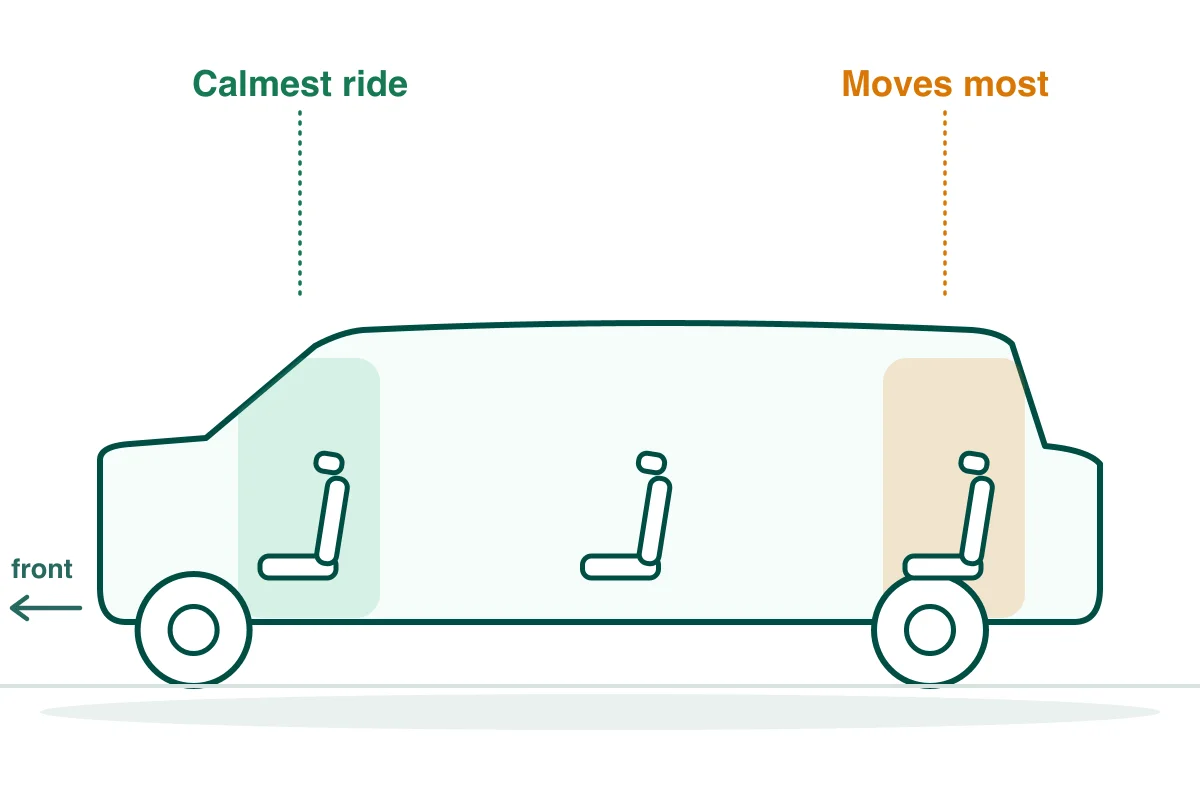
If you can, choose a trim with a second-row bench so a carsick child can ride in the center-second-row seat, which has the steadiest motion and the clearest forward view. Avoid placing sensitive riders in the third row, behind the rear axle, where bounce and pitch are greatest, and make sure any booster lets the child actually see out the window.
Going on a drive in the Chrysler Pacifica? Set it up first
Set it up before you pull out, not at the first lay-by. Dizzout is a drug-free app that plays precisely calibrated audio through any headphones you already own, wired or Bluetooth, with relief in about 90 seconds. Free to try.
Before you need it: find out how prone you are
Take the free 2-minute testTwo minutes, no sign-up, and it ends with a drug-free plan to prepare.
Put it on your phone before you go
Free to try, no card needed. Or go straight to the App Store or Google Play.
 Scan to open on your phone
On a computer? Dizzout installs on your phone. Scan the code, or open dizzout.com/get on your phone and it'll take you straight to the right store.
Know someone who gets motion sick?
Send them the app that helps stop it, drug-free, in about 90 seconds, works with any headphones. Free to try.
What helps in the Chrysler Pacifica
- Seat the most sensitive rider in the second-row center position when a bench is available, and keep the third row for the least-affected passengers
- Encourage kids to look out the front or at the horizon rather than down at phones, tablets, books, or the rear-seat screen while moving
- Open a window or aim fresh air from the vents and keep the cabin cool, since stuffy warmth tends to make symptoms worse
- Drive smoothly with gradual braking and gentle inputs, especially on the winding back roads owners flag as the worst case
- Over-the-counter options exist for some riders, but follow the label and ask a pharmacist or your pediatrician, particularly for children
- Dizzout is a drug-free, screen-free sound therapy you can start the moment symptoms begin; most users feel better in about 90 seconds
The screens-away item on that list has a page of its own, with the trials attached: see the verdict on putting your phone away.
Frequently asked questions
Why do my kids get carsick in our Chrysler Pacifica but not in other cars?
Owners commonly report that back-row riders in the Pacifica feel queasy on longer or twistier drives, and a few tie it to a firmer or bouncier rear ride. The biggest factor is usually seat position: the third row sits at or behind the rear axle, where motion is strongest and the forward view is poorest. Moving a sensitive child to the second-row center seat and keeping their eyes on the road ahead often helps the most.
Should I get the bench or captain's chairs in the Pacifica if someone gets carsick?
For a motion-sensitive passenger, a second-row bench is usually the better choice because it provides a true center seat, the steadiest spot in the van with the clearest forward view. Captain's chairs are roomy and comfortable but remove that center position, pushing riders toward the windows or the bumpier third row. The bench gives you the best seat for a carsick child.
Do the 20-inch wheels on the Pacifica make motion sickness worse?
Some owners associate the optional 20-inch wheels and a firmer rear setup with more rear-seat bounce, but this is mixed: other owners running 20s report a comfortable ride and no carsickness, even with motion-prone family members. Treat it as one possible factor among several rather than a sure cause, and focus first on seat choice, ventilation, and keeping eyes on the horizon.
Other car motion-sickness guides
Sources & further reading
- https://www.pacificaforums.com/threads/new-pacifica-l-bad-motion-sickness.41509/
- https://www.pacificaforums.com/threads/less-bouncy-rear-any-solutions.54791/
- https://thecarseatlady.com/bench-vs-captains-chairs/
- https://thecarseatlady.com/motion-sickness-puking-poncho/
- https://wwwnc.cdc.gov/travel/page/motion-sickness
Your next question, probably
Car sick on every single drive?
The graded plan that builds tolerance ride by ride
If that is not your question:
Based on publicly reported owner experiences and the vehicle's documented design characteristics, as of 2026. Vehicle and brand names are trademarks of their respective owners; Dizzout is not affiliated with or endorsed by them. Motion-sickness sensitivity varies by person, so this is informational, not a vehicle review or a substitute for a doctor's advice.