Motion Sickness on Carnival Celebration: What to Expect and How to Prepare
At 183,521 gross tons, Carnival Celebration is a stable ship in most sea conditions. It is an Excel Class ship operated by Carnival, carrying up to 5,374 passengers, and Carnival routes for this vessel primarily cover Caribbean and Bahamas. Its homeport is Miami, Florida.
Carnival Celebration is the flagship of Carnival's fleet at 183,521 gross tons. Caribbean sailings from Miami remain mostly calm year-round. The ship is equipped with modern stabilizers that significantly reduce roll motion in standard sea conditions.
Key facts
- Carnival Celebration measures 183,521 gross tons and is 1,130 feet long.
- Ship class: Excel Class, launched 2022, operated by Carnival.
- It carries up to 5,374 passengers.
- Its size places it in the low motion category, and it is equipped with stabilizers.
- Cabins recommended for motion-sensitive passengers: Decks 6-8, midship.
Try Dizzout free. Put it on your phone before you go, so it is there when you need it. Drug-free, any headphones.Free · works with any headphones · no account to try
Stop seasickness on your cruise. Free to try, no card needed. Or go straight to the App Store or Google Play.
How Much Motion Will You Feel on Carnival Celebration?
Ship size is the single biggest factor in how much motion passengers feel. Larger vessels displace more water and are significantly more stable than smaller ships. Carnival Celebration's 183,521 GT places it in the low motion category. It is equipped with hydraulic stabilizers that actively reduce roll motion in moderate seas.
Best Cabin Location on Carnival Celebration for Motion Sickness
The most stable cabins on any cruise ship are midship, on lower decks, closest to the ship's center of gravity. On Carnival Celebration, the recommended cabins for motion-sensitive passengers are Decks 6-8, midship. Avoid cabins at the bow (front) and stern (back), and any cabin on upper decks - movement is amplified the higher and further from center you are.
Find your steadiest cabin
Pick your ship, or a ship class, then where on the ship you are thinking of staying.
The chosen cabin, midship and on a lower deck, is marked.
A cabin midship, on a lower deck sits in the steadiest zone on this ship.
Carnival Celebration moves little in normal conditions.
- This ship moves little in normal conditions, based on its size and stabilisers.
- Midship sits over the ship's centre of gravity, the pivot point pitch and roll turn around.
- Lower decks are closer to the waterline, so roll swings them through a shorter arc.
Recommended cabins on Carnival Celebration: Decks 6-8, midship.
This is the spot the whole guide points to. Nice pick.
You picked the steadiest zone the ship has
That is the best the ship can do, and the steadiest cabin is still not a calm sea. Dizzout is the drug-free option to have on board: sound therapy on any headphones, about 90 seconds, no drowsiness.
Free to try, no card needed. Or go straight to the App Store or Google Play.
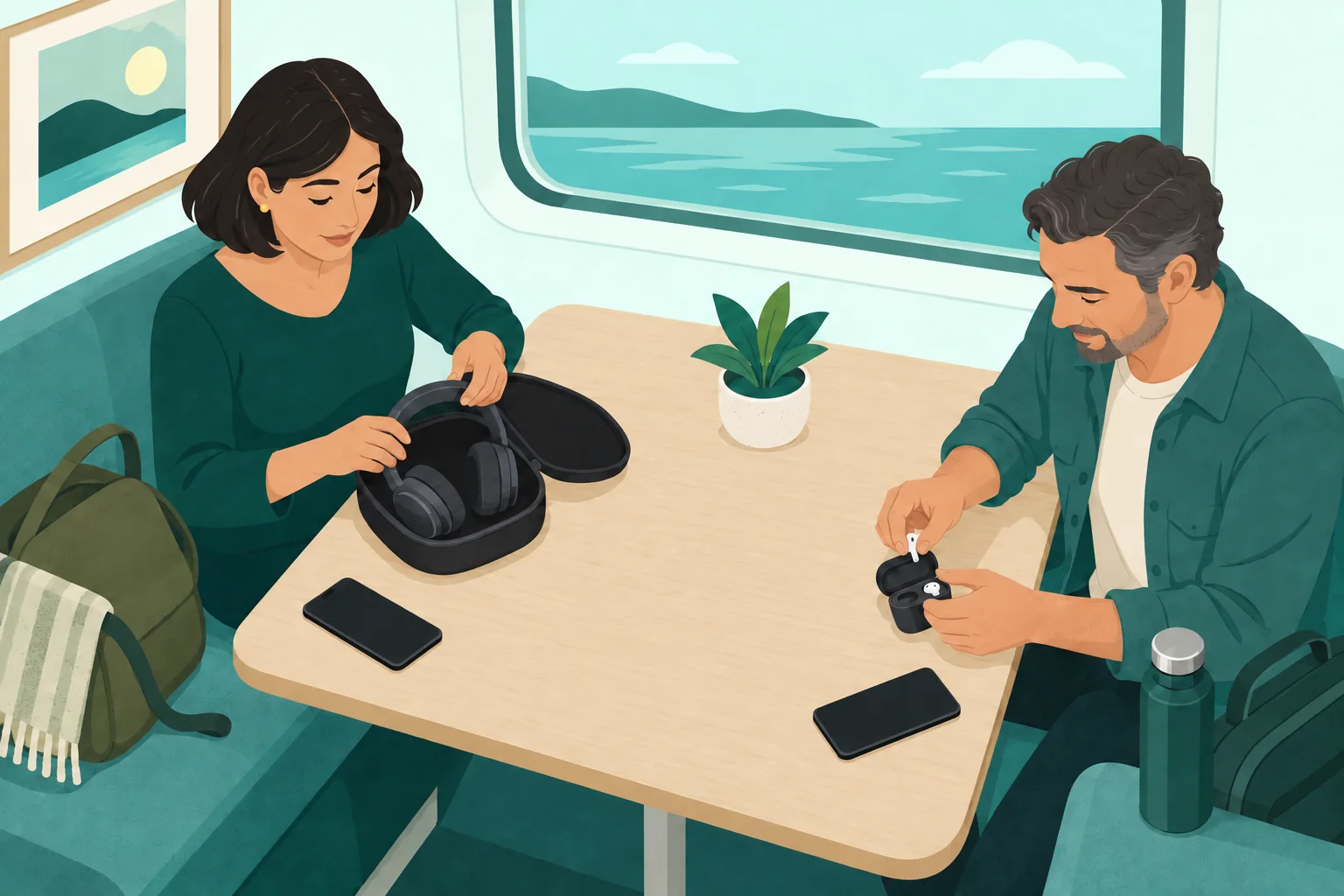
Keep each travel kit separate
Each traveler can prepare their own phone and headphones. Set up Dizzout while seated, with personal equipment kept in separate cases.
Booking or booked? The cabin decides a lot
Find the steadiest cabinFree and takes about a minute.
Free to download. Paid subscription for full access. Or go straight to the App Store or Google Play.
 Scan to open on your phone
On a computer? Dizzout installs on your phone. Scan the code, or open dizzout.com/get on your phone and it'll take you straight to the right store.
Know someone who gets motion sick?
Send them the app that helps stop it, drug-free, in about 90 seconds, works with any headphones. Free to try.
What to Pack for Motion Sickness on Carnival Celebration
- Dizzout on your phone, drug-free and designed to help once symptoms have started
- Bonine or Dramamine if you use them, taken 30 to 60 minutes before boarding
- A scopolamine patch for multi-day sailings, applied 8 or more hours before departure
- Sea-Bands acupressure wristbands
- Ginger chews
Carnival ships typically stock Bonine and Dramamine at the onboard pharmacy or medical center. Scopolamine patches and wristbands should be brought from home, and anything you take is a question for a pharmacist or doctor first. The wristbands are the item on that list where the trials genuinely disagree: see the verdict on acupressure wristbands.
Boarding Day and Sail-Away on Carnival Celebration
Boarding usually opens around late morning and closes a couple of hours before sail-away. The first few hours on board are often when motion-sensitive passengers feel things start to shift - the ship is taking on fuel and shifting weight, the gangway moves slightly, and once you push off from the pier you'll feel the first real swells of the cruise. If you're prone to seasickness, do not arrive starving, do not head straight to the buffet for a heavy plate, and try to get on deck during sail-away. The horizon view does more for the inner ear than the muster drill briefing.
How Carnival Celebration Compares to Its Sister Ships
Carnival Celebration shares its Excel Class design with Carnival Jubilee and Carnival Mardi Gras. Sister ships in the same class usually share hull design, gross tonnage, and stabilizer technology, so motion experiences are broadly similar across them. Where they differ is itinerary - one sister ship may run Caribbean year-round while another spends the winter in the Mediterranean. If your preferred sister ship is on a rougher itinerary, motion can feel meaningfully worse despite the identical engineering.
Best Time of Year to Sail Carnival Celebration
Sea conditions for Carnival Celebration's typical routes vary heavily by season. Caribbean cruises are calmest June through November between hurricane systems, though hurricane season itself can create rough days even without a direct storm. Winter Caribbean (December-March) is usually beautiful but the Atlantic transit can be choppy. For motion-sensitive passengers, picking the right month often matters more than picking the right ship.
Reading on Carnival Celebration Without Triggering Nausea
This is the most common motion-sickness trap on cruise ships and almost nobody warns you about it. Reading in your cabin - especially a cabin without a sea view - is a near-perfect recipe for nausea. Your eyes are locked on a still page or screen while your inner ear feels the ship rolling. Your brain hits the same sensory mismatch as if you were reading in a moving car. The fix is to read on deck with the horizon visible, or to switch to audiobooks when you want to stay below. An audiobook works for the same reason the horizon does: your eyes stop tracking a page that is holding still while the ship is not.
What decides how much you feel on Carnival Celebration
Three things set how much motion reaches your cabin, and all three are published numbers rather than opinions. Carnival Celebration measures 183,521 gross tons and 1,130 feet: mass and length are what make a hull slow to respond to a swell, which is why the largest ships feel steadiest. It carries stabiliser fins, which cut roll, the side to side motion most people notice first, but do nothing for pitch, the fore and aft motion you feel at the bow. That is why we rate its motion low. What none of it controls is the sea: a calm-rated ship in a rough crossing still moves, and on a long itinerary one or two days can be uncomfortable whatever the ship.
Typical Carnival Celebration Routes and Sea Conditions
Carnival Celebration operates primarily on Caribbean and Bahamas itineraries. Caribbean routes generally offer calm seas, particularly in the Southern Caribbean. The Atlantic crossing to the Bahamas can be rougher, especially October through April.
Frequently Asked Questions
Is seasickness common on Carnival Celebration?
It is less common on a ship this size than most first-time cruisers expect, and it is not rare either. Calm water and a large hull do most of the work: on Carnival Celebration we rate the motion risk low compared to smaller vessels. Rough water changes the picture for everyone: in a study of expedition passengers crossing the Drake Passage, seasickness in rough seas approached everyone aboard. First-time cruisers and passengers in bow or stern cabins on upper decks feel it first.
What does Carnival provide for seasickness?
Carnival ships stock motion sickness medication at the onboard medical center. You can also request it through room service on most sailings. For prevention before boarding, bring your own medication - the ship pharmacy is not always stocked with every option.
What's the fastest way to stop seasickness on Carnival Celebration?
Once you're already feeling sick, most medications won't work fast enough - they need to be taken before symptoms start. The fastest options once nausea has begun are sound therapy via Dizzout (drug-free, relief in about 90 seconds) or visiting the ship's medical center for an injection, which also acts quickly but requires a trip to the medical deck and typically costs $50-150.
Does Carnival Celebration have stabilizers?
Yes. Carnival Celebration is equipped with stabilizer fins, which reduce roll, the side to side motion most people notice first. Stabilizers do not reduce pitch, the fore and aft motion felt at the bow, so a stabilized ship can still move in a heavy swell.
Other ships we have looked at
Related guides
- Is your route rough?Sea-by-sea conditions, month by month: Biscay, the Drake, Alaska and more.
- Still rocking after you get off?Land sickness is normal after a cruise. How long it lasts and what helps.
- All cruise ship guidesComparison table, FAQs, and Carnival ship list.
- Seasickness, general overviewWhy ships make people queasy and what actually helps.
- Cruise prevention hacksCabin choice, food, movement: the practical stuff.
- The science of motion sicknessHow the vestibular system creates the nausea response.
Explore more
Further reading
- · Cleveland Clinic: Motion Sickness: clinical overview of causes, symptoms, and treatment options.
- · CDC Yellow Book: Motion Sickness chapter: official travel-medicine guidance for cruisers and flyers.
- · Cruise Critic reviews for Carnival Celebration: passenger experience reports including motion notes.