
Motion Sickness and Eye Strain: Why Your Eyes Feel Tired and Sore, and How to Ease It
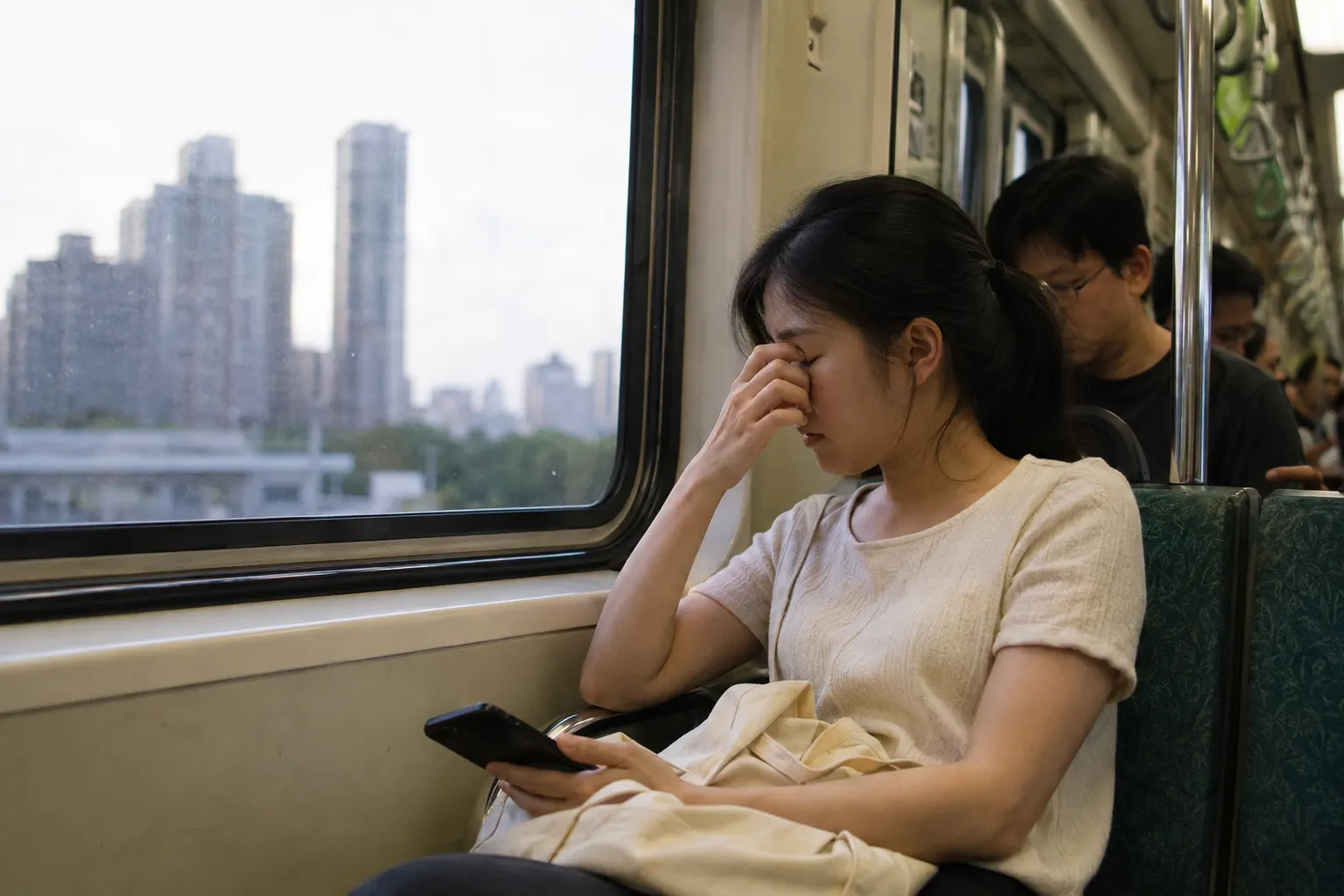
Eye strain, a tired, sore, or aching feeling in and around the eyes, sometimes with blurry vision, is a discomfort many people notice alongside motion sickness, especially when the trigger is visual: reading or scrolling in a moving car, watching a screen on a boat or plane, or using a VR headset. It tends to show up because your eyes are working hard to focus on close, moving, or shifting visuals while your inner ear reports different motion, and that mismatch (plus the sheer visual effort) leaves your eyes feeling fatigued. The reassuring part: it usually eases once you rest your eyes and the conflicting visual input stops, and there are several simple, drug-free things you can do to feel more comfortable.
First thing to do: Look away from the close-up visual and rest your gaze on something stable and distant, like the horizon or a point straight ahead roughly 20 feet away, for 20 seconds or more; this is the core of the widely recommended 20-20-20 approach.
Prone to motion sickness? Drug-free calibrated sound through any headphones, designed to help once symptoms have started.Starts in your browser · works with any headphones
Get your personalized Dizzout plan. Paid subscription for full access.

On your phone? Scan to start there.
What it feels like
Eye strain (sometimes called eye fatigue or, when screens are involved, digital eye strain) is a feeling of tired, sore, heavy, or aching eyes. It can come with dryness or irritation, blurry or slightly unfocused vision, and a dull headache around the brow or temples. In the context of motion sickness, it often appears when you've been reading, scrolling, gaming, or wearing a VR headset while in motion, and it frequently arrives bundled with other symptoms such as headache, nausea, or dizziness. Eye strain is listed among the symptoms of visually driven motion sickness, the kind sometimes called cybersickness or virtual motion sickness, where screens and headsets are the main trigger. It's a real and common discomfort, but it's typically mild and temporary. It's worth separating ordinary eye strain, which eases with rest, from a sudden change in vision such as lasting double vision, sharp eye pain, or vision loss, which are different and warrant a clinician's attention.
Why motion sickness causes eye strain (eye fatigue)
Your sense of balance and orientation relies on three inputs agreeing: your inner ears (the vestibular system, which senses motion), your eyes, and position sensors in your muscles and joints. According to Cleveland Clinic, motion sickness happens when these signals don't match: for example, your eyes are locked on a phone, book, or headset display that appears still (or moves in its own way) while your inner ear feels the sway and acceleration of the vehicle. This sensory conflict is the leading explanation for motion-sickness symptoms in general. Eye strain layers onto that in two ways. First, the eyes themselves are doing demanding work: constantly refocusing on close-up or shifting visuals, tracking text or a screen against a moving background, and, with screens and VR, coping with brightness, glare, and depth cues that don't quite line up with real-world motion. Second, people tend to blink less while concentrating on a screen, which dries the surface of the eye and adds to the tired, gritty feeling (a pattern the American Optometric Association describes for digital eye strain). Put together, the visual effort and the underlying sensory mismatch leave the eyes feeling fatigued and sore, often alongside the headache and queasiness of motion sickness.
How to ease it now
- 1
Look away from the close-up visual and rest your gaze on something stable and distant, like the horizon or a point straight ahead roughly 20 feet away, for 20 seconds or more; this is the core of the widely recommended 20-20-20 approach.
- 2
Put the book, phone, or tablet away, or take off the VR headset; close and screen-based visuals are a major source of both the strain and the sensory conflict.
- 3
Blink slowly and fully a few times and let your eyes close and rest for a moment: concentrating on a screen tends to reduce blinking and dry the eyes.
- 4
Get cool, fresh air and stop straining to read fast-passing scenery; let your eyes relax rather than forcing focus.
- 5
Breathe slowly and steadily; controlled breathing has research support for easing motion-sickness symptoms, and it helps you relax the tension that often comes with tired eyes.
- 6
For the nausea or dizziness that can accompany the strain, some people use ginger or drug-free sound therapy. Dizzout is one drug-free option, delivering sound therapy through any headphones, that many users try once symptoms have started; if you'd prefer a remedy or medication, ask a pharmacist what's appropriate for you.
A drug-free option that works after symptoms start
Get your personalized Dizzout plan
Dizzout is a free-to-download, drug-free app that uses calibrated sound on any headphones. It's one of the few options designed to help once you already feel sick. Dizzout states relief in about 90 seconds.
Paid subscription for full access.
30,000+ travelers in 30+ countries · How we count

On your phone? Scan to start there.
Comparing apps first? See how the motion sickness apps compare
How to prevent it
- Use the 20-20-20 rule during screen, reading, or VR sessions: every 20 minutes, look at something about 20 feet away for 20 seconds to give your eyes a break.
- Avoid reading or scrolling while the vehicle is moving; instead face forward and keep your gaze on the road or horizon so your eyes and inner ear agree.
- Choose the steadiest seat: the front of a car, over the wing on a plane, or mid-ship on a boat, where motion, and the visual work of coping with it, is least.
- Set screens up for comfort: match brightness to your surroundings, reduce glare, use larger text, and keep a comfortable viewing distance rather than holding a device close.
- Take regular breaks from gaming and VR, ease into headset use with shorter sessions at first, and stop if your eyes start to feel tired.
- Get fresh air, stay hydrated, and have your eyes checked periodically: uncorrected vision problems can make eye strain worse, so an eye-care professional's advice can help.
When to see a doctor
Eye strain from reading, screens, or motion should ease within a short while once you rest your eyes and the visual trigger stops. Talk to a doctor or an eye-care professional if the strain is frequent or persistent, if it keeps interfering with work or daily life, or if it's linked to headaches that keep returning. Seek prompt medical or eye care for warning signs that go beyond ordinary tired eyes: vision loss or a sudden change in vision, double vision that doesn't clear when you rest, sharp eye pain, marked eye redness or light sensitivity, flashes of light or a shower of new floaters, or a sudden severe headache. Also get medical advice for neurological warning signs such as confusion, trouble speaking, facial drooping, or weakness or numbness. These can signal eye or neurological conditions that need evaluation rather than simple strain. This page is informational and not a substitute for personalized medical advice.
Common questions
Is eye strain really a symptom of motion sickness?
Yes, especially when the trigger is visual. Eye strain is listed among the symptoms of visually induced motion sickness, sometimes called cybersickness or virtual motion sickness, which is driven by screens, VR headsets, or reading while in motion. It often appears alongside headache, nausea, and dizziness. Classic travel sickness can involve it too, particularly if you've been reading or looking at a device.
Why do my eyes feel tired and sore when I read in a moving car?
Two things stack up. Your eyes are working hard to focus on close, small text against a moving background, and you tend to blink less while concentrating, which dries the eye's surface. On top of that, your eyes report near-stillness (the page) while your inner ear feels the car's motion, a sensory mismatch that drives motion sickness. Together they leave your eyes feeling strained and fatigued.
Does the 20-20-20 rule actually help?
It's a simple, widely recommended way to give your eyes regular rest: every 20 minutes, look at something about 20 feet away for around 20 seconds. Shifting focus to a distant point relaxes the focusing muscles and, during travel, also lets your eyes take in real-world motion that matches what your inner ear feels, which can ease both the strain and the sensory conflict.
Is my headache from eye strain or from motion sickness?
It can be both, and they often overlap. Eye strain frequently brings a dull ache around the brow or temples, while motion sickness has its own headache among its symptoms. The practical response is the same either way: rest your eyes, put screens and reading away, look at the horizon, get fresh air, and breathe slowly. If headaches keep returning, it's worth seeing a doctor or eye-care professional.
How long does the eye strain last?
For most people, tired, sore eyes settle within minutes to an hour or so once you stop the close-up visual work and rest your eyes, sometimes with a bit of lingering tiredness. If the strain is frequent, doesn't ease with rest, or comes with vision changes, eye pain, or persistent headaches, see a doctor or eye-care professional to check for other causes.
Sources
Related symptoms & guides
This page is informational and is not a substitute for professional medical advice. If symptoms are severe, persistent, or occur without any motion trigger, see a qualified clinician.