Motion Sickness: Paris to Nice Drive
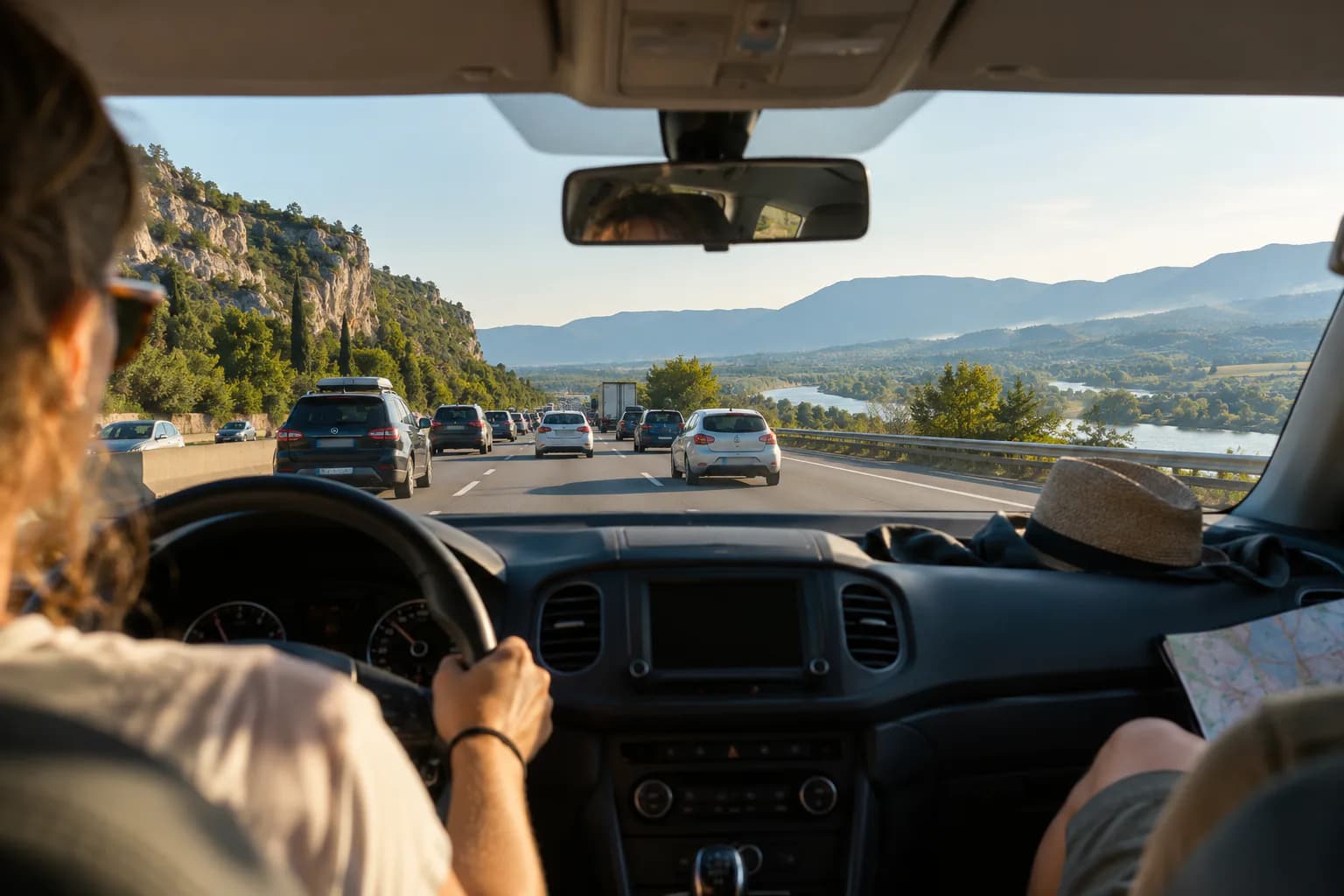
The Paris to Nice trip covers about 580 miles (933 km) and takes around 9 hours. The terrain is autoroute, which makes it a low motion sickness risk route.
The A6/A7 autoroute from Paris to Nice (the Autoroute du Soleil) is well-engineered French motorway, mostly straight with gentle curves. The final stretch (A8) into Nice runs along the Mediterranean with some curves but nothing extreme. Motion sickness is rare on this route except in heavy summer traffic.
In the Nausea Index table of the 46 road trips we cover, the Paris to Nice trip is rated gentle, one of 7 in that band, with 39 rated higher. Full table: the bumpiest road trips, ranked.
Key facts
- The Paris to Nice trip covers about 580 miles, which is 933 km.
- It takes about 9 hours.
- The terrain is autoroute, which puts the route in the low band for motion sickness.
- 2 sections are flagged as motion sickness pressure points, starting with A7 Vallée du Rhône heavy summer traffic.
- Steadiest place to sit: Front passenger seat.
Going on the Paris to Nice drive? Dizzout is drug-free sound therapy for passengers in the back seat, with relief in about 90 seconds.Starts in your browser · works with any headphones
Stop car sickness. Get your personalized Dizzout plan. Paid subscription for full access.

On your phone? Scan to start there.
Where Motion Sickness Hits Hardest
The sections most likely to trigger motion sickness are: A7 Vallée du Rhône heavy summer traffic, A8 coastal approach to Nice. Summer weekends in July and August produce severe traffic on the A7 - this is when motion sickness peaks due to stop-and-go conditions. Drive midweek or off-season when possible.
Measured bends
We counted every bend on this route from OpenStreetMap data: 928.7 km, ranked 24 of 26 road trips for bends per km.
- Bends
- 18
- Bends per km
- 0.02
- Hairpins
- 2
- Busiest 10 km
- 9 bends
Best Seat for Motion Sickness on This Drive
Front passenger seat.
Going on the Paris to Nice drive? Have Dizzout ready
Stop car sickness
Dizzout is drug-free sound therapy for passengers in the back seat, with relief in about 90 seconds. It plays precisely calibrated audio through any headphones you already own, wired or Bluetooth. Free to download.
Get your personalized Dizzout plan. Paid subscription for full access.
30,000+ travelers in 30+ countries · How we count

On your phone? Scan to start there.
Comparing apps first? See how the motion sickness apps compare
Not travelling yet? Remind me the day before my trip
Know someone who gets motion sick?
Send them the app that helps stop it, drug-free, in about 90 seconds, works with any headphones. Free to download.
Prevention Tips for the Paris to Nice Drive
- Have Dizzout downloaded before you start, so it is ready the moment symptoms begin
- If you plan to take an over-the-counter tablet such as Bonine or Dramamine, those need 30 to 60 minutes before departure to do anything. Ask a pharmacist first
- Eat lightly before the drive; a heavy meal makes symptoms worse for most people
- Take breaks every 90 minutes minimum on long stretches
- Keep the car cool and well-ventilated
- Avoid reading or phone use in the back seat
Which of those actually hold up when they are tested is a separate question, and we keep the answers in one place: the remedy verdicts, ranked by evidence.
Frequently asked questions
Is the Paris to Nice drive bad for motion sickness?
No. It is engineered autoroute almost the whole way and rated low risk. The realistic trigger is summer holiday traffic, hours of stop and go on the A7, rather than any curve the road throws at you.
When is traffic worst on the A7?
Summer holiday weekends, when much of the country heads south at once. France's official traffic forecasting service publishes calendars of the difficult days; check them before choosing your date, because a jammed A7 is far harder on queasy passengers than extra miles ever are.
Where do you take breaks on the A6 and A7?
French autoroutes have service areas at regular intervals, big enough to walk around and reset. Break every 90 minutes or so rather than pushing through; arriving queasy on the Riviera is a poor trade for one saved stop.
Which part of the drive has the most curves?
The final A8 stretch into Nice, where the motorway meets the coastal hills. The curves are engineered and gentle by mountain standards, but after many flat hours they can catch a dozing passenger by surprise. Eyes up for the last hour and it rarely amounts to much.
Should carsick passengers take the train to Nice instead?
High speed rail links Paris and the south, and for badly carsick travelers it removes the biggest variable, summer traffic jams. A forward facing train seat with eyes on the horizon beats a car stuck on the A7 in August. If the car is essential, drive off peak and midweek.
What's the fastest way to stop car sickness mid-drive?
Once symptoms have started, pills won't work fast enough - they take 30+ minutes to kick in. The fastest options mid-drive are sound therapy via headphones (Dizzout states relief in about 90 seconds), pulling over for fresh air, and looking at the distant horizon.
Other drives we have looked at
Route facts last checked September 2026. Roads, rules and seasons change; the linked official pages are the live word.