
Motion Sickness: San Francisco to Los Angeles Drive
The San Francisco to Los Angeles trip covers about 460 miles (740 km) and takes around 10 hours. The terrain is coastal cliff road, which makes it a very high motion sickness risk route.
The Pacific Coast Highway (Highway 1) between San Francisco and Los Angeles via Big Sur is one of the most motion-sickness-inducing drives in the world. Constant tight curves along coastal cliffs, frequent elevation changes, and a 90+ mile stretch through Big Sur of near continuous curves make this route notorious for car sickness.
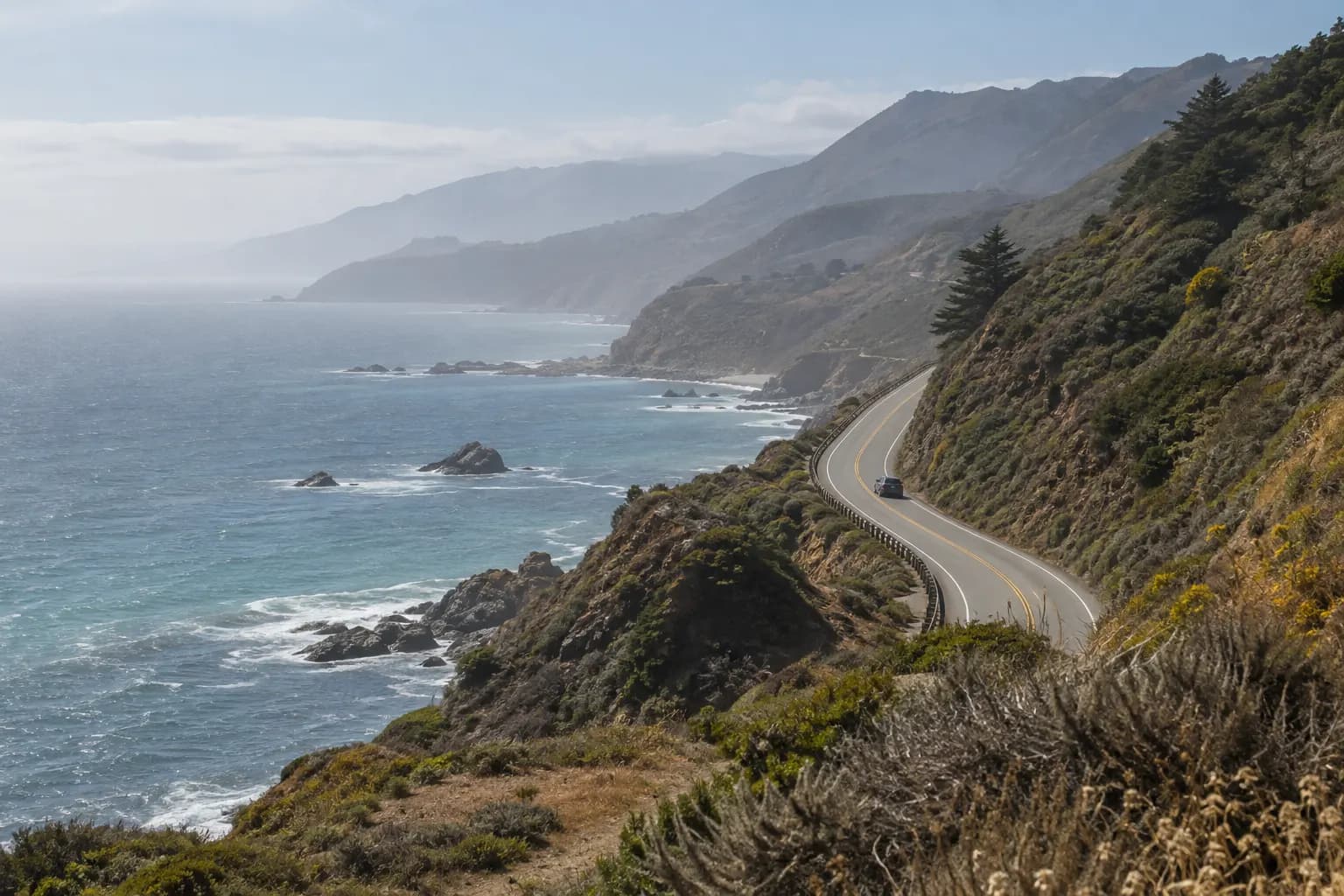
Key facts
- The San Francisco to Los Angeles trip covers about 460 miles, which is 740 km.
- It takes about 10 hours.
- The terrain is coastal cliff road, which puts the route in the very high band for motion sickness.
- 3 sections are flagged as motion sickness pressure points, starting with Big Sur.
- Steadiest place to sit: Driver's seat, or front passenger with eyes on the horizon.
Try Dizzout free. Put it on your phone before you go, so it is there when you need it. Drug-free, any headphones.Free · works with any headphones · no account to try
Stop car sickness. Free to try, no card needed. Or go straight to the App Store or Google Play.
Where Motion Sickness Hits Hardest
The sections most likely to trigger motion sickness are: Big Sur (entire stretch), Nepenthe to Ragged Point, Cambria switchbacks. Take this route only if motion sickness isn't a major concern. If you must drive it with motion-sensitive passengers, consider splitting it across two days, taking breaks every 30 minutes, and using the more direct US-101 inland alternative.
Measured bends
We counted every bend on this route from OpenStreetMap data: 701.7 km, ranked 17 of 26 road trips for bends per km.
- Bends
- 250
- Bends per km
- 0.36
- Hairpins
- 12
- Busiest 10 km
- 44 bends
Best Seat for Motion Sickness on This Drive
Driver's seat, or front passenger with eyes on the horizon.
Going on the San Francisco to Los Angeles drive? Set it up first
Set it up before you pull out, not at the first lay-by. Dizzout is a drug-free app that plays precisely calibrated audio through any headphones you already own, wired or Bluetooth, with relief in about 90 seconds. Free to try.
Before you need it: find out how prone you are
Take the free 2-minute testTwo minutes, no sign-up, and it ends with a drug-free plan to prepare.
Put it on your phone before you go
Free to try, no card needed. Or go straight to the App Store or Google Play.
 Scan to open on your phone
On a computer? Dizzout installs on your phone. Scan the code, or open dizzout.com/get on your phone and it'll take you straight to the right store.
Know someone who gets motion sick?
Send them the app that helps stop it, drug-free, in about 90 seconds, works with any headphones. Free to try.
Prevention Tips for the San Francisco to Los Angeles Drive
- Have Dizzout downloaded before you start, so it is ready the moment symptoms begin
- If you plan to take an over-the-counter tablet such as Bonine or Dramamine, those need 30 to 60 minutes before departure to do anything. Ask a pharmacist first
- Eat lightly before the drive; a heavy meal makes symptoms worse for most people
- Take breaks every 90 minutes minimum on long stretches
- Keep the car cool and well-ventilated
- Avoid reading or phone use in the back seat
Which of those actually hold up when they are tested is a separate question, and we keep the answers in one place: the remedy verdicts, ranked by evidence.
Frequently asked questions
Which part of the SF to LA coastal drive is hardest for motion sickness?
The Big Sur stretch. The road hugs cliffs for mile after mile with barely a straight to recover on, and the curves keep coming for well over an hour. Passengers who were fine through Monterey are often struggling by Ragged Point.
Is Highway 1 through Big Sur open right now?
Check before you go: the Big Sur section closes after slides and storms, sometimes for long stretches, and reopening dates move. Caltrans publishes current Highway 1 conditions, and checking them the morning you leave is the only reliable answer.
Is there a flatter route from San Francisco to Los Angeles?
Yes. US-101 runs inland, stays far straighter, and cuts hours off the coastal time. If someone in the car gets badly carsick, drive 101 and sample the coast in short out and back sections instead of committing to the full cliff road.
How should you split the PCH drive with a carsick passenger?
Across two days, with the overnight somewhere near the middle so neither day is all curves. Breaks every 30 minutes through Big Sur, before symptoms start rather than after, keep most passengers functional. Eat lightly and keep cool, fresh air moving through the cabin.
How long does the SF to LA coast route take?
About 10 hours of driving without stops, which almost nobody does. With viewpoints, meals and the slow Big Sur miles, it is a very full single day and a far better two day trip.
What's the fastest way to stop car sickness mid-drive?
Once symptoms have started, pills won't work fast enough - they take 30+ minutes to kick in. The fastest options mid-drive are sound therapy via headphones (Dizzout states relief in about 90 seconds), pulling over for fresh air, and looking at the distant horizon.
Other drives we have looked at
Route facts last checked September 2026. Roads, rules and seasons change; the linked official pages are the live word.