The short answer
Children roughly 2 to 12 are the most affected age group, because the balance system in the inner ear is still maturing and they usually cannot see the road ahead. What helps is departing when they are rested, seating them where they have a forward view, keeping the car ventilated and free of strong scents, swapping tablets and books for audio, and stopping every one to two hours. Anything beyond that belongs with your pediatrician.
Planning a family road trip should be exciting, not stressful. But if someone in your family suffers from car sickness, the thought of hours in the car can turn your dream vacation into a nightmare.
The good news? With the right preparation, you can reduce car sickness for your family. Here is what actually helps.
Understanding car sickness in children
Children are particularly susceptible to car sickness due to their developing vestibular systems and smaller stature. Their inner ear balance mechanisms are still maturing, making them more sensitive to the sensory conflicts that cause motion sickness. Additionally, children often can't see out windows as easily as adults, creating a disconnect between what they feel and what they see.
For context on how common this is at all: about one in three people are highly susceptible to motion sickness, and susceptibility peaks between roughly ages 7 and 12. The statistics page lists every figure with its source.
| Age band | What makes it harder | What changes |
|---|---|---|
| Ages 2 to 6 | Immature vestibular development, cannot see out windows easily, limited words for how they feel | More prone to anxiety about the feeling itself |
| Ages 7 to 12 | Balance systems still developing | Better visual reference, and old enough to follow prevention instructions |
Pre-trip preparation strategies
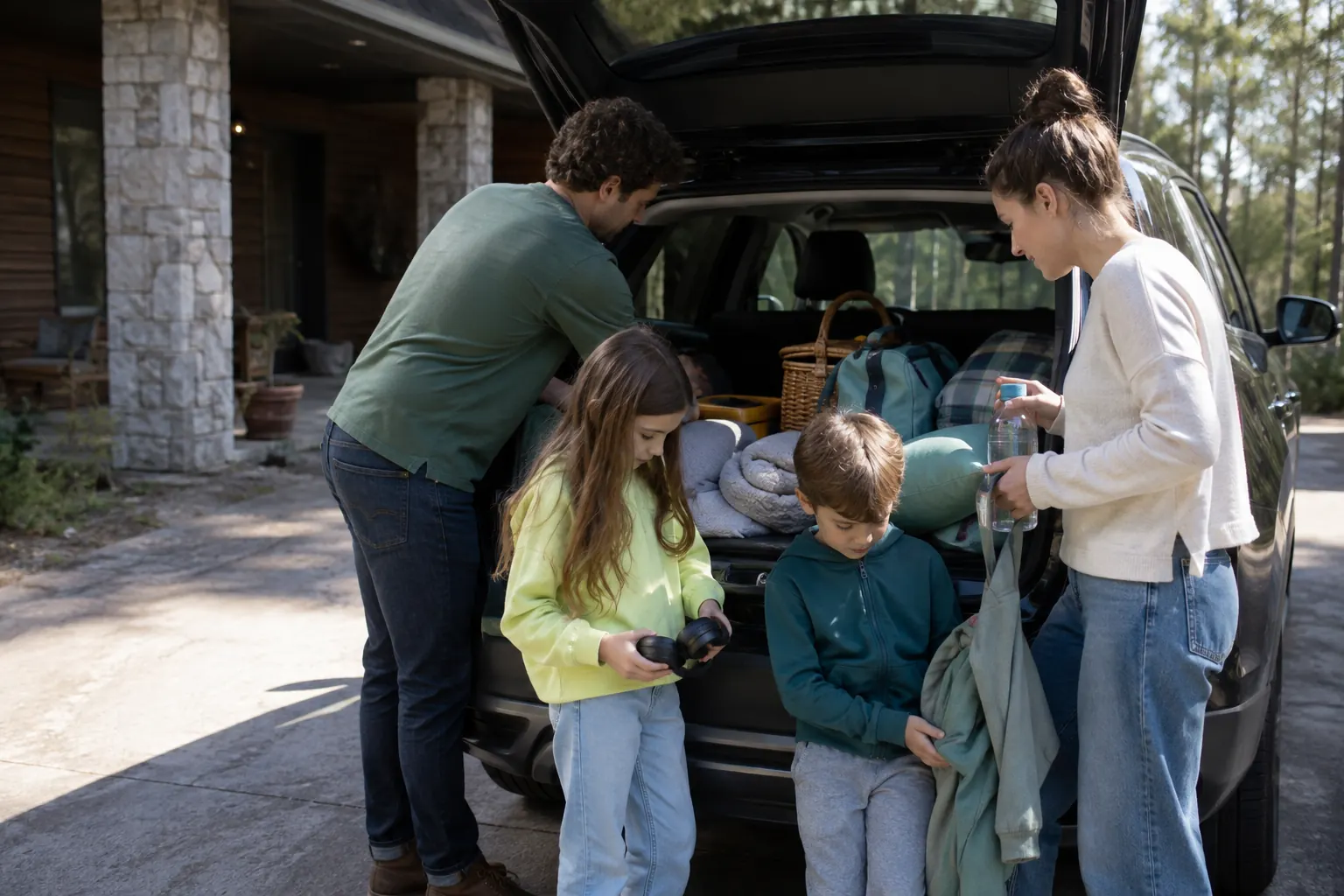
Prevention starts long before you hit the road. Proper preparation reduces the likelihood and severity of car sickness episodes, and it costs nothing.
Ticks are saved in this browser only, for this session.
Smart seating and positioning
Where children sit in the vehicle changes how susceptible they are. The right position gives better visual references and reduces motion sensitivity. Car-seat and airbag rules come first: follow your vehicle's guidance and the law where you are, then optimise within that.
Better positions
- Front passenger seat, for children 13+ or of proper size for airbag safety
- Centre rear seat: best forward view and least side-to-side motion
- Right rear seat: good window view and easier to monitor
- A booster high enough that their eyeline clears the window
Positions to avoid
- Rear-facing seats in SUVs and vans: the worst for motion sickness
- Left rear seat: limited forward view
- Seating so low they can only see the seat back in front
Seating advice is subject to car-seat and airbag rules, which come first.
- Steadiest:
- Front passenger, where age and airbag rules allow. The road ahead is visible.
- Okay:
- Centre rear, with a clear view through the windscreen.
- Worst:
- Third row or a rear-facing seat. No forward view and the most amplified motion.
Entertainment and distraction strategies
Keeping children engaged with the right activities prevents car sickness while making the journey enjoyable. The key is choosing activities that don't conflict with visual stability.
Motion-friendly
- Audiobooks, music, podcasts, sing-along songs
- Looking games: I-spy, license plates, counting objects
- Verbal games: story telling, 20 questions, rhymes
Limit these
- Reading books: close-up visual focus worsens symptoms
- Tablet and phone games: screens are a reliable trigger
- Detailed colouring: fine motor tasks need steady visual focus
Practical strategies, not measured effects. Which ones help is personal to each child.
The drug-free tools parents ask about
Alongside acupressure bands, the other thing parents ask about is sound-therapy apps such as Dizzout: precisely calibrated audio played through ordinary headphones, in a session of about 90 seconds. Unlike a pill, which has to be taken 30 to 60 minutes before symptoms start, it can be played once a child already feels unwell. There is no medicine in it and nothing to swallow.
It is a drug-free wellness option, it is not a medical device, and it is not a substitute for a pediatrician's advice. If you are considering it for a child, raise it at the same appointment where you would raise anything else, and use child-appropriate headphones at a comfortable volume.
Final thoughts
Don't let motion sickness ruin your family's road trip adventures. Combining these strategies gives you more to work with than any one of them alone, and most of them cost nothing.
Remember, preparation is key. Start with these before your next road trip, and test them on shorter drives so you know what works for your child before the long one. For more on why kids get it worse, see our guide for parents.
Frequently asked questions
At what age are children most likely to get car sick?
Roughly 2 to 12, with susceptibility peaking around ages 7 to 12. Their balance systems are still maturing, and younger children often cannot see out of the windows well enough to get a forward view of the road.
Where should a car-sick child sit?
Wherever they get the best forward view within the car-seat and airbag rules that apply to them. The centre rear seat with a clear view through the windscreen is usually the best compromise; rear-facing seats in SUVs and vans are the worst.
Are tablets a bad idea on a long drive?
For a motion-sick child, yes. A screen locks their eyes on a static image while their body feels every turn, which is the sharpest version of the conflict. Audiobooks, music and looking games keep them occupied without it.
Can I give my child motion sickness medicine?
That is a question for your pediatrician or pharmacist. Motion-sickness medicines carry age restrictions on their own labels, and the right answer depends on your child's age, weight and health. Start with the drug-free steps and raise medication at an appointment.
Someone you know gets motion sick?
Send them this guide. It might be the trip it saves.
Your next question, probably
What do the medicine labels say by age?
Label age notes, and what to ask a pediatrician
If that is not your question:
About this article
- Motion sickness statistics, with sources (Dizzout).
- MedlinePlus Genetics (NIH). Motion sickness: how common it is.
This article is informational and is not medical advice. Decisions about medicines, supplements or any product for a child belong with your pediatrician or pharmacist, who knows your child's age, weight and health history. Car-seat and airbag rules take precedence over any seating suggestion here.